600-401-CC4
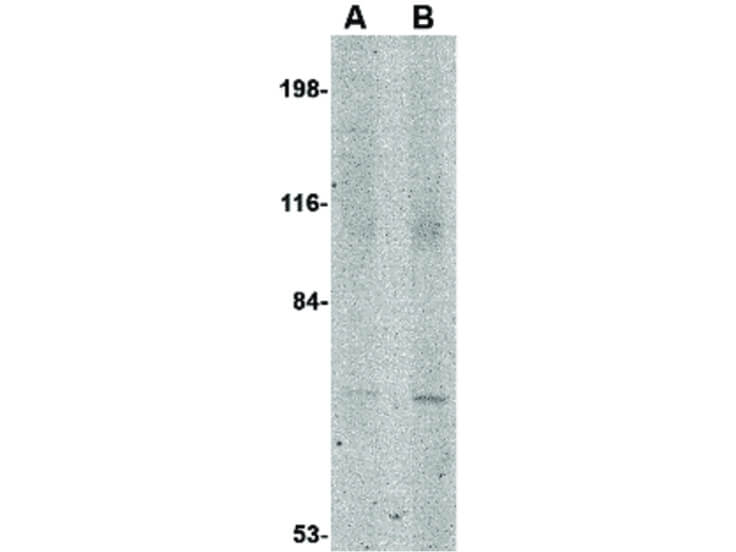
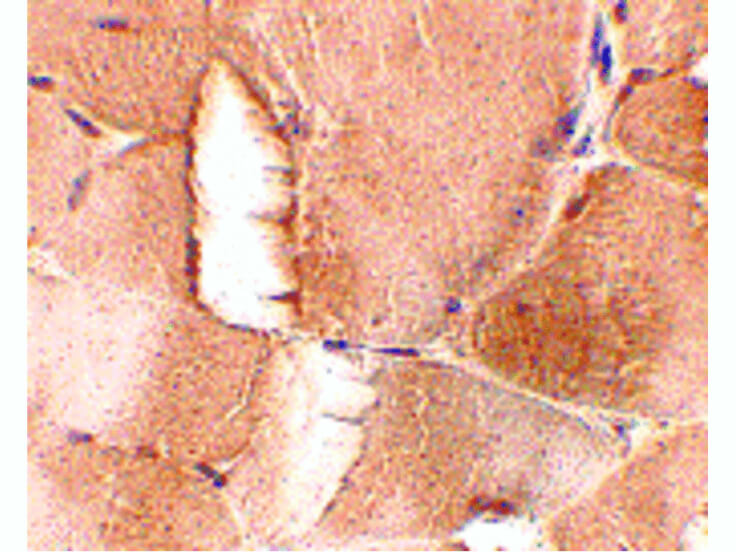
JPH1 Antibody

Cannot supply to this region.
- SKU:
- 600-401-CC4
- Additional Names:
- JPH1|JPH1 Antibody, JP1, JP-1, JP1, Junctophilin-1, Junctophilin type 1
- Application:
- ELISA, IHC, WB
- Concentration:
- 1 mg/ml
- Physical State:
- Liquid
- Species Reactivity:
- Human
- Storage Conditions:
- -20[o]C aliquoted. Aliquot. Avoid freeze/thaw cycles., 2-8[o]C diluted. Aliquot. Avoid freeze/thaw cycles.
- Supplier:
- Rockland Inc
- Host:
- Rabbit
- Reactivities:
- Human, Mouse, Rat
- Buffer:
- 0.01 M Sodium Phosphate, 0.25 M Sodium Chloride
- Immunogen:
- Anti-JPH1 antibody was prepared from whole rabbit serum produced by repeated immunizations with a 15 amino acid synthetic peptide near the C-terminus of human JPH1.
- Formulation:
- 0.01 M Sodium Phosphate, 0.25 M Sodium Chloride, pH 7.2
- Uniprot:
- Q9HDC5
- Synonyms:
- CMT2K;JP-1;JP1;junctophilin type 1;junctophilin-1
- Extra Details:
- Junctional complexes between the plasma membrane (PM) and endoplasmic/sarcoplasmic reticulum (ER/SR) are a common feature of all excitable cell types and mediate cross talk between cell surface and intracellular ion channels. Junctophilins (JPs) are important components of the junctional complexes. JPs are composed of a carboxy-terminal hydrophobic segment spanning the ER/SR membrane and a remaining cytoplasmic domain that shows specific affinity for the PM. Four JPs have been identified as tissue-specific subtypes derived from different genes: JPH1 is expressed in skeletal muscle, JPH2 is detected throughout all muscle cell types, and JPH3 and JPH4 are predominantly expressed in the brain and contribute to the subsurface cistern formation in neurons. JPH1 is essential for stabilizing the T-tubule and SR membranes to form junctions and provide an environment for the assembly of receptors such as the ryanodine receptor type 1 (RyR1).
- Shipping Conditions:
- Dry Ice