600-401-BE4
FGF4 Antibody

Cannot supply to this region.
- SKU:
- 600-401-BE4
- Additional Names:
- FGF4|FGF4 Antibody, HST, KFGF, HST-1, HSTF1, K-FGF, HBGF-4, HST, KS3, Fibroblast growth factor 4, Heparin secretory-transforming protein 1, FGF-4
- Application:
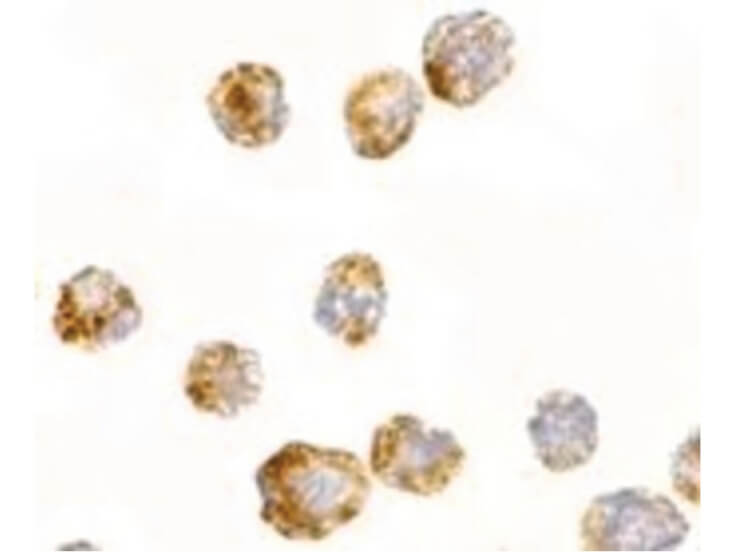
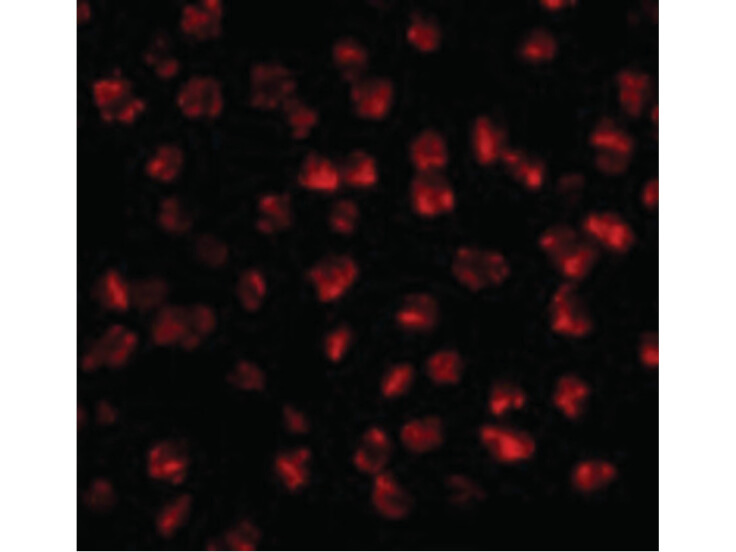
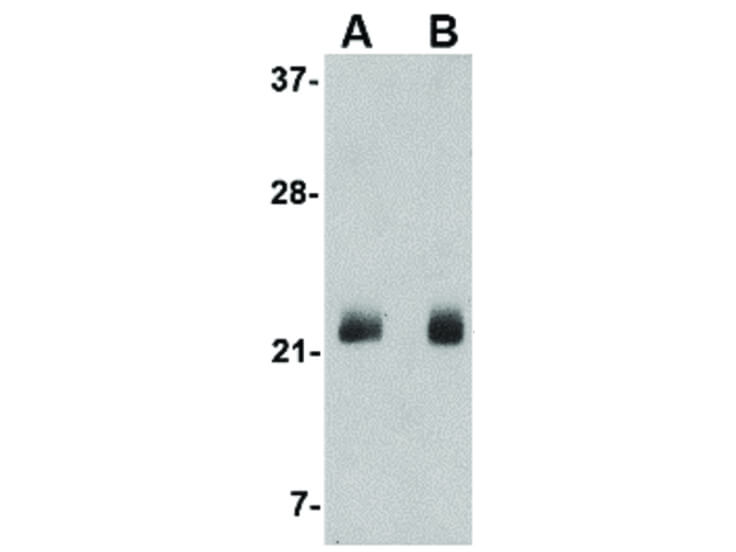
- ELISA, IHC, WB, IF
- Concentration:
- 1 mg/ml
- Physical State:
- Liquid
- Species Reactivity:
- Human
- Storage Conditions:
- -20[o]C aliquoted. Aliquot. Avoid freeze/thaw cycles., 2-8[o]C diluted. Aliquot. Avoid freeze/thaw cycles.
- Supplier:
- Rockland Inc
- Host:
- Rabbit
- Reactivities:
- Human, Mouse
- Buffer:
- 0.01 M Sodium Phosphate, 0.25 M Sodium Chloride
- Immunogen:
- Anti-FGF4 antibody was prepared from whole rabbit serum produced by repeated immunizations with a 18 amino acid synthetic peptide near the C-terminus of the human FGF4.
- Formulation:
- 0.01 M Sodium Phosphate, 0.25 M Sodium Chloride, pH 7.2
- Uniprot:
- P08620
- Synonyms:
- FGF-4;fibroblast growth factor 4;HBGF-4;heparin secretory transforming protein 1;Heparin secretory-transforming protein 1;heparin-binding growth factor 4;HST;HST-1;HSTF-1;HSTF1;human stomach cancer, transforming factor from FGF-related oncogene;K-FGF;kaposi sarcoma oncogene;KFGF;oncogene HST;transforming protein KS3
- Extra Details:
- Fibroblast growth factor 4 (FGF4) is a member of the fibroblast growth factor (FGF) family that possess broad mitogenic and cell survival activities and play key roles in growth and survival of stem cells during embryogenesis, tissue regeneration, and carcinogenesis. FGF4 was identified by its strong oncogenic transforming activity and is a potent angiogenic factor, expressed in several highly vascularized tumors and also in adult mouse testis, intestine, and brain. Studies on the mouse homolog suggests a function in bone morphogenesis and limb development through the sonic hedgehog (SHH) signaling pathway. Furthermore, FGF4 regulates neural progenitor cell proliferation and neuronal differentiation. Recent studies show a growth-promoting role for FGF4 in human embryonic stem cells and a putative feedback inhibition mechanism by a novel FGF4 splice isoform that may serve to promote differentiation at a later stages of development.
- Shipping Conditions:
- Dry Ice