600-401-BA5
EndoG Antibody

Cannot supply to this region.
- SKU:
- 600-401-BA5
- Additional Names:
- ENDOG|EndoG Antibody, Endonuclease G, mitochondrial, Endo G
- Application:
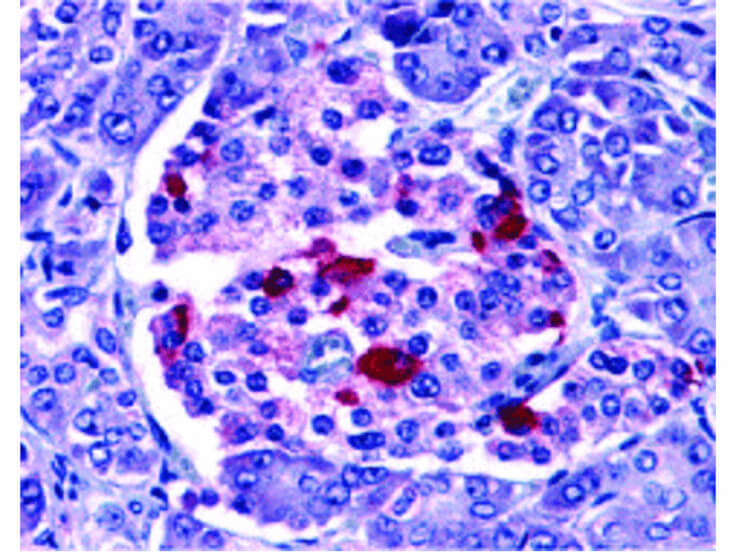
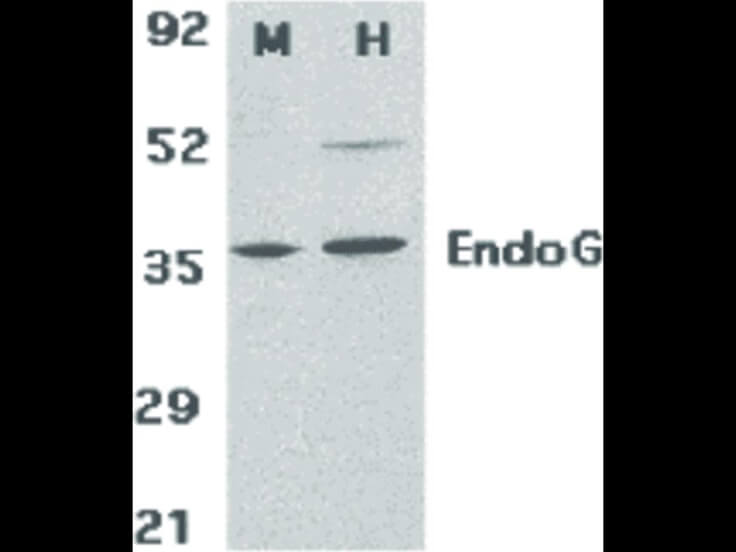
- ELISA, IHC, WB, IF
- Concentration:
- 1 mg/ml
- Physical State:
- Liquid
- Species Reactivity:
- Human
- Storage Conditions:
- 2-8[o]C
- Supplier:
- Rockland Inc
- Host:
- Rabbit
- Reactivities:
- Human, Mouse, Rat
- Buffer:
- 0.01 M Sodium Phosphate, 0.25 M Sodium Chloride
- Immunogen:
- Anti-EndoG antibody was from whole rabbit serum produced by repeated immunizations with a synthetic peptide corresponding to 15 amino acids near the N-terminus of human EndoG.
- Formulation:
- 0.01 M Sodium Phosphate, 0.25 M Sodium Chloride, pH 7.2
- Uniprot:
- Q14249
- Synonyms:
- endo G;endonuclease G, mitochondrial;mitochondrial endonuclease G
- Extra Details:
- The fragmentation of nuclear DNA is a hallmark of apoptotic cell death. The activities of caspase and nuclease are involved in the DNA fragmentation. Caspase-activated deoxyribonuclease (CAD), also termed DNA fragmentation factor (DFF40), is one such nuclease, and is capable of inducing DNA fragmentation and chromatin condensation after cleavage by caspase-3 of its inhibitor ICAD/DFF45. Caspase and CAD independent DNA fragmentation also exists. Recent studies demonstrated that another nuclease, endonuclease G (endoG), is specifically activated by apoptotic stimuli and is able to induce nucleosomal fragmentation of DNA independently of caspase and DFF/CAD. EndoG is a mitochondrion-specific nuclease that translocates to the nucleus and cleaves chromatin DNA during apoptosis. The homologue of mammalian EndoG is the first mitochondrial protein identified to be involved in apoptosis in C. elegans. EndooG also cleaves DNA in vitro.
- Shipping Conditions:
- Blue Ice