600-401-B15
ATDC Antibody

Cannot supply to this region.
- SKU:
- 600-401-B15
- Additional Names:
- rabbit anti-ATDC Antibody, Ataxia-telangiectasia group D associated protein antibody, FLJ36085 antibody, TRIM 29 antibody, Tripartite motif containing protein 29 antibody, TRIM-29|TRIM29
- Application:
- ELISA, WB
- Concentration:
- 0.67 mg/ml
- Physical State:
- Liquid
- Species Reactivity:
- Human
- Storage Conditions:
- -20[o]C aliquoted. Aliquot. Avoid freeze/thaw cycles., 2-8[o]C diluted. Aliquot. Avoid freeze/thaw cycles.
- Supplier:
- Rockland Inc
- Host:
- Rabbit
- Reactivities:
- Human
- Buffer:
- 0.02 M Potassium Phosphate, 0.15 M Sodium Chloride
- Immunogen:
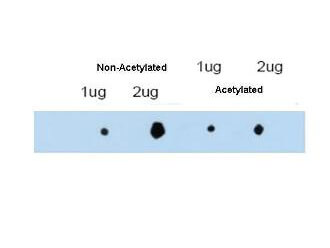
- This affinity purified antibody was prepared from whole rabbit serum produced by repeated immunizations with a peptide corresponding to an internal portion of human ATDC protein around lysine 116.
- Formulation:
- 0.02 M Potassium Phosphate, 0.15 M Sodium Chloride, pH 7.2
- Uniprot:
- Q14134
- Synonyms:
- Ataxia telangiectasia group D-associated protein;ataxia-telangiectasia group D-associated protein;ATDC;tripartite motif protein TRIM29;tripartite motif-containing protein 29
- Extra Details:
- Ataxia-telangiectasia group D-associated protein (ATDC), also called tripartite motif-containing protein 29 (TRIM29), is a novel Histone deacetylase (HDAC) associated protein. Its function is tightly regulated by HDAC. ATDC Lysine 116 (K116) is acetylated and has a significant functional role in regulating cell survival and tumorigenesis. ATDC is expressed in placenta, prostate and thymus, and is over expressed in pancreatic and cervical tumors. Its function in tumor cells is not fully understood. It is constitutively phosphorylated by PKC on serine/threonine in A431 cells. The ATDC gene product is one of a group of proteins that share multiple zinc finger motifs and an adjacent leucine zipper motif. These proteins have been proposed to form homo- or heterodimers involved in nucleic acid binding, consistent with the fact that many of these proteins appear to be transcriptional regulatory factors involved in carcinogenesis and/or differentiation. The likelihood that the ATDC gene product is involved in transcriptional regulation could explain the pleiomorphic characteristics of AT, including abnormal cell cycle regulation.
- Shipping Conditions:
- Dry Ice