600-401-AL5
CLDN1 Antibody

Cannot supply to this region.
- SKU:
- 600-401-AL5
- Additional Names:
- CLDN1|CLDN1 Antibody, CLD1, SEMP1, ILVASC, CLD1, UNQ481/PRO944, Claudin-1, Senescence-associated epithelial membrane protein
- Application:
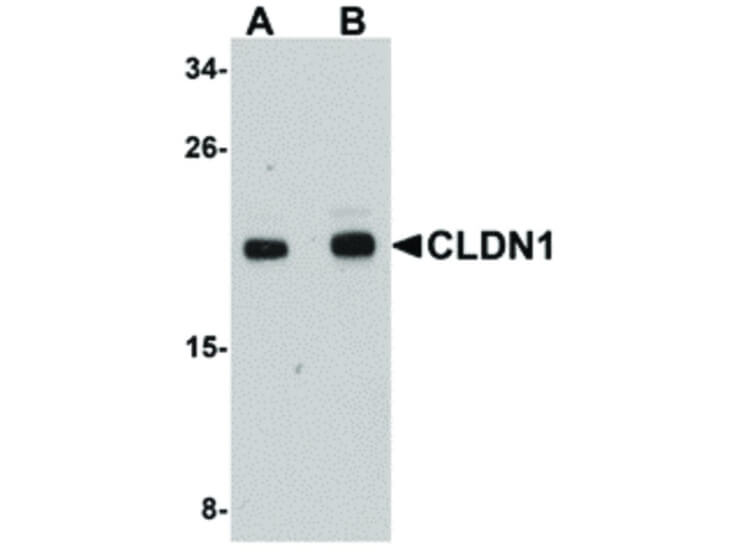
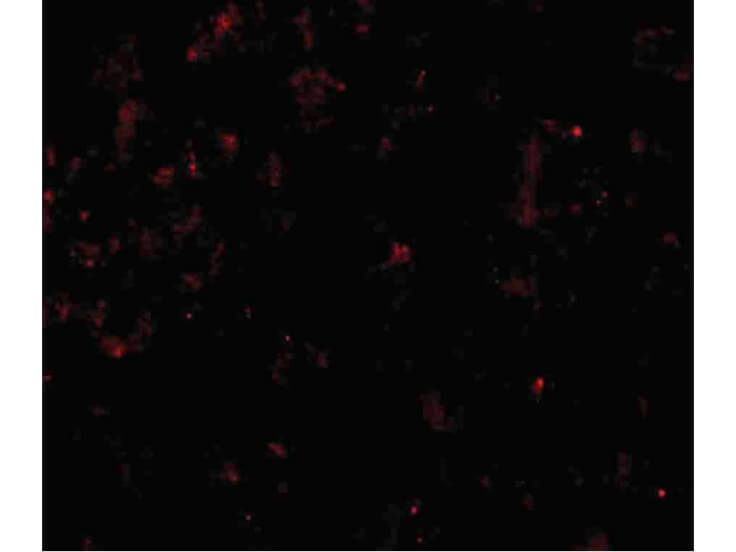
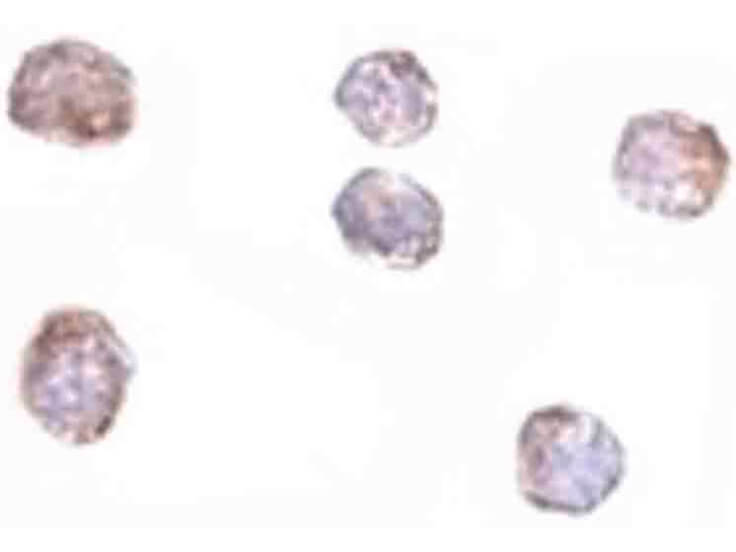
- ELISA, IHC, WB, IF
- Concentration:
- 1 mg/ml
- Physical State:
- Liquid
- Species Reactivity:
- Human
- Storage Conditions:
- -20[o]C aliquoted. Aliquot. Avoid freeze/thaw cycles., 2-8[o]C diluted. Aliquot. Avoid freeze/thaw cycles.
- Supplier:
- Rockland Inc
- Host:
- Rabbit
- Reactivities:
- Human, Mouse, Rat
- Buffer:
- 0.01 M Sodium Phosphate, 0.25 M Sodium Chloride
- Immunogen:
- Anti-CLDN1 antibody was prepared from whole rabbit serum produced by repeated immunizations with a 20 amino acid synthetic peptide near the C-terminus of human CLDN1.
- Formulation:
- 0.01 M Sodium Phosphate, 0.25 M Sodium Chloride, pH 7.2
- Uniprot:
- O95832
- Synonyms:
- claudin-1;CLD1;ILVASC;SEMP1;Senescence-associated epithelial membrane protein;senescence-associated epithelial membrane protein 1
- Extra Details:
- Claudin1 (CLDN1), a member of the claudin family, is an integral membrane protein and a component of tight junction strands. Tight junctions are specialized regions of cell to cell contact consisting of networking strands that act as a molecular gasket for preventing the leakage of ions, water, etc., between cells. They are abundant in luminal epithelial sheets where they maintain epithelial cell polarity. Different tissues exhibit different Claudin composition and CLDN1 expression is often cell type and tissue dependent. Loss of function mutations result in neonatal ichthyosis-sclerosing cholangitis syndrome. CLDN1 and CLDN2 were found to be overexpressed in colonal cancer tissues and may be useful as tumor markers and targets for the treatment of colorectal cancer. Characterization of Claudins expression in human tumors can be an additional diagnostic tool. Recent studies show that CLDN1 has gastric tumor suppressive activity and is a direct transcriptional target of RUNX3. Along with SCARB1, LDL-R, and the tetraspanin superfamily member CD81, CLDN1 has been reported to be an entry factor for the Hepatitis C virus.
- Shipping Conditions:
- Dry Ice