600-401-AK2
cIAP Antibody

Cannot supply to this region.
- SKU:
- 600-401-AK2
- Additional Names:
- BIRC2|cIAP Antibody, API1, MIHB, HIAP2, RNF48, cIAP1, Hiap-2, c-IAP1, API1, IAP2, Baculoviral IAP repeat-containing protein 2, C-IAP1, IAP-2
- Application:
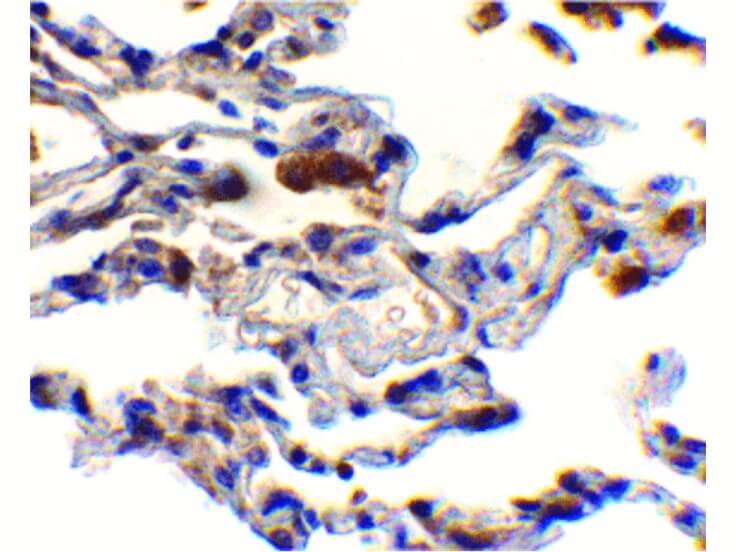
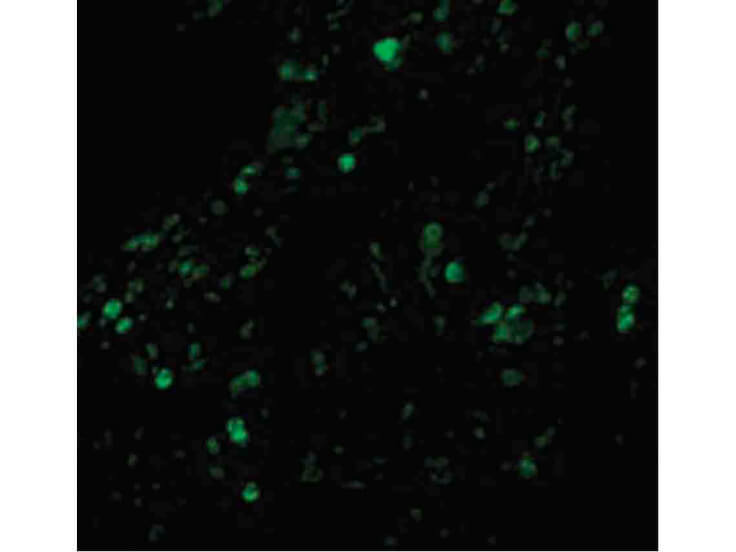
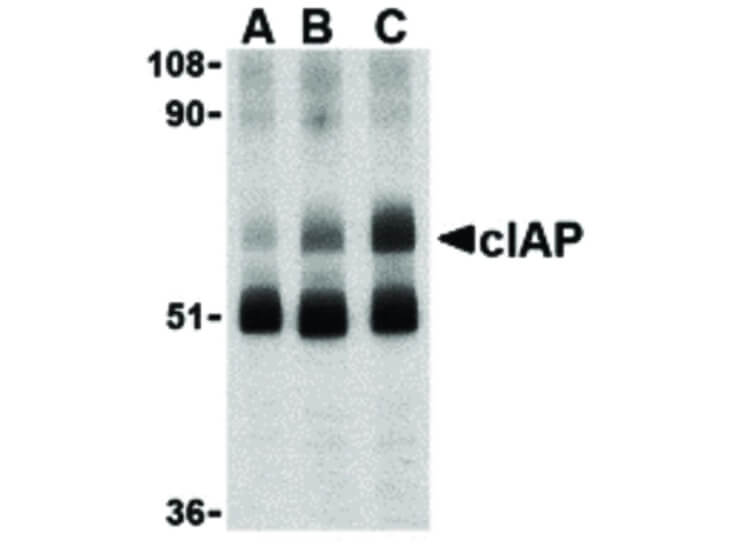
- ELISA, IHC, WB, IF
- Concentration:
- 1 mg/ml
- Physical State:
- Liquid
- Species Reactivity:
- Human
- Storage Conditions:
- -20[o]C aliquoted. Aliquot. Avoid freeze/thaw cycles., 2-8[o]C diluted. Aliquot. Avoid freeze/thaw cycles.
- Supplier:
- Rockland Inc
- Host:
- Rabbit
- Reactivities:
- Human, Mouse
- Buffer:
- 0.01 M Sodium Phosphate, 0.25 M Sodium Chloride
- Immunogen:
- Anti-c-IAP antibody was prepared from whole rabbit serum produced by repeated immunizations with a synthetic peptide corresponding to 14 amino acids at the C-terminus of human c-IAP1 c-IAP antibody detects both c-IAP1 and c-IAP2.
- Formulation:
- 0.01 M Sodium Phosphate, 0.25 M Sodium Chloride, pH 7.2
- Uniprot:
- Q13490
- Synonyms:
- API1;apoptosis inhibitor 1;baculoviral IAP repeat-containing protein 2;c-IAP1;cellular inhibitor of apoptosis 1;cIAP1;Hiap-2;HIAP2;IAP homolog B;IAP-2;inhibitor of apoptosis protein 2;MIHB;NFR2-TRAF signalling complex protein;RING finger protein 48;RING-type E3 ubiquitin transferase BIRC2;RNF48;TNFR2-TRAF-signaling complex protein 2
- Extra Details:
- Apoptosis, or programmed cell death, is related to many diseases, such as cancer. Apoptosis is triggered by a variety of stimuli including members in the TNF family and can be prevented by the inhibitor of apoptosis (IAP) proteins. IAP proteins form a conserved gene family that binds to and inhibits cell death proteases. The two isoforms of c-IAP (c-IAP1 and c-IAP2) are structurally related to XIAP, containing 3 baculoviral IAP repeat (BIR) motifs that are essential and sufficient for the binding and inhibition of caspases-3, -7. The c-IAPs can associate with the death receptor TNF-R2, and mediate the ubiquitination of TRAF2 following the binding of TNF-a by its receptor. Omi, a negative regulator of c-IAP, inhibits its activity by catalytically cleaving c-IAP. Another negative regulator, Smac/DIABLO, acts by enhancing the auto-ubiquitination activity of c-IAP.
- Shipping Conditions:
- Dry Ice