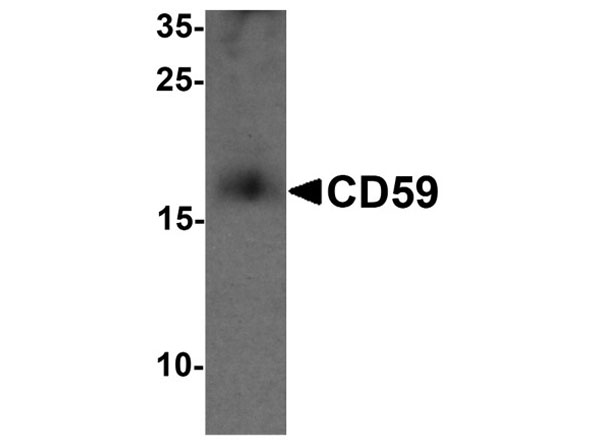
600-401-AJ1
CD59 Antibody

Cannot supply to this region.
- SKU:
- 600-401-AJ1
- Additional Names:
- CD59|CD59 Antibody, 1F5, EJ16, EJ30, EL32, G344, MIN1, MIN2, MIN3, MIRL, HRF20, MACIF, MEM43, MIC11, MSK21, 16.3A5, HRF-20, MAC-IP, p18-20, CD59 glycoprotein, 1F5 antigen
- Application:
- ELISA, WB
- Concentration:
- 1 mg/ml
- Physical State:
- Liquid
- Species Reactivity:
- Human
- Storage Conditions:
- -20[o]C aliquoted. Aliquot. Avoid freeze/thaw cycles., 2-8[o]C diluted. Aliquot. Avoid freeze/thaw cycles.
- Supplier:
- Rockland Inc
- Host:
- Rabbit
- Reactivities:
- Human, Mouse
- Buffer:
- 0.01 M Sodium Phosphate, 0.25 M Sodium Chloride
- Immunogen:
- Anti- CD59 antibody was prepared from whole rabbit serum produced by repeated immunizations with a 14 amino acid peptide near the N-terminus of human CD59.
- Formulation:
- 0.01 M Sodium Phosphate, 0.25 M Sodium Chloride, pH 7.2
- Uniprot:
- P13987
- Synonyms:
- 16.3A5;1F5;1F5 antigen;20 kDa homologous restriction factor;CD59 antigen p18-20 (antigen identified by monoclonal antibodies 16.3A5, EJ16, EJ30, EL32 and G344);CD59 blood group antigen;CD59 glycoprotein;CD59 molecule, complement regulatory protein;EJ16;EJ30;EL32;G344;HRF-20;HRF20;human leukocyte antigen MIC11;Ly-6-like protein;lymphocytic antigen CD59/MEM43;MAC-inhibitory protein;MAC-IP;MACIF;MEM43;MEM43 antigen;membrane attack complex (MAC) inhibition factor;membrane attack complex inhibition factor;membrane inhibitor of reactive lysis;MIC11;MIN1;MIN2;MIN3;MIRL;MSK21;p18-20;protectin;surface anitgen recognized by monoclonal antibody 16.3A5;T cell-activating protein
- Extra Details:
- The complement regulatory protein CD59 is a cell surface glycoprotein that regulates complement-mediated cell lysis and is involved in lymphocyte signal transduction. CD59 is a potent inhibitor of the complement membrane attack complex, whereby it binds complement C8 and/or C9 during the assembly of this complex, thereby inhibiting the incorporation of multiple copies of C9 into the complex, which is necessary for osmolytic pore formation. CD59 also plays a role in signal transduction pathways in the activation of T cells. Mutations in this gene cause CD59 deficiency, a disease resulting in hemolytic anemia and thrombosis, and ultimately cerebral infarction.
- Shipping Conditions:
- Dry Ice