600-101-MN3S
Eaat2 Antibody

Cannot supply to this region.
- SKU:
- 600-101-MN3S
- Additional Names:
- Goat Anti-Eaat2 Antibody, Goat Anti-Excitotoxic Amino Acid Transporter Antibody, Solute Carrier Family 1 Member 2, Solute Carrier Family 1 (Glial High Affinity Glutamate Transporter) Member 2, Sodium-Dependent Glutamate/Aspartate Transporter 2, Toxcitatory Amino Acid Transporter, Glutamate/Aspartate Transporter II, EAAT2, Excitotoxic Amino Acid Transporter, EIEE41, GLT-1, HBGT, GLT1|Slc1a2
- Application:
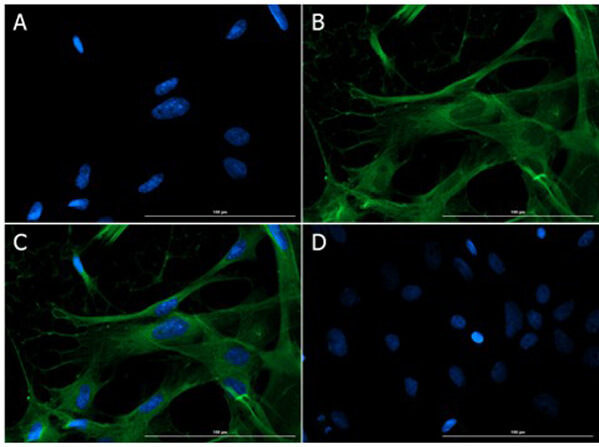
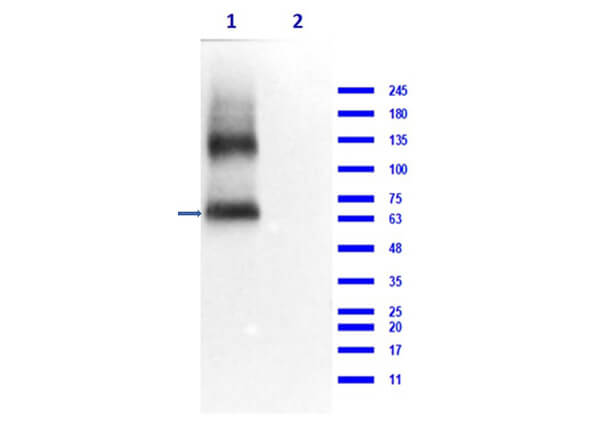
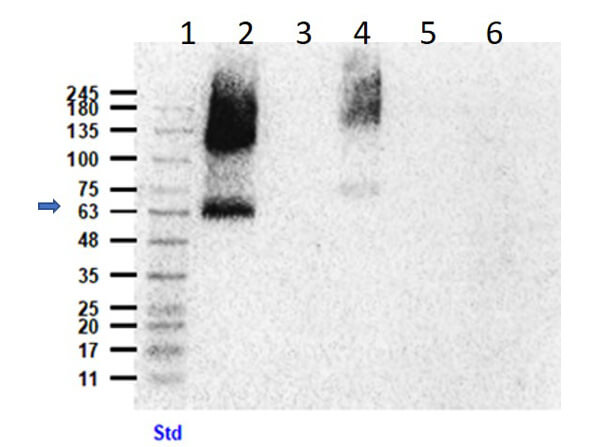
- ELISA, WB, IF
- Concentration:
- 1.05 mg/ml
- Physical State:
- Liquid
- Species Reactivity:
- Rat
- Storage Conditions:
- -20[o]C diluted. Avoid freeze/thaw cycles., See Manual Avoid freeze/thaw cycles.
- Supplier:
- Rockland Inc
- Host:
- Goat
- Reactivities:
- Mouse, Rat
- Buffer:
- 0.02 M Potassium Phosphate, 0.15 M Sodium Chloride
- Immunogen:
- Anti-Eaat2 Antibody was prepared from whole goat serum produced by repeated immunizations with a synthetic peptide corresponding to the N-terminal region of Rat Eaat2 surrounding aa1-25 conjugated to Keyhole Limpet Hemocyanin (KLH).
- Formulation:
- 0.02 M Potassium Phosphate, 0.15 M Sodium Chloride, pH 7.2
- Uniprot:
- P31596
- Synonyms:
- Eaat2;excitatory amino acid transporter 2;glial glutamate transporter GLT1/V3;glial glutamate transporter GLT1/V4;Glt;Glt-1;glutamate transporter 1;high affinity glucose transporter;sodium-dependent glutamate/aspartate transporter 2;solute carrier family 1 (glial high affinity glutamate transporter), member 2;Solute carrier family 1 member 2
- Extra Details:
- SLC1A2 (Solute Carrier Family 1 Member 2), glutamate transporters, also known as excitatory amino acid transporters (EAATs), are sodium- and potassium- dependent members of the solute carrier family 6 (SLC1), widely distributed throughout the brain. These sodium-dependent, high-affinity amino acid transporter mediates the uptake of L-glutamate, L-aspartate, and D-aspartate functioning as a symporter that transports one amino acid molecule together with two or three Na (+) ions and one proton, in parallel with the counter-transport of one K (+) ion. It mediates the Cl (-) flux that is not coupled to amino acid transport avoiding the accumulation of negative charges due to aspartate and Na (+) symport. Eaat2 is essential for the rapid removal of released glutamate from the synaptic cleft, and for terminating the postsynaptic action of glutamate. Improper regulation of this gene is thought to be associated with several neurological disorders including Epileptic Encephalopathy, Early Infantile, 41 and Undetermined Early-Onset Epileptic Encephalopathy. Anti-Eaat2 Antibody is useful for researchers interested in transmembrane transporter activity, neuroscience research, and cell metabolism.
- Shipping Conditions:
- Dry Ice