600-101-392
BMI1 Antibody

Cannot supply to this region.
- SKU:
- 600-101-392
- Additional Names:
- BMI1|goat anti-Bmi-1 antibody, Bmi1, B lymphoma Mo MLV insertion region antibody, Bmi 1 antibody, MGC12685 antibody, Murine leukemia viral (bmi 1) oncogene homolog antibody, Oncogene BMI 1 antibody, PCGF 4 antibody
- Application:
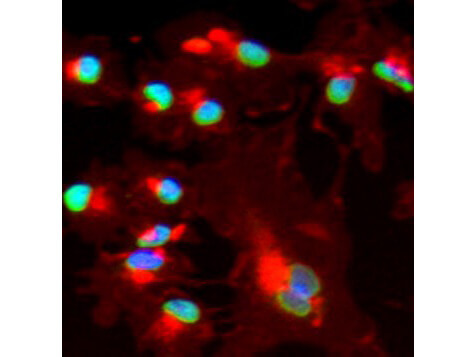
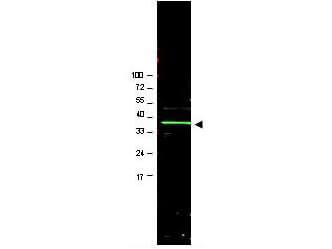
- ELISA, WB, IF
- Concentration:
- 0.91 mg/ml
- Physical State:
- Liquid
- Species Reactivity:
- Human
- Storage Conditions:
- -20[o]C aliquoted. Aliquot. Avoid freeze/thaw cycles., 2-8[o]C diluted. Aliquot. Avoid freeze/thaw cycles.
- Supplier:
- Rockland Inc
- Host:
- Goat
- Reactivities:
- Human
- Buffer:
- 0.02 M Potassium Phosphate, 0.15 M Sodium Chloride
- Immunogen:
- This affinity purified antibody was prepared from whole goat serum produced by repeated immunizations with a synthetic peptide corresponding to amino acids 252-264 of human Bmi1 protein.
- Formulation:
- 0.02 M Potassium Phosphate, 0.15 M Sodium Chloride, pH 7.2
- Uniprot:
- P35226
- Synonyms:
- B lymphoma Mo-MLV insertion region 1 homolog;BMI1;BMI1 polycomb ring finger oncogene;BMI1 polycomb ring finger proto-oncogene;COMMD3-BMI1 read-through protein;flvi-2/bmi-1;FLVI2/BMI1;murine leukemia viral (bmi-1) oncogene homolog;PCGF4;polycomb complex protein BMI-1;polycomb group protein Bmi1;polycomb group RING finger protein 4;ring finger protein 51;RNF51
- Extra Details:
- The Bmi-1 oncogene (also known as polycomb group ring finger 4, MGC12685, murine leukemia viral (bmi 1) oncogene homolog, oncogene BMI 1, polycomb complex protein BMI 1 and RNF51) induces telomerase activity and immortalizes human mammary epithelial cells. Bmi-1 extends the replicative life span of human fibroblasts by suppressing the p16-dependent senescence pathway. The polycomb group (PcG) genes are involved in the maintenance of cellular memory through epigenetic chromatin modifications. Recent studies have implicated a role for PcG genes in the self-renewal of hematopoietic stem cells (HSCs), a process in which cellular memory is maintained through cell division. Among the PcG genes, Bmi-1 plays a central role in the inheritance of stemness, and its forced expression promotes HSC self-renewal. These findings highlight the importance of epigenetic regulation in HSC self-renewal and identify PcG genes as potential targets for therapeutic HSC manipulation.
- Shipping Conditions:
- Dry Ice