200-401-X55
AATF Antibody

Cannot supply to this region.
- SKU:
- 200-401-X55
- Additional Names:
- AATF|AATF Antibody, DED, BFR2, CHE1, CHE-1, DED, HSPC277, Protein AATF, Apoptosis-antagonizing transcription factor
- Application:
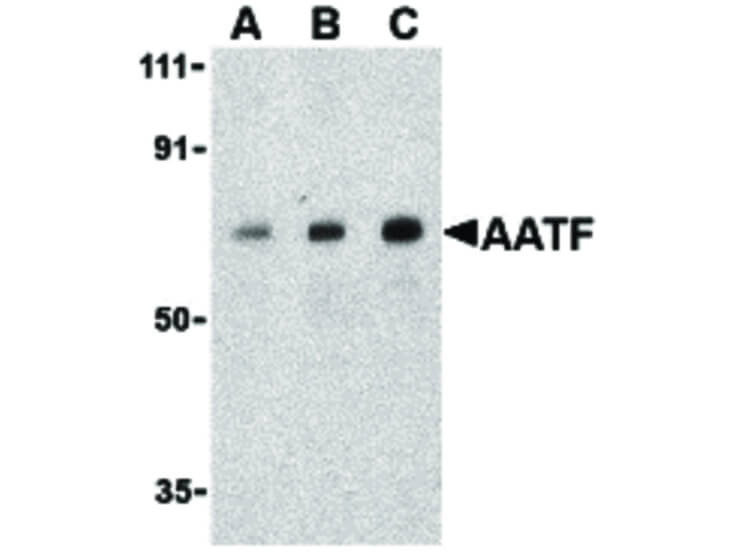
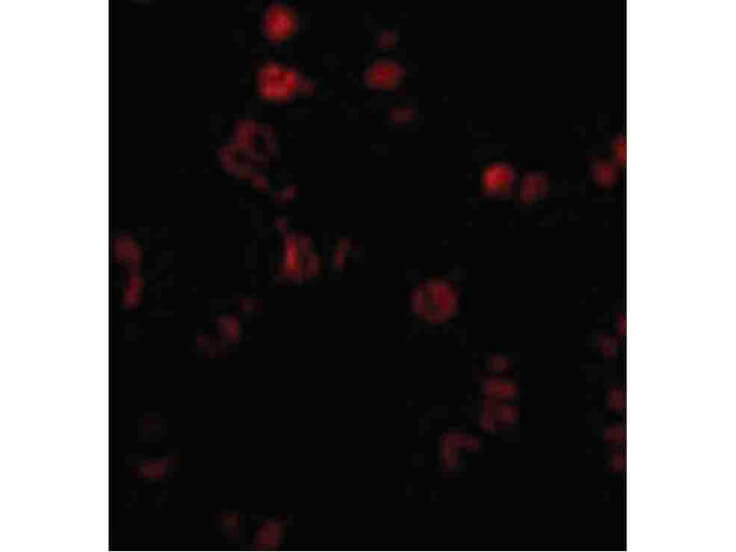
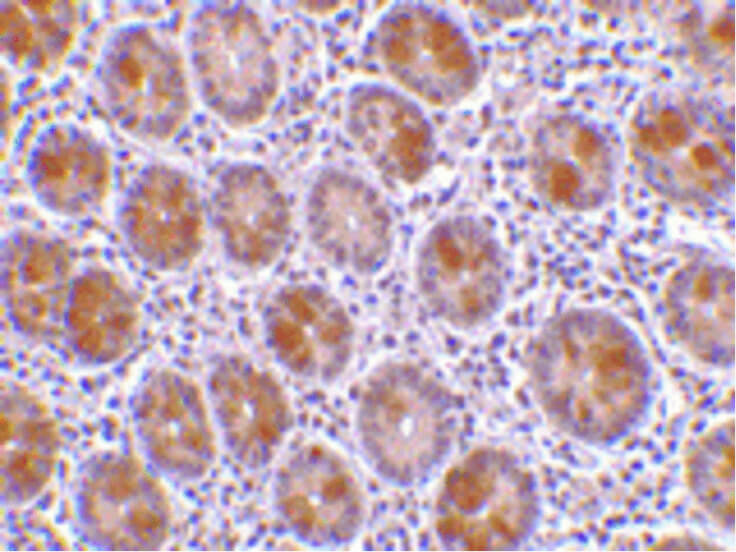
- ELISA, IHC, WB, IF
- Concentration:
- 1 mg/ml
- Physical State:
- Liquid
- Species Reactivity:
- Human
- Storage Conditions:
- -20[o]C aliquoted. Aliquot. Avoid freeze/thaw cycles., 2-8[o]C diluted. Aliquot. Avoid freeze/thaw cycles.
- Supplier:
- Rockland Inc
- Host:
- Rabbit
- Reactivities:
- Human, Mouse
- Buffer:
- 0.01 M Sodium Phosphate, 0.25 M Sodium Chloride
- Immunogen:
- Anti-AATF antibody was prepared from whole rabbit serum produced by repeated immunizations with a 12 amino acid synthetic peptide from near the C-terminus of human AATF.
- Formulation:
- 0.01 M Sodium Phosphate, 0.25 M Sodium Chloride, pH 7.2
- Uniprot:
- Q9NY61
- Synonyms:
- Apoptosis-antagonizing transcription factor;BFR2;CHE-1;CHE1;DED;protein AATF;rb-binding protein Che-1
- Extra Details:
- AATF (apoptosis antagonizing transcription factor) was initially discovered as an interaction partner of ZIP kinase (ZIPK), a member of death-associated protein (DAP) kinase family of pro-apoptotic serine/threonine kinases. AATF is a phosphoprotein containing an acidic region and a putative leucine zipper domain and nuclear localization signal, features which are typical of transcription factors. AATF inhibits the ZIPK-mediated pro-apoptotic pathway and may activate other anti-apoptotic pathways. Recently, it has also been shown to protect neural cells against oxidative damage induced by amyloid b-peptide and to inhibit aberrant production of the beta-peptide by interacting with Par-4 (prostate apoptosis response-4), another pro-apoptotic leucine zipper protein that is associated with neuronal degeneration in Alzheimer's disease (AD), suggesting that AATF may have potential therapeutic applications in both familial and sporadic forms of AD.
- Shipping Conditions:
- Dry Ice