200-401-DN2
PID Antibody

Cannot supply to this region.
- SKU:
- 200-401-DN2
- Additional Names:
- MTA2|PID Antibody, PID, MTA1L1, PID, Metastasis-associated protein MTA2, Metastasis-associated 1-like 1, MTA1-L1 protein
- Application:
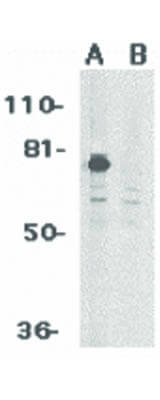
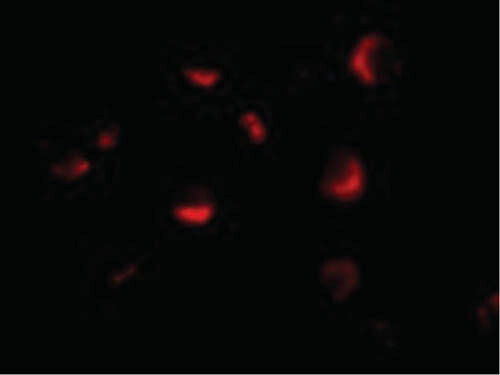
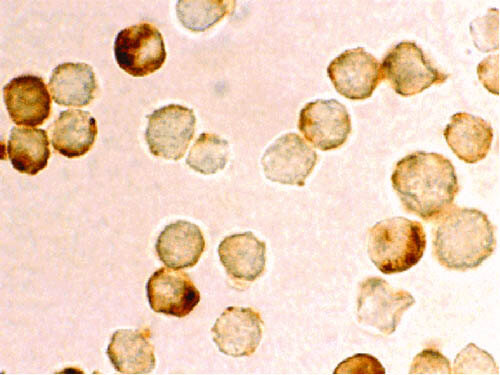
- ELISA, IHC, WB, IF
- Concentration:
- 1 mg/ml
- Physical State:
- Liquid
- Species Reactivity:
- Human
- Storage Conditions:
- -20[o]C aliquoted. Aliquot. Avoid freeze/thaw cycles., 2-8[o]C diluted. Aliquot. Avoid freeze/thaw cycles.
- Supplier:
- Rockland Inc
- Host:
- Rabbit
- Reactivities:
- Human, Mouse, Rat
- Buffer:
- 0.01 M Sodium Phosphate, 0.25 M Sodium Chloride
- Immunogen:
- Anti-PID antibody was prepared from whole rabbit serum produced by repeated immunizations with a 17 amino acid peptide near the C-terminus of human PID.
- Formulation:
- 0.01 M Sodium Phosphate, 0.25 M Sodium Chloride, pH 7.2
- Uniprot:
- O94776
- Synonyms:
- metastasis -associated gene 1-like 1;metastasis associated gene family, member 2;metastasis-associated 1-like 1;metastasis-associated protein 2;metastasis-associated protein MTA2;MTA1-L1 protein;MTA1L1;p53 target protein in deacetylase complex;PID
- Extra Details:
- The p53 tumor-suppressor gene integrates numerous signals that control cell life and death. Several novel molecules involved in p53 pathway, including Chk2, p53R2, p53AIP1, Noxa, PIDD, and PID/MTA2, were recently discovered. The transcriptional activity of p53 is modulated by protein stability and acetylation. PID/MTA2, also termed MTA1-L1, was found to be a subunit of nucleosome remodeling and deacetylating (NRD/NuRD) complex. PID/MTA2 modulates the enzymatic activity of the histone deacetylase complex and its expression reduces the levels of acetylated p53. Deacetylation of p53 by PID/MTA2 represses p53-dependent transcriptional activation and modulates p53-mediated cell growth arrest and apoptosis. PID/MTA2 is ubiquitously expressed in human tissues.
- Shipping Conditions:
- Dry Ice