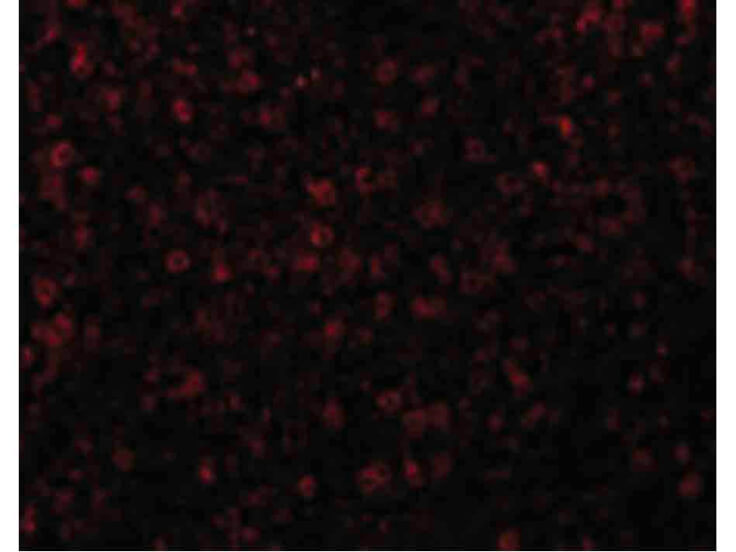
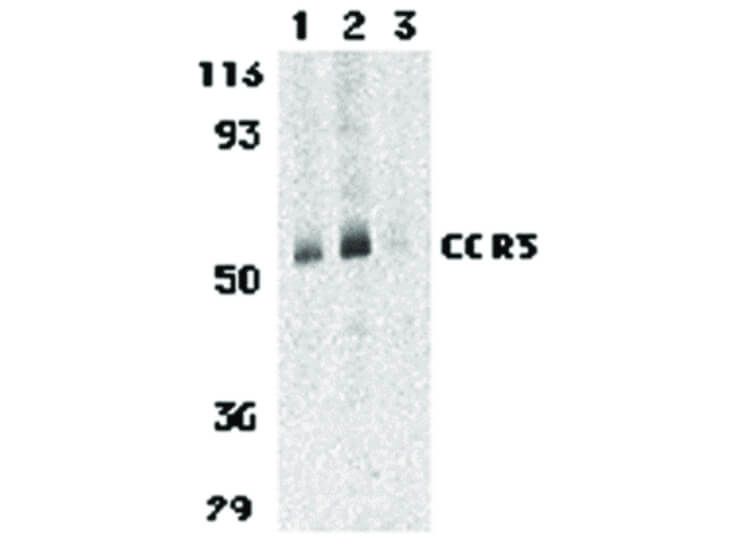
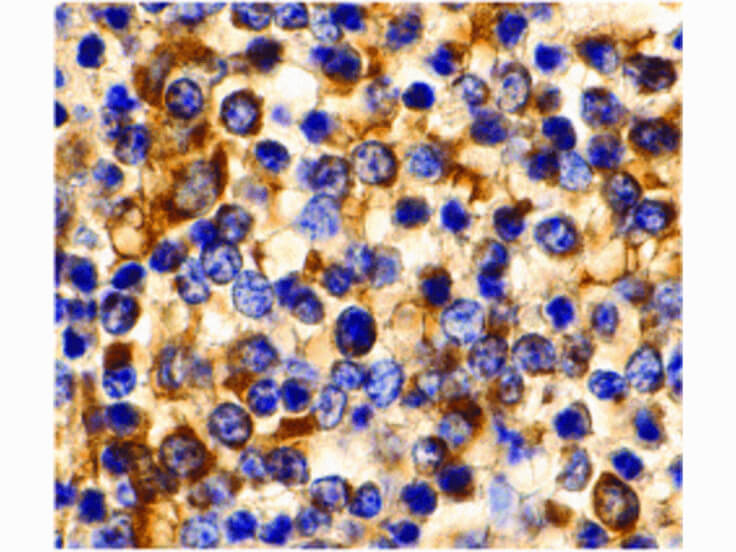
200-401-AG3
CCR3 Antibody

Cannot supply to this region.
- SKU:
- 200-401-AG3
- Additional Names:
- CCR3|CCR3 Antibody, CKR3, CD193, CMKBR3, CC-CKR-3, C-C chemokine receptor type 3, Eosinophil eotaxin receptor, C-C CKR-3
- Application:
- ELISA, IHC, WB, IF
- Concentration:
- 1 mg/ml
- Physical State:
- Liquid
- Species Reactivity:
- Human
- Storage Conditions:
- 2-8[o]C
- Supplier:
- Rockland Inc
- Host:
- Rabbit
- Reactivities:
- Human, Mouse, Rat
- Buffer:
- 0.01 M Sodium Phosphate, 0.25 M Sodium Chloride
- Immunogen:
- Anti-CCR3 antibody was prepared from whole rabbit serum produced by repeated immunizations with a 14 amino acid synthetic peptide from near the C-terminus of human CCR3.
- Formulation:
- 0.01 M Sodium Phosphate, 0.25 M Sodium Chloride, pH 7.2
- Uniprot:
- P51677
- Synonyms:
- b-chemokine receptor;C C CKR3;C-C chemokine receptor type 3;C-C CKR-3;CC chemokine receptor 3;CC-CKR-3;CCR-3;CD193;chemokine (C-C motif) receptor 3;CKR 3;CKR3;CMKBR3;eosinophil CC chemokine receptor 3;eosinophil eotaxin receptor
- Extra Details:
- Human immunodeficiency virus (HIV) and related virus require coreceptors to infect target cells. Some G protein-coupled receptors including CCR5, CXCR4, CCR3, CCR2b, CCR8, GPR15, STRL33, and CX3CR1 in the chemokine receptor family were recently identified as HIV coreceptors. CCR5, CXCR4 and CCR3 are the principal receptors for HIV fusion and entry of target cells. CCR3 facilitates infection by a subset of virus. CCR3 and CCR5 promote efficient infection of microglia, the major target cells in the CNS. High levels of CCR3 and CXCR4 expression were found on the neurons from both the central and peripheral nervous systems. The CCR3 ligand, eotaxin, and an anti-CCR3 antibody inhibited HIV infection of microglia. These results indicate CCR3 plays an important role in HIV infection of CNS.
- Shipping Conditions:
- Blue Ice