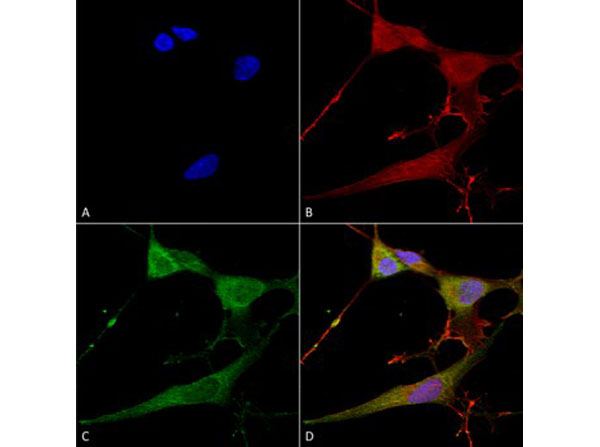
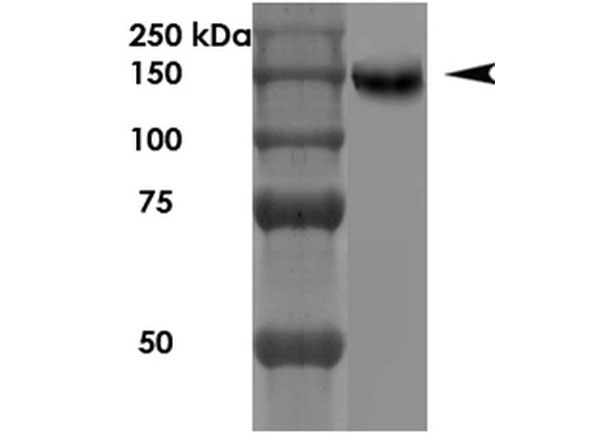
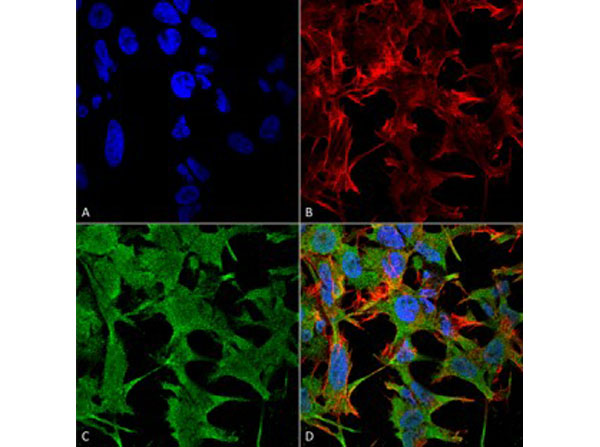
200-301-W74
NrCAM Antibody

Cannot supply to this region.
- SKU:
- 200-301-W74
- Additional Names:
- Neuronal cell adhesion molecule, Bravo, hBravo, KIAA0343, MGC138845, MGC138846, Neuronal surface protein Bravo, Ng CAM related, Ng-CAM-related, NgCAM related cell adhesion molecule, NgCAM-related cell adhesion molecule, Nr CAM, Nr-CAM|Nrcam
- Application:
- ELISA, IHC, WB
- Concentration:
- 1 mg/ml
- Physical State:
- Liquid
- Species Reactivity:
- Mouse
- Storage Conditions:
- -20[o]C aliquoted. Aliquot. Avoid freeze/thaw cycles., 2-8[o]C diluted. Aliquot. Avoid freeze/thaw cycles.
- Supplier:
- Rockland Inc
- Host:
- Mouse
- Reactivities:
- Human, Mouse, Rat
- Buffer:
- 0.02 M Potassium Phosphate, 0.15 M Sodium Chloride
- Immunogen:
- Anti-NrCAM Antibody was produced by repeated immunization of mice with a fusion protein containing amino acids 30-845 of mouse NrCAM.
- Formulation:
- 0.02 M Potassium Phosphate, 0.15 M Sodium Chloride, pH 7.2
- Clone:
- S364-51
- Uniprot:
- Q810U4
- Synonyms:
- B;Bravo;C030017F07Rik;C130076O07Rik;mBravo;mKIAA0343;neuron-glia-CAM-related cell adhesion molecule;neuronal cell adhesion molecule;neuronal surface protein Bravo;ng-CAM-related;ngCAM-related cell adhesion molecule;nr-CAM
- Extra Details:
- Neuronal cell adhesion molecule (NrCAM) is a cell surface protein of the immunoglobulin (Ig) superfamily. NrCAM (also known as Bravo) contains six Ig domains, five fibronectin repeats, a transmembrane region and an intracellular domain. NrCAM is expressed in brain, spinal cord, peripheral nervous system and pancreas. In the spinal cord, NrCAM acts as a ligand for axonin-1 to guide commissural axons across the floor plate. NrCAM also acts as a ligand for F3 to control actin-dependent growth cone motility. NrCAM interacts with neurofascin and may facilitate the clustering of the cystoskeletal protein ankyrin G and the voltage-dependent sodium channel proteins at the node of Ranvier. NrCAM expression may play a role in the severity of certain types of tumors. NrCAM is overexpressed in high-grade astrocytomas, gliomas and glioblastoma tumor tissues. Anti-NrCam is ideal for research in Cancer and Neuroscience. In the pancreas, NrCAM expression is upregulated in intraductal hyperplasia. Antisense NrCAM reduces the tumorigenic properties of human glioblastoma cells in vitro and slowed tumor growth in vivo. The gene encoding human NrCAM maps to chromosome 7q31.1-q31.2.
- Shipping Conditions:
- Blue Ice