200-301-W55
GFAP Antibody

Cannot supply to this region.
- SKU:
- 200-301-W55
- Additional Names:
- GFAP|Glial fibrillary acidic protein, Intermediate filament protein, Astrocyte, gfapl, DKFZp459C0729, MGC139638, FLJ45472, AI836096, GFAP antibody
- Application:
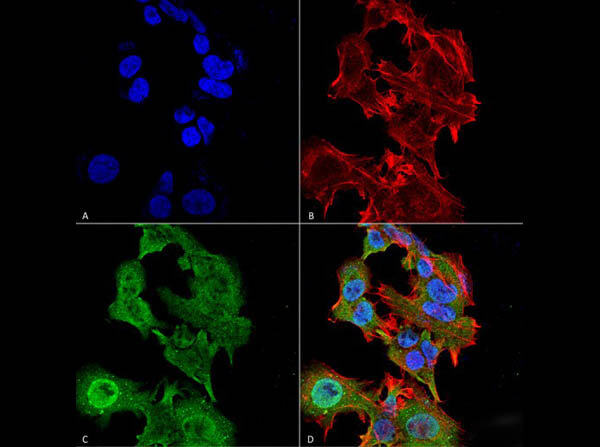
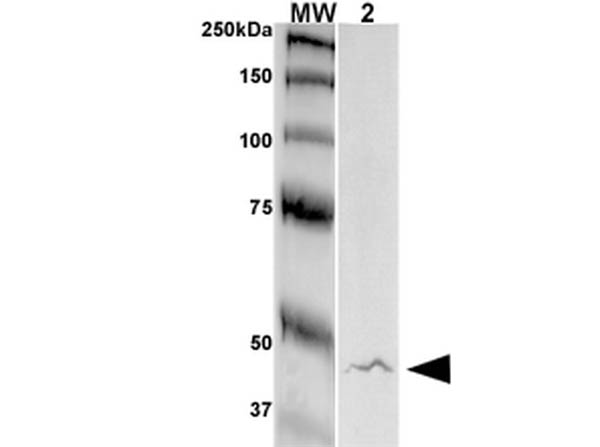
- IHC, WB, IF
- Concentration:
- 1 mg/ml
- Physical State:
- Liquid
- Species Reactivity:
- Human
- Storage Conditions:
- -20[o]C aliquoted. Aliquot. Avoid freeze/thaw cycles., 2-8[o]C diluted. Aliquot. Avoid freeze/thaw cycles.
- Supplier:
- Rockland Inc
- Host:
- Mouse
- Reactivities:
- Human, Mouse, Rat
- Buffer:
- 0.02 M Potassium Phosphate, 0.15 M Sodium Chloride
- Immunogen:
- Anti-GFAP Antibody was produced in mice by repeated immunizations with a synthetic peptide corresponding to amino acids 411-422 (KTVEMRDGEVIK) of human GFAP.
- Formulation:
- 0.02 M Potassium Phosphate, 0.15 M Sodium Chloride, pH 7.2
- Clone:
- S206A-8
- Uniprot:
- P14136
- Synonyms:
- ALXDRD;glial fibrillary acidic protein
- Extra Details:
- The 50 kDa type III intermediate filament protein glial fibrillary acidic protein (GFAP) is a major structural component of astrocytes. GFAP associates with the calcium binding protein annexin II-p2 and S-100. Association with these proteins together with phosphorylation regulates GFAP polymerization. Astroycytes respond to brain injury by proliferatin (astrogliosis), and one of the first events to occur during astrocyte proiliferation is increased GFAP expression. Interestingly, antibodies to GFAP have been detected in individuals with dementia. Anti-GFAP is ideal for investigators involved in Neuroscience Research, including Alexander Disease, Oligodendroglioma, Cytoskleton Remolding Neurofilaments and PIP3/AKT Signaling.
- Shipping Conditions:
- Dry Ice