200-301-B59
TRPC6 Antibody

Cannot supply to this region.
- SKU:
- 200-301-B59
- Additional Names:
- mouse anti-TRPC6 Antibody, TRPC 6, TRP6, short transient receptor potential channel 6 and transient receptor potential cation channel subfamily C member 6|TRPC6
- Application:
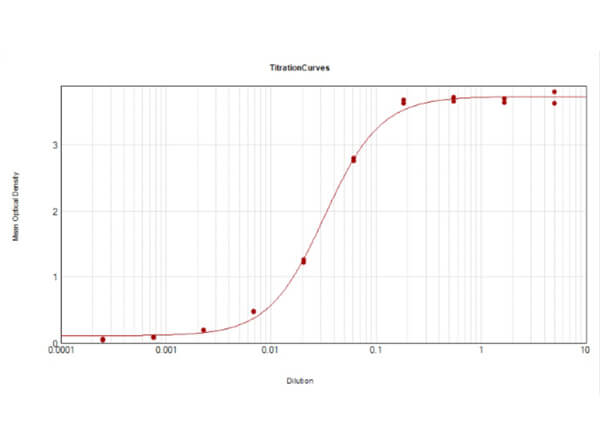
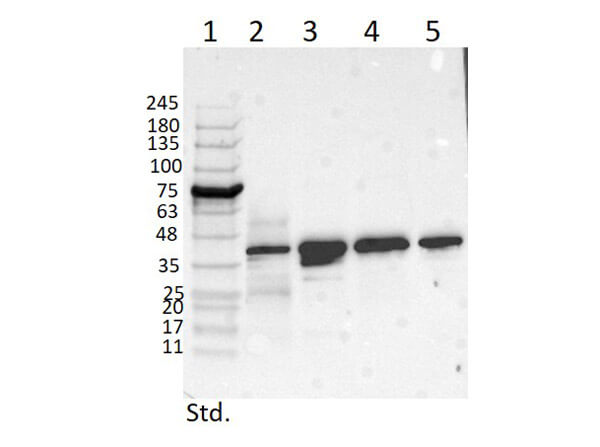
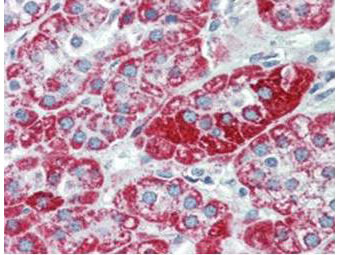
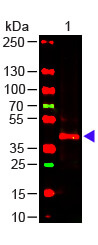
- ELISA, IHC, WB
- Concentration:
- 0.964 mg/ml
- Physical State:
- Liquid
- Species Reactivity:
- Human
- Storage Conditions:
- -20[o]C aliquoted. Aliquot. Avoid freeze/thaw cycles., 2-8[o]C diluted. Aliquot. Avoid freeze/thaw cycles.
- Supplier:
- Rockland Inc
- Host:
- Mouse
- Reactivities:
- Human, Mouse
- Buffer:
- 0.02 M Potassium Phosphate, 0.15 M Sodium Chloride
- Immunogen:
- This monoclonal antibody was produced by repeated immunizations with a synthetic peptide corresponding to a region near the carboxy terminus of human TRPC6 protein.
- Formulation:
- 0.02 M Potassium Phosphate, 0.15 M Sodium Chloride, pH 7.2
- Clone:
- 3F2.H10.F2
- Uniprot:
- Q9Y210
- Synonyms:
- focal segmental glomerulosclerosis 2;FSGS2;short transient receptor potential channel 6;transient receptor protein 6;TRP-6;TRP6
- Extra Details:
- TRPC6, also known as TRP6, short transient receptor potential channel 6 and transient receptor potential cation channel subfamily C member 6, is thought to form a receptor-activated non-selective calcium permeant cation channel. TRPC6 is probably operated by a phosphatidylinositol second messenger system activated by receptor tyrosine kinases or G-protein coupled receptors. It is activated by diacylglycerol (DAG) in a membrane-delimited fashion, independently of protein kinase C and may not to be activated by intracellular calcium store depletion. Defects in this gene are a cause of focal segmental glomerulosclerosis (FSGS). Expression of this protein has been reported in tissues such as placenta, lung, spleen, ovary, small intestine, and renal podocytes. Immunohistochemistry studies using polyclonal antibodies to this target have shown moderate to strong staining in cell types such as neurons, breast, respiratory, squamous and prostate epithelium, epidermis, placental trophoblasts, dendritic cells, and subsets of immune cells, and faint to moderate staining of adrenal, colon, ganglion cells, hepatocytes, heart, and testis.
- Shipping Conditions:
- Dry Ice