100-401-395
Protective Protein/Cathepsin A Antibody

Cannot supply to this region.
- SKU:
- 100-401-395
- Additional Names:
- CTSA, PPGB|rabbit anti-Protective Protein Antibody, rabbit anti-Cathepsin A Antibody, Beta Galactosidase Protective Protein antibody, Carboxypeptidase C antibody, Cathepsin A antibody, CTSA antibody, Glactosialidosis antibody, GLB2 antibody, Goldberg Syndrome antibody
- Application:
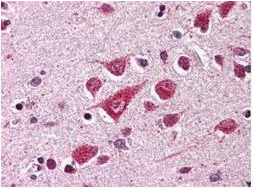
- ELISA, IHC, WB, IP
- Concentration:
- 80 mg/ml
- Physical State:
- Liquid
- Species Reactivity:
- Human
- Storage Conditions:
- -20[o]C aliquoted. Aliquot. Avoid freeze/thaw cycles., 2-8[o]C diluted. Aliquot. Avoid freeze/thaw cycles.
- Supplier:
- Rockland Inc
- Host:
- Rabbit
- Reactivities:
- Human
- Buffer:
- 0.02 M Potassium Phosphate, 0.15 M Sodium Chloride
- Immunogen:
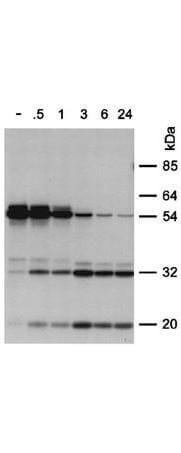
- This whole rabbit serum was prepared by repeated immunizations with native 54-kDa human Protective Protein/Cathepsin A (PPCA) precursor, purified from the medium of baculovirus infected insect cells.
- Formulation:
- 0.02 M Potassium Phosphate, 0.15 M Sodium Chloride, pH 7.2
- Format:
- Antiserum
- Uniprot:
- P10619, P10619.2
- Synonyms:
- beta-galactosidase 2;beta-galactosidase protective protein;carboxypeptidase C;Carboxypeptidase L;carboxypeptidase Y-like kininase;carboxypeptidase-L;Cathepsin A;deamidase;GLB2;GSL;lysosomal carboxypeptidase A;lysosomal protective protein;NGBE;PPCA;PPGB;protective protein cathepsin A;Protective protein for beta-galactosidase;urinary kininase
- Extra Details:
- Lysosomal protective protein/cathepsin A (PPCA) is a lysosomal serine carboxypeptidase that forms an intralysosomal enzyme-complex with b-galactosidase and neuraminidase (NEU1). PPCA is synthesized as a 54-kDa precursor/zymogen, and proteolytically cleaved in the lysosome into a catalytically active 32- and 20-kDa two-chain enzyme. The enzyme has cathepsin A activity at acidic pH but maintains also a deamidase/esterase activity at neutral pH. Furthermore, the human enzyme, purified from platelets and lymphocytes, has been shown to function on the inactivation of selected neuropeptides, like substance P, oxytocin, and endothelin I. The autosomal recessive genetic deficiency of PPCA causes galactosialidosis, a neurodegenerative lysosomal storage disorder, resulting in the secondary deficiencies of b-galactosidase and NEU1.
- Shipping Conditions:
- Dry Ice