000-001-C10
ErpN/OspE Control Protein

Cannot supply to this region.
- SKU:
- 000-001-C10
- Additional Names:
- erpN, BB_L39|ErpN, ErpA, outer surface protein E, Borrelia burgdorferi OspE, ospE/F-Related Protein N, control protein
- Application:
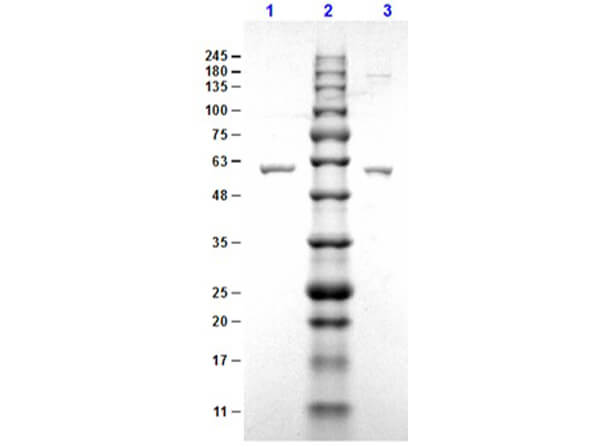
- ELISA, SDS-PAGE, WB, Functional Assay
- Concentration:
- 1 mg/ml
- Physical State:
- Liquid
- Purity:
- >90%
- Storage Conditions:
- Please refer to datasheet
- Supplier:
- Rockland Inc
- Buffer:
- 0.02 M Potassium Phosphate, 0.15 M Sodium Chloride
- Immunogen:
- erpN, BB_L39
- Formulation:
- 0.02 M Potassium Phosphate, 0.15 M Sodium Chloride, pH 7.2
- Species:
- Bacteria
- Synonyms:
- BB_L39;BB_RS07085;plasminogen-binding protein ErpA
- Extra Details:
- ErpN (OspE/F-Related Protein N), is from the spirochete Borrelia burgdorferi, which is carried by Ixodes ticks. Erp proteins from Borrelia burgdorferi are postulated to be lipoproteins, based on their predicted amino acid sequences. The spirochete migrates from the tick midgut during feeding to its salivary glands and are thus transmitted to the mammal host. This transition may be facilitated by changes in expression of some B. burgdorferi genes. It is believed that expression of the various proteins associated with the spirochete may be regulated by the changes in tick life cycle, changes in conditions during tick feeding (such as temperature, pH, and nutrients) and/or in coordination with the course of infection of the mammal host. Several studies have demonstrated that infected humans and animals produce antibodies directed against Erp proteins within the first 2-4 weeks of infection, indicative of Erp synthesis during the initial stages of vertebrate infection. It is postulated that surface-exposed Erp proteins could facilitate interactions with host tissues during the establishment of vertebrate infection. Lyme disease proteins are ideal for researchers interested in immunology, neurology, and rheumatology, coinfections, autoimmune, and neurodegenerative diseases.
- Shipping Conditions:
- Dry Ice