GTX89126
CYLD antibody, Internal

Cannot supply to this region.
- SKU:
- GTX89126
- Additional Names:
- CYLD lysine 63 deubiquitinase , 2010013M14Rik , 2900009M21Rik , C130039D01Rik , CDMT , CYLD1 , EAC , mKIAA0849
- Application:
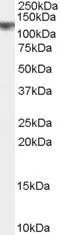
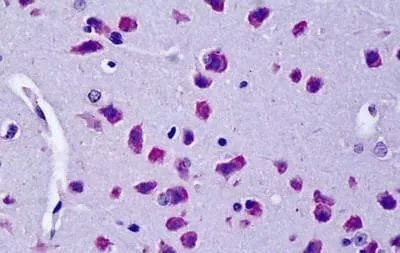
- WB, IHC-P
- Concentration:
- 0.50 mg/ml
- Physical State:
- Liquid
- Species Reactivity:
- Mouse
- Purification:
- Ammonium Sulfate Precipitated; Affinity Purified
- Storage Conditions:
- -20[o]C Aliquot. Avoid freeze/thaw cycles. Store undiluted., 2-8[o]C Aliquot. Avoid freeze/thaw cycles. Store undiluted., -20[o]C/-70[o]C Aliquot. Avoid freeze/thaw cycles. Store undiluted.
- Supplier:
- Genetex
- Host:
- Goat
- Reactivities:
- Mouse, Rat
- Buffer:
- TBS, 0.5% BSA, 0.02% Sodium azide.
- Immunogen:
- Peptide with sequence C-DSQQSKSKNPWYIDE, from the internal region of the protein sequence according to NP_775545.1.
- Uniprot:
- Q80TQ2
- Synonyms:
- 2010013M14Rik;2900009M21Rik;C130039D01Rik;CDMT;CYLD1;cylindromatosis (turban tumor syndrome);deubiquitinating enzyme CYLD;EAC;mKIAA0849;ubiquitin carboxyl-terminal hydrolase CYLD;ubiquitin thioesterase CYLD;ubiquitin thiolesterase CYLD;ubiquitin-specific-processing protease CYLD
- Extra Details:
- This gene encodes a protein that is a member of the ubiquitin C-terminal hydrolase subfamily of the deubiquitinating enzyme family. Members of this family catalyze the removal of ubiquitin from a substrate or another ubiquitin molecule and thereby play important roles in regulating signaling pathways, recycling ubiquitin and regulating protein stability. This protein removes ubiquitin from K-63-linked ubiquitin chains from proteins involved in NF-kappaB signaling and thus acts as a negative regulator of this pathway. In humans mutations in this gene have been associated with cylindromatosis, an autosomal dominant predisposition to tumors of skin appendages. In mouse deficiency of this gene impairs thymocyte development and increases susceptibility to skin and colon tumors. A pseudogene of this gene has been identified on chromosome 1. Alternative splicing results in multiple transcript variants that encode different protein isoforms. [provided by RefSeq, Jan 2013]
- Shipping Conditions:
- Blue Ice