GTX85701
SPANXC antibody

Cannot supply to this region.
- SKU:
- GTX85701
- Additional Names:
- SPANX family member C , C , CT11.3 , CTp11 , SPANXC
- Application:
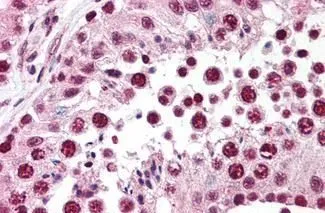
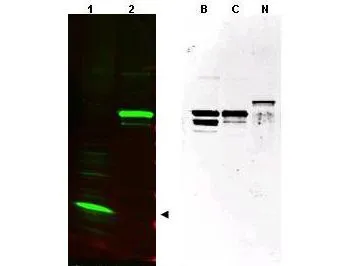
- ELISA, WB, IHC-P
- Concentration:
- 1 mg/ml
- Physical State:
- Liquid
- Species Reactivity:
- Human
- Purification:
- Affinity Purified
- Storage Conditions:
- -20[o]C Aliquot. Avoid freeze/thaw cycles. Store undiluted., 2-8[o]C Aliquot. Avoid freeze/thaw cycles. Store undiluted., -20[o]C/-70[o]C Aliquot. Avoid freeze/thaw cycles. Store undiluted.
- Supplier:
- Genetex
- Host:
- Rabbit
- Reactivities:
- Human
- Buffer:
- 20mM Potassium Phosphate, 150mM NaCl, 0.01% Sodium azide.
- Immunogen:
- Synthetic peptide corresponding to an internal region near amino acids 25-50 of human SPANX protein.
- Uniprot:
- Q8TAD1, Q9NY87
- Synonyms:
- cancer-testis-associated protein CTp11;cancer/testis antigen 11.3;cancer/testis antigen family 11, member 3;Cancer/testis-associated protein CTp11;cancer/testis-associated protein of 11 kD;CT11.3;CTp11;nuclear-associated protein SPAN-Xc;Nuclear-associated protein SPAN-Xe;SPAN-Xc protein;SPANX family member C;SPANX-C;SPANX-E;SPANXE;sperm protein associated with the nucleus on the X chromosome C;Sperm protein associated with the nucleus on the X chromosome E;sperm protein associated with the nucleus, X chromosome, family member C
- Extra Details:
- Temporally regulated transcription and translation of several testis-specific genes is required to initiate the series of molecular and morphological changes in the male germ cell lineage necessary for the formation of mature spermatozoa. This gene is a member of the SPANX family, which is located in a gene cluster on chromosome X. The SPANX genes encode differentially expressed testis-specific proteins that localize to various subcellular compartments. This particular gene encodes a protein that localizes to the nucleus and is expressed in highly metastatic cell lines, making the protein a potential diagnostic and prognostic marker. The protein belongs to a family of cancer/testis antigens and represents a potential target for cancer immunotherapy. [provided by RefSeq, Jul 2008]
- Shipping Conditions:
- Blue Ice