GTX85504
CTRP4 antibody

Cannot supply to this region.
- SKU:
- GTX85504
- Additional Names:
- C1q and TNF related 4 , CTRP4 , ZACRP4
- Application:
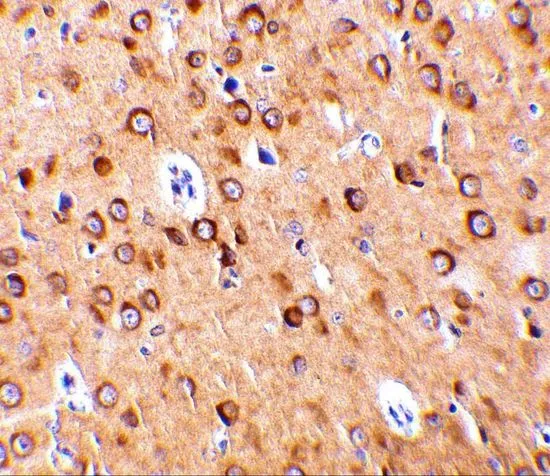
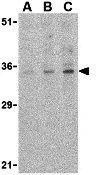
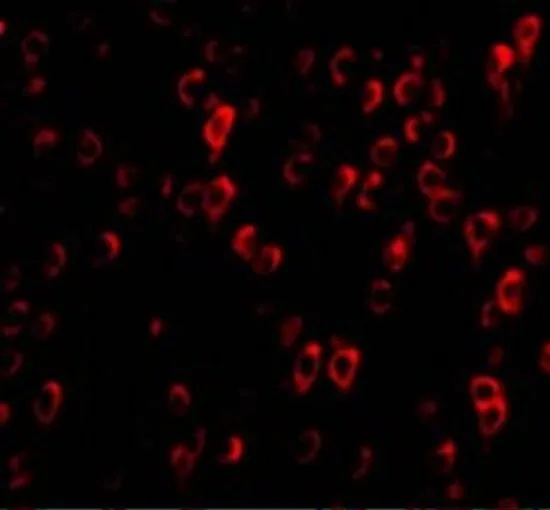
- ELISA, WB, IHC-P, IF, ICC
- Concentration:
- 1 mg/ml
- Physical State:
- Liquid
- Species Reactivity:
- Human
- Purification:
- Affinity Purified
- Storage Conditions:
- -20[o]C Aliquot. Avoid freeze/thaw cycles. Store undiluted., 2-8[o]C Aliquot. Avoid freeze/thaw cycles. Store undiluted., -20[o]C/-70[o]C Aliquot. Avoid freeze/thaw cycles. Store undiluted.
- Supplier:
- Genetex
- Host:
- Rabbit
- Reactivities:
- Human, Mouse, Rat
- Buffer:
- PBS, 0.02% Sodium azide.
- Immunogen:
- CTRP4 antibody was raised against a 16 amino acid synthetic peptide from near the carboxy terminus of human CTRP4.The immunogen is located within amino acids 240 - 290 of CTRP4.
- Uniprot:
- Q9BXJ3
- Synonyms:
- C1q and tumor necrosis factor related protein 4;C1q/TNF-related protein 4;complement C1q tumor necrosis factor-related protein 4;complement-c1q tumor necrosis factor-related protein 4;CTRP4;ZACRP4
- Extra Details:
- Adipose tissue of an organism plays a major role in regulating physiologic and pathologic processes such as metabolism and immunity by producing and secreting a variety of bioactive molecules termed adipokines (reviewed in 1). One highly conserved family of adipokines is adiponectin/ACRP30 and its structural and functional paralogs, the C1q/tumor necrosis factor-?-related proteins (CTRPs) 1-7 (2). Unlike adiponectin, which is expressed exclusively by differentiated adipocytes, the CTRPs are expressed in a wide variety of tissues (3). These proteins are thought to act mainly on liver and muscle tissue to control glucose and lipid metabolism. An analysis of the crystal structure of adiponectin revealed a structural and evolutionary link between TNF and C1q-containing proteins, suggesting that these proteins arose from a common ancestral innate immunity gene (4). Multiple isoforms of mouse CTRP4 have been reported.
- Shipping Conditions:
- Blue Ice