
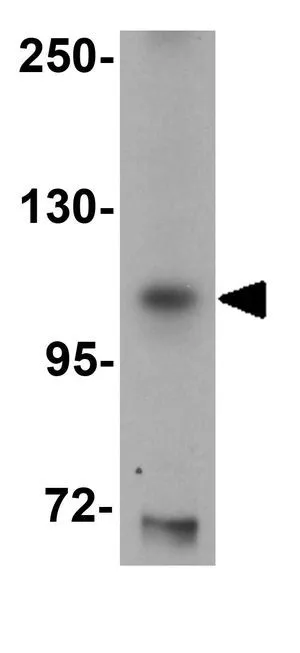
GTX85106
SIRT1 antibody

Cannot supply to this region.
- SKU:
- GTX85106
- Additional Names:
- sirtuin 1 , SIR2 , SIR2L1 , SIR2alpha
- Application:
- ELISA, WB, IHC-P
- Concentration:
- 1 mg/ml
- Physical State:
- Liquid
- Species Reactivity:
- Human
- Purification:
- Affinity Purified
- Storage Conditions:
- -20[o]C Aliquot. Avoid freeze/thaw cycles. Store undiluted., 2-8[o]C Aliquot. Avoid freeze/thaw cycles. Store undiluted., -20[o]C/-70[o]C Aliquot. Avoid freeze/thaw cycles. Store undiluted.
- Supplier:
- Genetex
- Host:
- Chicken/Avian
- Reactivities:
- Human, Mouse, Rat
- Buffer:
- PBS, 0.02% Sodium azide.
- Immunogen:
- SIRT1 antibody was raised against a 19 amino acid synthetic peptide near the amino terminus of human SIRT1.The immunogen is located within the first 50 amino acids of SIRT1.
- Uniprot:
- Q96EB6
- Synonyms:
- NAD-dependent protein deacetylase sirtuin-1;NAD-dependent protein deacylase sirtuin-1;regulatory protein SIR2 homolog 1;SIR2;SIR2-like protein 1;SIR2alpha;SIR2L1;sirtuin type 1
- Extra Details:
- The Silent Information Regulator (SIR2) family of genes are highly conserved from prokaryotes to eukaryotes and have important functions in the regulation of metabolism, growth and differentiation, inflammation, cellular survival, as well as in senescence and lifespan extension. Sirtuins, including SIRT1-7, are human homologs of yeast Sir2p. Sirtuins are NAD+-dependent histone/protein deacetylases (HDAC) which regulate cellular metabolism, e.g. energy metabolism, and thereby are associated with aging and several age-related diseases. SIRT1 has the closest homology to the yeast Sir2p and is widely expressed in fetal and adult tissues. SIRT1 regulates the p53-dependent DNA damage response pathway by binding to and deacetylating p53, specifically via lysine residue.
- Shipping Conditions:
- Blue Ice