GTX85086
AATF antibody

Cannot supply to this region.
- SKU:
- GTX85086
- Additional Names:
- apoptosis antagonizing transcription factor , BFR2 , CHE-1 , CHE1 , DED
- Application:
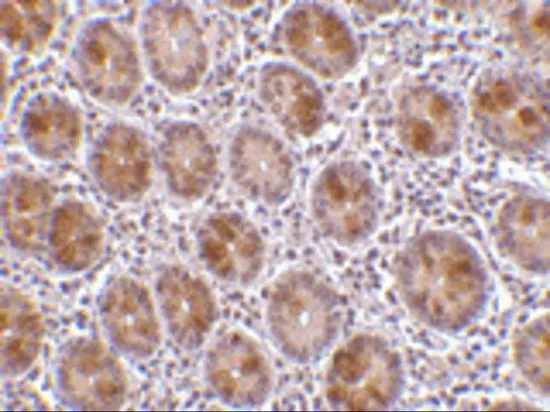
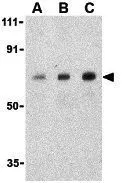
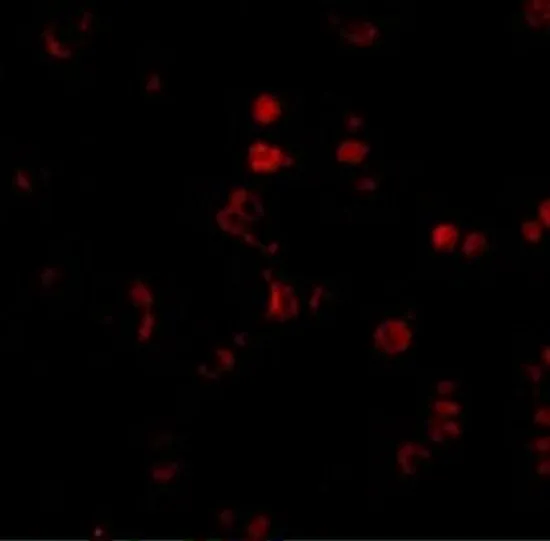
- ELISA, WB, IHC-P
- Concentration:
- 1 mg/ml
- Physical State:
- Liquid
- Species Reactivity:
- Human
- Purification:
- Affinity Purified
- Storage Conditions:
- -20[o]C Aliquot. Avoid freeze/thaw cycles. Store undiluted., 2-8[o]C Aliquot. Avoid freeze/thaw cycles. Store undiluted., -20[o]C/-70[o]C Aliquot. Avoid freeze/thaw cycles. Store undiluted.
- Supplier:
- Genetex
- Host:
- Rabbit
- Reactivities:
- Human, Mouse
- Buffer:
- PBS, 0.02% Sodium azide.
- Immunogen:
- AATF antibody was raised against a 12 amino acid synthetic peptide from near the carboxy terminus of human AATF.The immunogen is located within the last 50 amino acids of AATF.
- Uniprot:
- Q9NY61
- Synonyms:
- Apoptosis-antagonizing transcription factor;BFR2;CHE-1;CHE1;DED;protein AATF;rb-binding protein Che-1
- Extra Details:
- AATF (apoptosis antagonizing transcription factor) was initially discovered as an interaction partner of ZIP kinase (ZIPK) (1), a member of death-associated protein (DAP) kinase family of pro-apoptotic serine/threonine kinases (2). AATF is a phosphoprotein containing an acidic region and a putative leucine zipper domain and nuclear localization signal, features which are typical of transcription factors. AATF inhibits the ZIPK-mediated pro-apoptotic pathway and may activate other anti-apoptotic pathways (3). Recently, it has also been shown to protect neural cells against oxidative damage induced by amyloid b-peptide and to inhibit aberrant production of the b-peptide by interacting with Par-4 (prostate apoptosis response-4), another pro-apoptotic leucine zipper protein that is associated with neuronal degeneration in Alzheimer's disease (AD) (4,5), suggesting that AATF may have potential therapeutic applications in both familial and sporadic forms of AD.
- Shipping Conditions:
- Blue Ice