GTX85024
STK39 antibody

Cannot supply to this region.
- SKU:
- GTX85024
- Additional Names:
- serine/threonine kinase 39 , DCHT , PASK , SPAK
- Application:
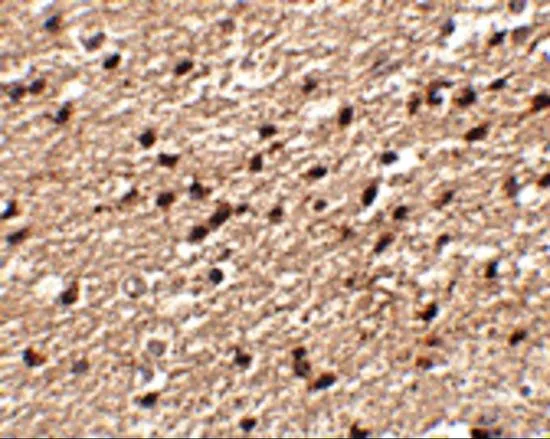
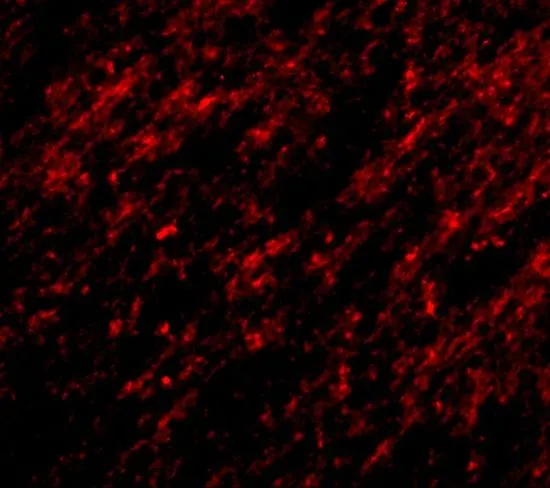
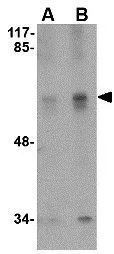
- ELISA, WB, IHC-P
- Concentration:
- 1 mg/ml
- Physical State:
- Liquid
- Species Reactivity:
- Human
- Purification:
- Affinity Purified
- Storage Conditions:
- -20[o]C Aliquot. Avoid freeze/thaw cycles. Store undiluted., 2-8[o]C Aliquot. Avoid freeze/thaw cycles. Store undiluted., -20[o]C/-70[o]C Aliquot. Avoid freeze/thaw cycles. Store undiluted.
- Supplier:
- Genetex
- Host:
- Rabbit
- Reactivities:
- Human, Mouse
- Buffer:
- PBS, 0.02% Sodium azide.
- Immunogen:
- Stk39 antibody was raised against a 19 amino acid synthetic peptide from near the carboxy terminus of human Stk39.The immunogen is located within amino acids 450 - 500 of Stk39.
- Uniprot:
- Q9UEW8
- Synonyms:
- DCHT;PASK;proline-alanine-rich STE20-related kinase;serine threonine kinase 39 (STE20/SPS1 homolog, yeast);serine/threonine-protein kinase 39;small intestine SPAK-like kinase;SPAK;ste-20-related kinase;Ste20-like protein kinase;STE20/SPS1 homolog;STE20/SPS1-related proline-alanine-rich protein kinase
- Extra Details:
- The serine/threonine kinase Stk39 belongs to the STE20 family, a group of kinases that are known to interact with inflammation-related kinases (such as p38, JNK, NKCC1, PKC-theta, WNK and MLCK), and with transcription factor AP-1. The STE 20 family is involved in diverse biological phenomena, including cell differentiation, cell transformation/ proliferation, cytoskeleton rearrangement, and the regulation of ion transporters. STK39 contains an N-terminal series of proline and alanine repeats (PAPA box), followed by a serine/threonine kinase catalytic domain and is abundantly expressed in the brain. STK39 is activated in response to hypotonic stress, leading to phosphorylation of several cation-chloride-coupled co-transporters. The catalytically active kinase specifically activates the p38 MAP kinase pathway, and its interaction with p38 decreases upon cellular stress, suggesting that this kinase may serve as an intermediate in the response to cellular stress. Recent studies show that STK39 tend to be a novel candidate gene for autism and hypertension.
- Shipping Conditions:
- Blue Ice