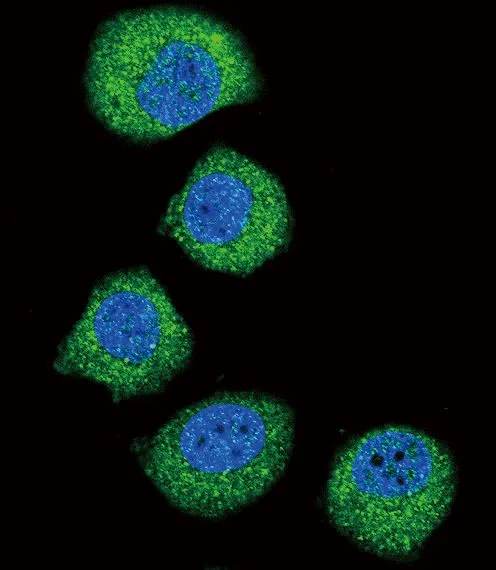
GTX81341
FGFR2 antibody

Cannot supply to this region.
- SKU:
- GTX81341
- Additional Names:
- fibroblast growth factor receptor 2 , BBDS , BEK , BFR-1 , CD332 , CEK3 , CFD1 , ECT1 , JWS , K-SAM , KGFR , TK14 , TK25
- Application:
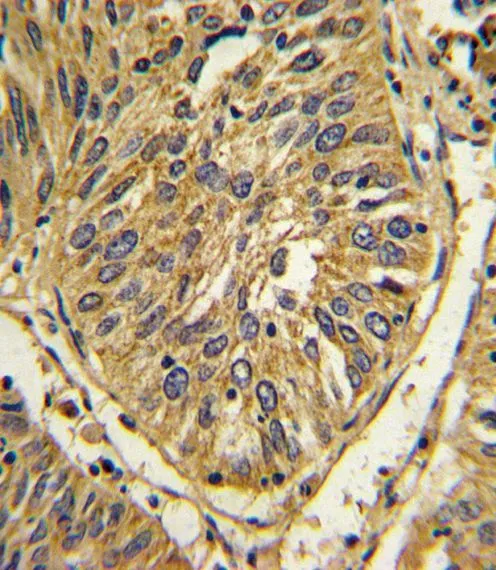
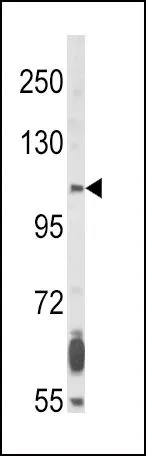
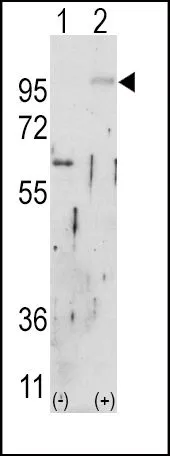
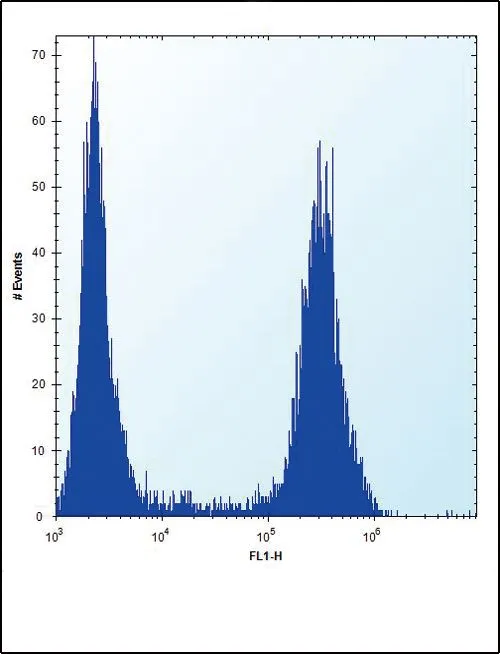
- Flow Cytometry, WB, IHC-P, IF, ICC
- Physical State:
- Liquid
- Species Reactivity:
- Human
- Purification:
- SAS Precipitated; Dialysis
- Storage Conditions:
- -20[o]C Aliquot. Avoid freeze/thaw cycles. Store undiluted., 2-8[o]C Aliquot. Avoid freeze/thaw cycles. Store undiluted., -20[o]C/-70[o]C Aliquot. Avoid freeze/thaw cycles. Store undiluted.
- Supplier:
- Genetex
- Host:
- Rabbit
- Reactivities:
- Human
- Buffer:
- PBS, 0.09% Sodium azide.
- Immunogen:
- This FGFR2 antibody is generated from rabbits immunized with a his tag recombinant protein of human FGFR2.
- Uniprot:
- P21802
- Synonyms:
- bacteria-expressed kinase;BBDS;BEK;BEK fibroblast growth factor receptor;BFR-1;CD332;CEK3;CFD1;ECT1;fibroblast growth factor receptor 2;JWS;K-SAM;keratinocyte growth factor receptor;KGFR;protein tyrosine kinase, receptor like 14;TK14;TK25
- Extra Details:
- The protein encoded by this gene is a member of the fibroblast growth factor receptor family, where amino acid sequence is highly conserved between members and throughout evolution. FGFR family members differ from one another in their ligand affinities and tissue distribution. A full-length representative protein consists of an extracellular region, composed of three immunoglobulin-like domains, a single hydrophobic membrane-spanning segment and a cytoplasmic tyrosine kinase domain. The extracellular portion of the protein interacts with fibroblast growth factors, setting in motion a cascade of downstream signals, ultimately influencing mitogenesis and differentiation. This particular family member is a high-affinity receptor for acidic, basic and/or keratinocyte growth factor, depending on the isoform. Mutations in this gene are associated with Crouzon syndrome, Pfeiffer syndrome, Craniosynostosis, Apert syndrome, Jackson-Weiss syndrome, Beare-Stevenson cutis gyrata syndrome, Saethre-Chotzen syndrome, and syndromic craniosynostosis. Multiple alternatively spliced transcript variants encoding different isoforms have been noted for this gene. [provided by RefSeq, Jan 2009]
- Shipping Conditions:
- Blue Ice