GTX79258
JunB antibody

Cannot supply to this region.
- SKU:
- GTX79258
- Additional Names:
- jun B proto-oncogene
- Application:
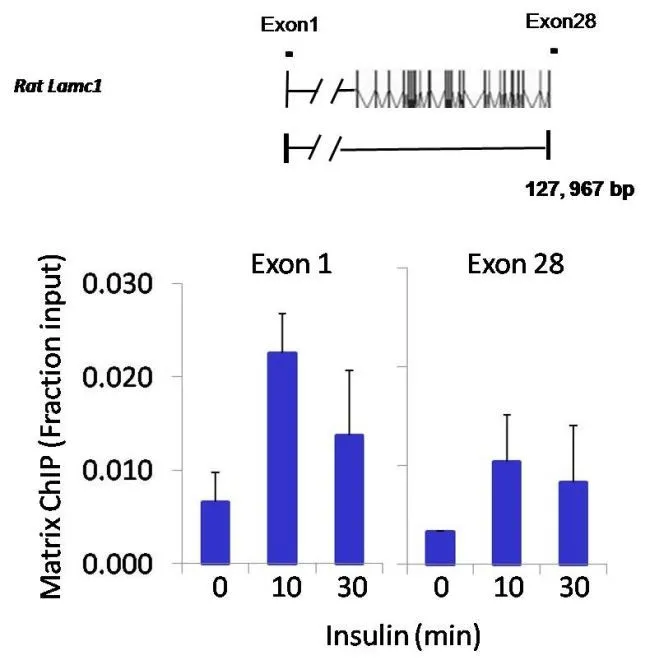
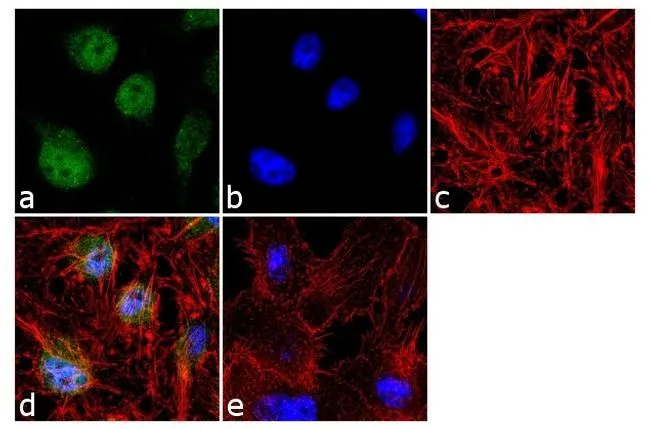
- ChIP, Flow Cytometry, WB, IF, ICC, IP
- Physical State:
- Liquid
- Species Reactivity:
- Human, Mouse
- Purification:
- Purified
- Storage Conditions:
- -20[o]C Aliquot. Avoid freeze/thaw cycles. Store undiluted., 2-8[o]C Aliquot. Avoid freeze/thaw cycles. Store undiluted., -20[o]C/-70[o]C Aliquot. Avoid freeze/thaw cycles. Store undiluted.
- Supplier:
- Genetex
- Host:
- Rabbit
- Reactivities:
- Human, Mouse, Rat
- Buffer:
- No preservatives
- Immunogen:
- Synthetic peptide corresponding to residues D(45) P Y R G L K G P G A R G P G P E(61) of mouse JunB.
- Uniprot:
- P09450
- Synonyms:
- Jun-B oncogene;myD21;transcription factor jun-B
- Extra Details:
- Cellular oncogenes, or proto-oncogenes, play pivotal roles in cellular communication pathways that regulate normal growth, development and differentiation. The cellular oncogene families fos and jun encode nuclear proteins that can function as transcription factors. The fos family of nuclear oncogenes encode cFos, FosB, (fos-related antigen) Fra1, and Fra2. Fos and Jun dimerize to form Activator Protein-1 (AP-1), a transcriptional factor that binds to the 12-O-tetradecanoylphorbol 13-acetate (TPA) response element (TRE) of several cellular and viral genes including human collagenase, metallothionein IIa, stromelysin, interleukin 2, SV40 and polyoma. Fos and Jun contain the 'leucine-zipper' motif that allows for dimerization and an adjacent basic domain required for biological activity. The functionally active form of Fos is in a heterodimer with a member of the Jun family. While Jun family members can form functional homodimers, studies indicate that Fos family members do not self-associate and therefore do not bind DNA on their own. The various dimers differ in their ability to transactivate AP-1 dependent genes.
- Shipping Conditions:
- Blue Ice