GTX66592
Proteasome 20S beta 3 antibody

Cannot supply to this region.
- SKU:
- GTX66592
- Additional Names:
- proteasome subunit beta 3 , HC10-II
- Application:
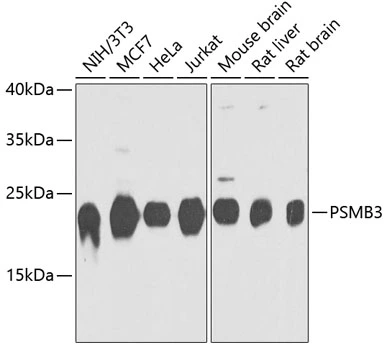
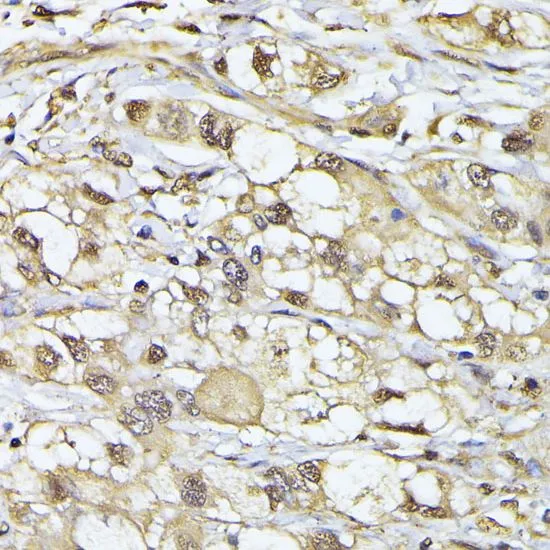
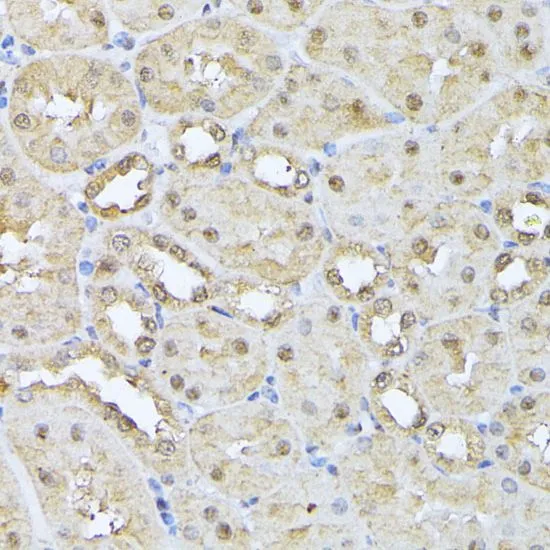
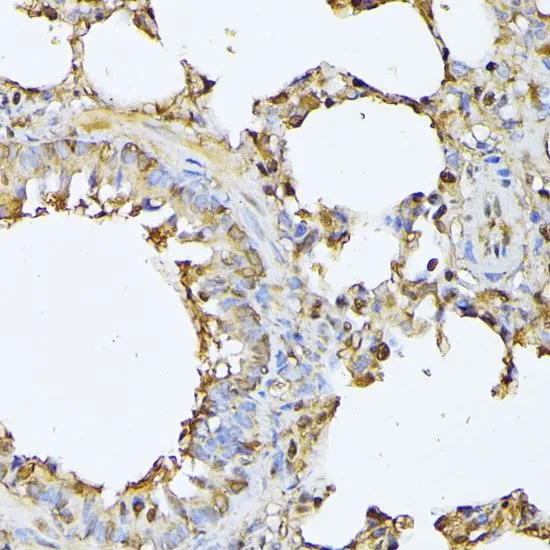
- WB, IHC-P
- Physical State:
- Liquid
- Species Reactivity:
- Human
- Purification:
- Affinity Purified
- Storage Conditions:
- -20[o]C Aliquot. Avoid freeze/thaw cycles. Store undiluted., 2-8[o]C Aliquot. Avoid freeze/thaw cycles. Store undiluted., -20[o]C/-70[o]C Aliquot. Avoid freeze/thaw cycles. Store undiluted.
- Supplier:
- Genetex
- Host:
- Rabbit
- Reactivities:
- Human, Mouse, Rat
- Buffer:
- PBS, 50% Glycerol, 0.02% Sodium azide.
- Immunogen:
- Recombinant funsion protein containing a sequence corresponding to amino acids 1-205 of human PSMB3 (NP_002786.2).
- Uniprot:
- P49720
- Synonyms:
- epididymis secretory sperm binding protein;HC10-II;proteasome (prosome, macropain) subunit, beta type, 3;proteasome chain 13;proteasome component C10-II;proteasome subunit beta 3;proteasome subunit beta type-3;proteasome theta chain
- Extra Details:
- The proteasome is a multicatalytic proteinase complex with a highly ordered ring-shaped 20S core structure. The core structure is composed of 4 rings of 28 non-identical subunits; 2 rings are composed of 7 alpha subunits and 2 rings are composed of 7 beta subunits. Proteasomes are distributed throughout eukaryotic cells at a high concentration and cleave peptides in an ATP/ubiquitin-dependent process in a non-lysosomal pathway. An essential function of a modified proteasome, the immunoproteasome, is the processing of class I MHC peptides. This gene encodes a member of the proteasome B-type family, also known as the T1B family, that is a 20S core beta subunit. The 26 S proteasome may be involved in trinucleotide repeat expansion, a phenomenon which is associated with many hereditary neurological diseases. Pseudogenes have been identified on chromosomes 2 and 12. Alternative splicing results in multiple transcript variants [provided by RefSeq, Sep 2013]
- Shipping Conditions:
- Blue Ice