GTX60156
DIO3 antibody

Cannot supply to this region.
- SKU:
- GTX60156
- Additional Names:
- iodothyronine deiodinase 3 , 5DIII , D3 , DIOIII , TXDI3
- Application:
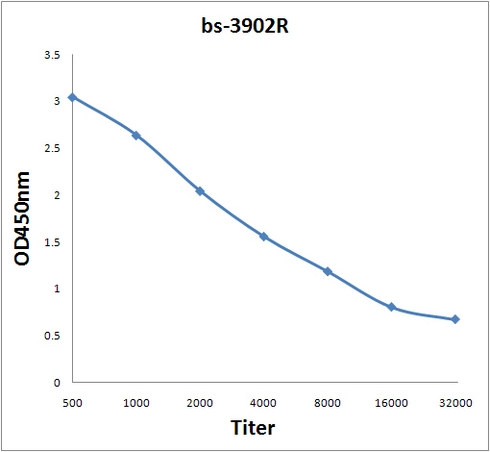
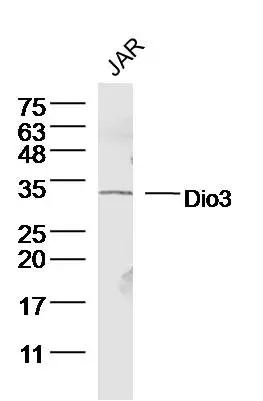
- ELISA, WB
- Concentration:
- 1 mg/ml
- Physical State:
- Liquid
- Species Reactivity:
- Human
- Purification:
- Protein A Purified
- Storage Conditions:
- -20[o]C Aliquot. Avoid freeze/thaw cycles. Store undiluted., 2-8[o]C Aliquot. Avoid freeze/thaw cycles. Store undiluted., -20[o]C/-70[o]C Aliquot. Avoid freeze/thaw cycles. Store undiluted.
- Supplier:
- Genetex
- Host:
- Rabbit
- Reactivities:
- Human, Ovine
- Buffer:
- 1% BSA, 50% Glycerol, 0.09% Sodium azide.
- Immunogen:
- KLH conjugated synthetic peptide derived from human DIO3.
- Uniprot:
- P55073
- Synonyms:
- 5DIII;D3;deiodinase, iodothyronine type III;DIOIII;iodothyronine deiodinase, placental type;selenoprotein DIO3;thyroxine 5-deiodinase;thyroxine deiodinase type III (selenoprotein);TXDI3;type 3 DI;type 3 iodothyronine selenodeiodinase;Type III iodothyronine deiodinase;type-III 5' deiodinase
- Extra Details:
- The protein encoded by this intronless gene belongs to the iodothyronine deiodinase family. It catalyzes the inactivation of thyroid hormone by inner ring deiodination of the prohormone thyroxine (T4) and the bioactive hormone 3,3',5-triiodothyronine (T3) to inactive metabolites, 3,3',5'-triiodothyronine (RT3) and 3,3'-diiodothyronine (T2), respectively. This enzyme is highly expressed in pregnant uterus, placenta, fetal and neonatal tissues, and thought to prevent premature exposure of developing fetal tissues to adult levels of thyroid hormones. It regulates circulating fetal thyroid hormone concentrations, and thus plays a critical role in mammalian development. Knockout mice lacking this gene exhibit abnormalities related to development and reproduction, and increased activity of this enzyme in infants with hemangiomas causes severe hypothyroidism. This protein is a selenoprotein, containing the rare selenocysteine (Sec) amino acid at its active site. Sec is encoded by the UGA codon, which normally signals translation termination. The 3' UTRs of selenoprotein mRNAs contain a conserved stem-loop structure, designated the Sec insertion sequence (SECIS) element, that is necessary for the recognition of UGA as a Sec codon rather than as a stop signal. [provided by RefSeq, May 2016]
- Shipping Conditions:
- Blue Ice