GTX56239
TBP antibody

Cannot supply to this region.
- SKU:
- GTX56239
- Additional Names:
- TATA-box binding protein , GTF2D , GTF2D1 , HDL4 , SCA17 , TFIID
- Application:
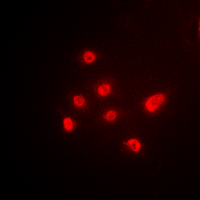
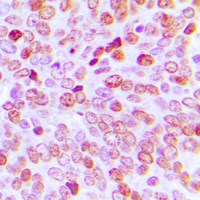
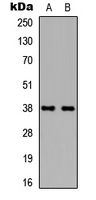
- WB, IHC-P, IF, ICC
- Physical State:
- Liquid
- Species Reactivity:
- Human
- Purification:
- Affinity Purified
- Storage Conditions:
- -20[o]C Aliquot. Avoid freeze/thaw cycles. Store undiluted., 2-8[o]C Aliquot. Avoid freeze/thaw cycles. Store undiluted., -20[o]C/-70[o]C Aliquot. Avoid freeze/thaw cycles. Store undiluted.
- Supplier:
- Genetex
- Host:
- Rabbit
- Reactivities:
- Human, Mouse
- Buffer:
- 0.42% Potassium Phosphate, 0.87% NaCl, 30% Glycerol, 0.01% Sodium azide.
- Immunogen:
- KLH-conjugated synthetic peptide encompassing a sequence within the center region of TBP. The exact sequence is proprietary.
- Uniprot:
- P20226
- Synonyms:
- GTF2D;GTF2D1;HDL4;SCA17;TATA sequence-binding protein;TATA-binding factor;TATA-box binding protein N-terminal domain;TATA-box factor;TATA-box-binding protein;TFIID;transcription initiation factor TFIID TBP subunit
- Extra Details:
- Initiation of transcription by RNA polymerase II requires the activities of more than 70 polypeptides. The protein that coordinates these activities is transcription factor IID (TFIID), which binds to the core promoter to position the polymerase properly, serves as the scaffold for assembly of the remainder of the transcription complex, and acts as a channel for regulatory signals. TFIID is composed of the TATA-binding protein (TBP) and a group of evolutionarily conserved proteins known as TBP-associated factors or TAFs. TAFs may participate in basal transcription, serve as coactivators, function in promoter recognition or modify general transcription factors (GTFs) to facilitate complex assembly and transcription initiation. This gene encodes TBP, the TATA-binding protein. A distinctive feature of TBP is a long string of glutamines in the N-terminus. This region of the protein modulates the DNA binding activity of the C terminus, and modulation of DNA binding affects the rate of transcription complex formation and initiation of transcription. The number of CAG repeats encoding the polyglutamine tract is usually 25-42, and expansion of the number of repeats to 45-66 increases the length of the polyglutamine string and is associated with spinocerebellar ataxia 17, a neurodegenerative disorder classified as a polyglutamine disease. Two transcript variants encoding different isoforms have been found for this gene. [provided by RefSeq, Jul 2016]
- Shipping Conditions:
- Blue Ice