_396_w_23060900_120.webp)
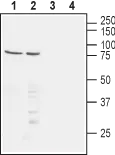
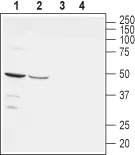
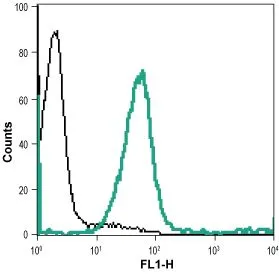
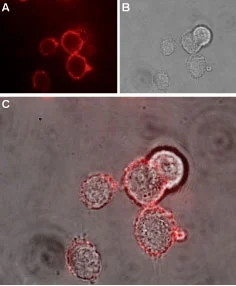
GTX54843
Nectin 1 antibody

Cannot supply to this region.
- SKU:
- GTX54843
- Additional Names:
- nectin cell adhesion molecule 1 , CD111 , CLPED1 , ED4 , HIgR , HV1S , HVEC , OFC7 , PRR , PRR1 , PVRL1 , PVRR , PVRR1 , SK-12 , nectin-1
- Application:
- Flow Cytometry, IHC, WB, IHC-Fr, IF, ICC, IM
- Concentration:
- 0.8 mg/ml
- Physical State:
- Liquid
- Species Reactivity:
- Human
- Purification:
- Affinity Purified
- Storage Conditions:
- -20[o]C Aliquot. Avoid freeze/thaw cycles. Store undiluted., 2-8[o]C Aliquot. Avoid freeze/thaw cycles. Store undiluted., -20[o]C/-70[o]C Aliquot. Avoid freeze/thaw cycles. Store undiluted.
- Supplier:
- Genetex
- Host:
- Rabbit
- Reactivities:
- Human, Mouse, Rat
- Buffer:
- PBS, 1% BSA, 0.05% Sodium azide.
- Immunogen:
- Peptide (C)GKPPSVVSWETRLK, corresponding to amino acid residues 177-190 (Extracellular, N-terminus) of human Nectin-1 (Accession : Q15223).
- Uniprot:
- Q15223
- Synonyms:
- CD111;CLPED1;ectodermal dysplasia 4 (Margarita Island type);ED4;herpes simplex virus type 1 sensitivity;herpes virus entry mediator C;herpesvirus Ig-like receptor;HIgR;HV1S;HVEC;nectin 1;Nectin cell adhesion molecule 1;nectin-1;OFC7;poliovirus receptor-like 1;poliovirus receptor-related 1 (herpesvirus entry mediator C);poliovirus receptor-related protein 1;PRR;PRR1;PVRL1;PVRR;PVRR1;SK-12
- Extra Details:
- This gene encodes an adhesion protein that plays a role in the organization of adherens junctions and tight junctions in epithelial and endothelial cells. The protein is a calcium(2+)-independent cell-cell adhesion molecule that belongs to the immunoglobulin superfamily and has 3 extracellular immunoglobulin-like loops, a single transmembrane domain (in some isoforms), and a cytoplasmic region. This protein acts as a receptor for glycoprotein D (gD) of herpes simplex viruses 1 and 2 (HSV-1, HSV-2), and pseudorabies virus (PRV) and mediates viral entry into epithelial and neuronal cells. Mutations in this gene cause cleft lip and palate/ectodermal dysplasia 1 syndrome (CLPED1) as well as non-syndromic cleft lip with or without cleft palate (CL/P). Alternative splicing results in multiple transcript variants encoding proteins with distinct C-termini. [provided by RefSeq, Oct 2009]
- Shipping Conditions:
- Blue Ice