GTX50692
BRCA1 antibody

Cannot supply to this region.
- SKU:
- GTX50692
- Additional Names:
- BRCA1 DNA repair associated , BRCAI , BRCC1 , BROVCA1 , FANCS , IRIS , PNCA4 , PPP1R53 , PSCP , RNF53
- Application:
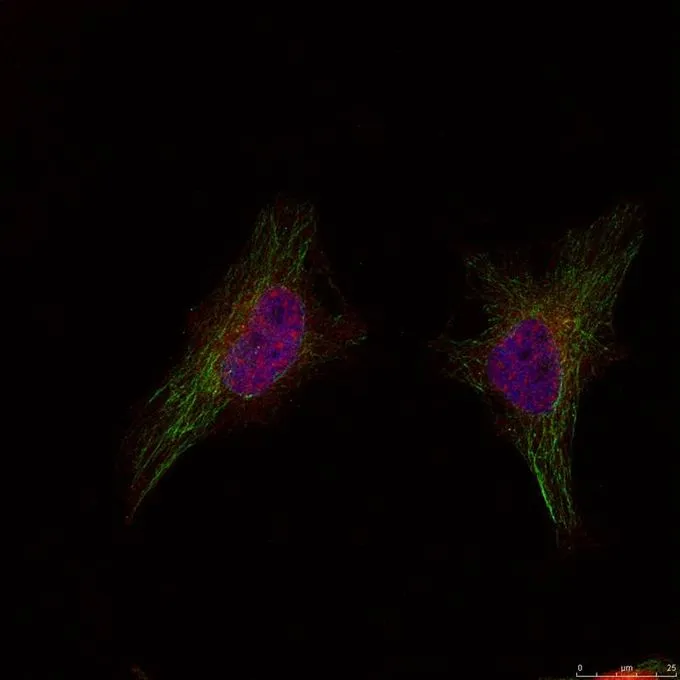
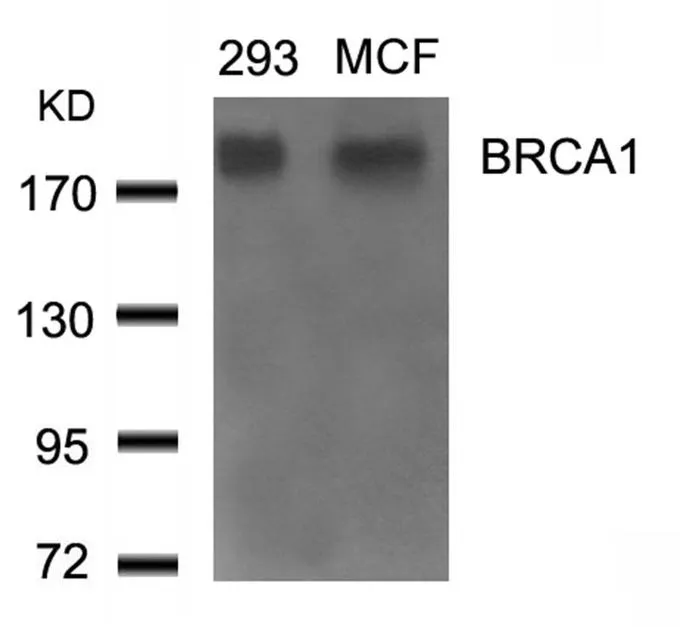
- WB, IF, ICC
- Concentration:
- 1 mg/ml
- Physical State:
- Liquid
- Species Reactivity:
- Human
- Purification:
- Affinity Purified
- Storage Conditions:
- -20[o]C Aliquot. Avoid freeze/thaw cycles. Store undiluted., 2-8[o]C Aliquot. Avoid freeze/thaw cycles. Store undiluted., -20[o]C/-70[o]C Aliquot. Avoid freeze/thaw cycles. Store undiluted.
- Supplier:
- Genetex
- Host:
- Rabbit
- Reactivities:
- Human
- Buffer:
- PBS, 150mM NaCl, 50% Glycerol, 0.02% Sodium azide.
- Immunogen:
- Peptide sequence around aa.1522~1526 (Y-P-S-Q-E) derived from human BRCA1.
- Uniprot:
- P38398
- Synonyms:
- BRCA1/BRCA2-containing complex, subunit 1;BRCAI;BRCC1;breast and ovarian cancer susceptibility protein 1;breast cancer 1, early onset;breast cancer type 1 susceptibility protein;BROVCA1;early onset breast cancer 1;Fanconi anemia, complementation group S;FANCS;IRIS;PNCA4;PPP1R53;protein phosphatase 1, regulatory subunit 53;PSCP;RING finger protein 53;RING-type E3 ubiquitin transferase BRCA1;RNF53
- Extra Details:
- This gene encodes a nuclear phosphoprotein that plays a role in maintaining genomic stability, and it also acts as a tumor suppressor. The encoded protein combines with other tumor suppressors, DNA damage sensors, and signal transducers to form a large multi-subunit protein complex known as the BRCA1-associated genome surveillance complex (BASC). This gene product associates with RNA polymerase II, and through the C-terminal domain, also interacts with histone deacetylase complexes. This protein thus plays a role in transcription, DNA repair of double-stranded breaks, and recombination. Mutations in this gene are responsible for approximately 40% of inherited breast cancers and more than 80% of inherited breast and ovarian cancers. Alternative splicing plays a role in modulating the subcellular localization and physiological function of this gene. Many alternatively spliced transcript variants, some of which are disease-associated mutations, have been described for this gene, but the full-length natures of only some of these variants has been described. A related pseudogene, which is also located on chromosome 17, has been identified. [provided by RefSeq, May 2009]
- Shipping Conditions:
- Blue Ice