GTX35196
NFkB p105 antibody

Cannot supply to this region.
- SKU:
- GTX35196
- Additional Names:
- nuclear factor kappa B subunit 1 , CVID12 , EBP-1 , KBF1 , NF-kB1 , NF-kappa-B1 , NF-kappaB , NFKB-p105 , NFKB-p50 , NFkappaB , p105 , p50
- Application:
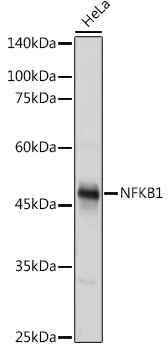
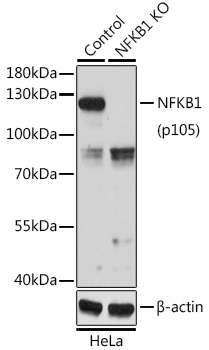
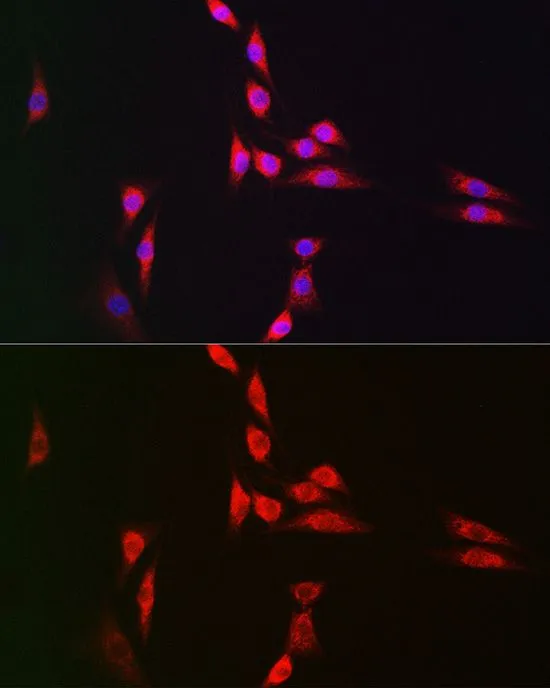
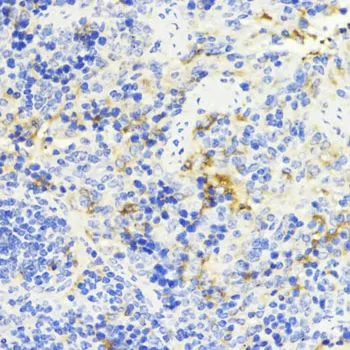
- WB, IHC-P, IF, ICC
- Physical State:
- Liquid
- Species Reactivity:
- Human
- Purification:
- Affinity Purified
- Storage Conditions:
- -20[o]C Aliquot. Avoid freeze/thaw cycles. Store undiluted., 2-8[o]C Aliquot. Avoid freeze/thaw cycles. Store undiluted., -20[o]C/-70[o]C Aliquot. Avoid freeze/thaw cycles. Store undiluted.
- Supplier:
- Genetex
- Host:
- Rabbit
- Reactivities:
- Human, Mouse
- Buffer:
- PBS, 50% Glycerol, 0.02% Sodium azide.
- Immunogen:
- Recombinant fusion protein containing a sequence corresponding to amino acids 740-964 of human NFKB1 (NP_001158884.1).
- Uniprot:
- P19838
- Synonyms:
- CVID12;DNA-binding factor KBF1;EBP-1;KBF1;NF-kappa-B1;NF-kappaB;NF-kappabeta;NF-kB;NF-kB1;NFkappaB;NFKB-p105;NFKB-p50;nuclear factor kappa-B DNA binding subunit;nuclear factor NF-kappa-B p105 subunit;nuclear factor NF-kappa-B p50 subunit;nuclear factor of kappa light polypeptide gene enhancer in B-cells 1
- Extra Details:
- This gene encodes a 105 kD protein which can undergo cotranslational processing by the 26S proteasome to produce a 50 kD protein. The 105 kD protein is a Rel protein-specific transcription inhibitor and the 50 kD protein is a DNA binding subunit of the NF-kappa-B (NFKB) protein complex. NFKB is a transcription regulator that is activated by various intra- and extra-cellular stimuli such as cytokines, oxidant-free radicals, ultraviolet irradiation, and bacterial or viral products. Activated NFKB translocates into the nucleus and stimulates the expression of genes involved in a wide variety of biological functions. Inappropriate activation of NFKB has been associated with a number of inflammatory diseases while persistent inhibition of NFKB leads to inappropriate immune cell development or delayed cell growth. Alternative splicing results in multiple transcript variants encoding different isoforms, at least one of which is proteolytically processed. [provided by RefSeq, Feb 2016]
- Shipping Conditions:
- Blue Ice