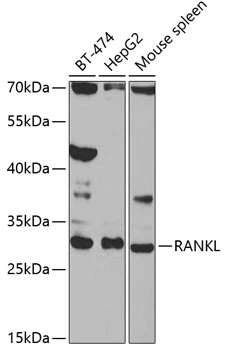
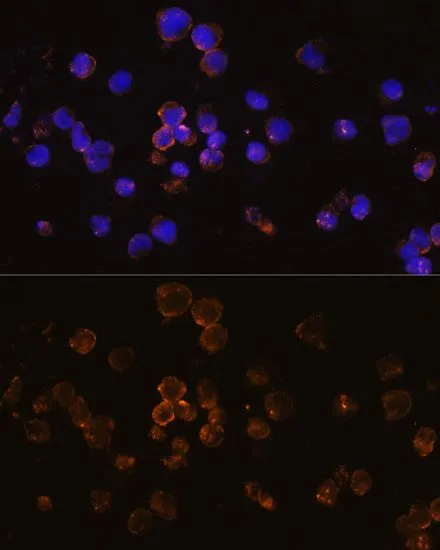
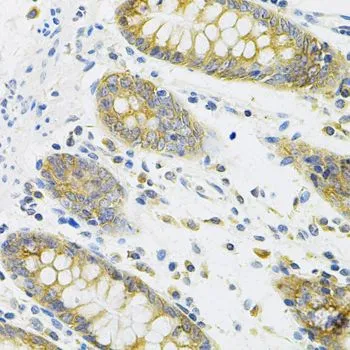
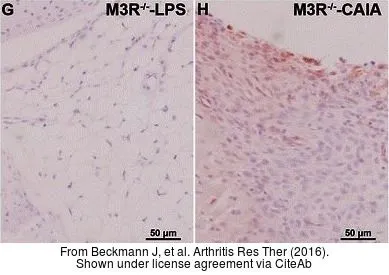
GTX32834
RANKL antibody

Cannot supply to this region.
- SKU:
- GTX32834
- Additional Names:
- TNF superfamily member 11 , CD254 , ODF , OPGL , OPTB2 , RANKL , TNLG6B , TRANCE , hRANKL2 , sOdf
- Application:
- WB, IHC-P, IF, ICC
- Physical State:
- Liquid
- Species Reactivity:
- Human
- Purification:
- Affinity Purified
- Storage Conditions:
- -20[o]C Aliquot. Avoid freeze/thaw cycles. Store undiluted., 2-8[o]C Aliquot. Avoid freeze/thaw cycles. Store undiluted., -20[o]C/-70[o]C Aliquot. Avoid freeze/thaw cycles. Store undiluted.
- Supplier:
- Genetex
- Host:
- Rabbit
- Reactivities:
- Human, Mouse, Rat
- Buffer:
- PBS, 50% Glycerol, 0.02% Sodium azide.
- Immunogen:
- Recombinant fusion protein containing a sequence corresponding to amino acids 78-317 of human TNFSF11 (NP_003692.1).
- Uniprot:
- O14788
- Synonyms:
- CD254;hRANKL2;ODF;OPGL;OPTB2;osteoclast differentiation factor;osteoprotegerin ligand;RANKL;receptor activator of nuclear factor kappa B ligand;Receptor activator of nuclear factor kappa-B ligand;sOdf;TNF-related activation-induced cytokine;TNLG6B;TRANCE;tumor necrosis factor (ligand) superfamily, member 11;tumor necrosis factor ligand 6B;tumor necrosis factor ligand superfamily member 11;tumor necrosis factor superfamily member 11
- Extra Details:
- This gene encodes a member of the tumor necrosis factor (TNF) cytokine family which is a ligand for osteoprotegerin and functions as a key factor for osteoclast differentiation and activation. This protein was shown to be a dentritic cell survival factor and is involved in the regulation of T cell-dependent immune response. T cell activation was reported to induce expression of this gene and lead to an increase of osteoclastogenesis and bone loss. This protein was shown to activate antiapoptotic kinase AKT/PKB through a signaling complex involving SRC kinase and tumor necrosis factor receptor-associated factor (TRAF) 6, which indicated this protein may have a role in the regulation of cell apoptosis. Targeted disruption of the related gene in mice led to severe osteopetrosis and a lack of osteoclasts. The deficient mice exhibited defects in early differentiation of T and B lymphocytes, and failed to form lobulo-alveolar mammary structures during pregnancy. Two alternatively spliced transcript variants have been found. [provided by RefSeq, Jul 2008]
- Shipping Conditions:
- Blue Ice