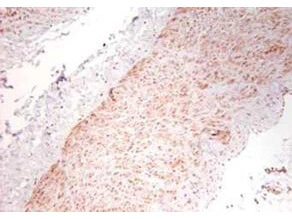
GTX26671
TNF alpha antibody

Cannot supply to this region.
- SKU:
- GTX26671
- Additional Names:
- tumor necrosis factor , DIF , TNF-alpha , TNFA , TNFSF2 , TNLG1F
- Application:
- ELISA, WB, IHC-P, IF, ICC
- Concentration:
- 1 mg/ml
- Physical State:
- Liquid
- Species Reactivity:
- Human
- Storage Conditions:
- -20[o]C Aliquot. Avoid freeze/thaw cycles. Store undiluted., 2-8[o]C Aliquot. Avoid freeze/thaw cycles. Store undiluted., -20[o]C/-70[o]C Aliquot. Avoid freeze/thaw cycles. Store undiluted.
- Supplier:
- Genetex
- Host:
- Rabbit
- Reactivities:
- Human
- Buffer:
- 20mM Potassium Phosphate, 150mM NaCl, no preservatives.
- Immunogen:
- Recombinant human TNF alpha
- Uniprot:
- P01375
- Synonyms:
- APC1 protein;Cachectin;DIF;TNF-a;TNF-alpha;TNF, macrophage-derived;TNF, monocyte-derived;TNFA;TNFSF2;TNLG1F;tumor necrosis factor;tumor necrosis factor ligand 1F;tumor necrosis factor ligand superfamily member 2;tumor necrosis factor-alpha
- Extra Details:
- Tumor necrosis factor-alpha (TNF-a), also known as cachectin, is an inflammatory. TNF-a is produced by neutrophils, activated lymphocytes, macrophages, NK cells, LAK cells, Astrocytes, endothelial cells, smooth muscle cells and some transformed cells. TNF-a appears to be a major mediator of inflammatory responses and overproduction results in the extensive tissue damage associated with endotoxemia and cachexia. In addition, high serum levels of TNF are associated with septic shock, rejection of renal transplants, parasitic infections and various neoplastic diseases. TNF-a influences the growth and function of both normal and neoplastic cells. On normal cells, TNF-a exhibits growth enhancing activities for fibroblasts, T cells and B cells; differentiation of myeloid cells. On neoplastic cells, TNF-a exerts growth inhibitory activities that can be either cytostatic or cytotoxic.
- Shipping Conditions:
- Blue Ice