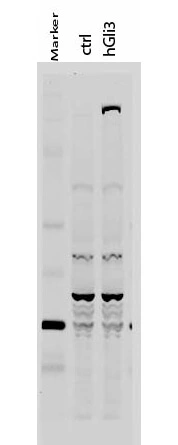
GTX26050
GLI3 antibody

Cannot supply to this region.
- SKU:
- GTX26050
- Additional Names:
- GLI family zinc finger 3 , ACLS , GCPS , GLI3-190 , GLI3FL , PAP-A , PAPA , PAPA1 , PAPB , PHS , PPDIV
- Application:
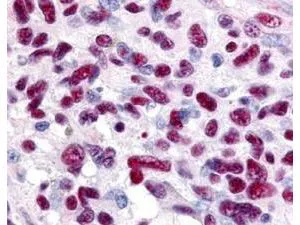
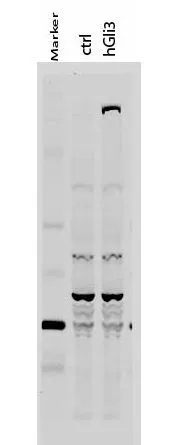
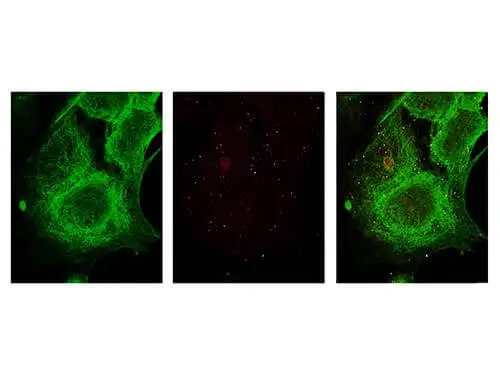
- ELISA, WB, IHC-P, IF, ICC
- Concentration:
- 1 mg/ml
- Physical State:
- Liquid
- Species Reactivity:
- Human
- Purification:
- Affinity Purified
- Storage Conditions:
- -20[o]C Aliquot. Avoid freeze/thaw cycles. Store undiluted., 2-8[o]C Aliquot. Avoid freeze/thaw cycles. Store undiluted., -20[o]C/-70[o]C Aliquot. Avoid freeze/thaw cycles. Store undiluted.
- Supplier:
- Genetex
- Host:
- Rabbit
- Reactivities:
- Fish, Human
- Buffer:
- 20mM Potassium Phosphate, 150mM NaCl, 0.01% Sodium azide.
- Immunogen:
- Synthetic peptide corresponding to an internal region near amino acids 30-60 of human Gli-3 protein.
- Uniprot:
- P10071
- Synonyms:
- ACLS;GCPS;GLI-Kruppel family member GLI3;GLI3 form of 190 kDa;GLI3 full-length protein;GLI3-190;GLI3FL;glioma-associated oncogene family zinc finger 3;oncogene GLI3;PAP-A;PAPA;PAPA1;PAPB;PHS;PPDIV;transcriptional activator GLI3;zinc finger protein GLI3
- Extra Details:
- Gli3 is belongs to the GLI C2H2-type zinc-finger protein family and contains 5 C2H2-type zinc fingers. Gli3 is very important for normal limb and brain development and is implicated in the transduction of Shh signal. Gli3 is also expressed in a wide variety of normal adult tissues, including lung, colon, spleen, placenta, testis, and myometrium. Defects in GLI3 are the cause of Greig cephalo-poly-syndactyly syndrome (GCPS); an autosomal dominant disorder affecting limb and craniofacial development.
- Shipping Conditions:
- Blue Ice