GTX25975
DcR1 antibody

Cannot supply to this region.
- SKU:
- GTX25975
- Additional Names:
- CD263 , DCR1 , DCR1TNFR , LIT , TNF receptor superfamily member 10c , TNFRSF10C , TRAILR3 , TRID , DcR1 , TRAIL-R3
- Application:
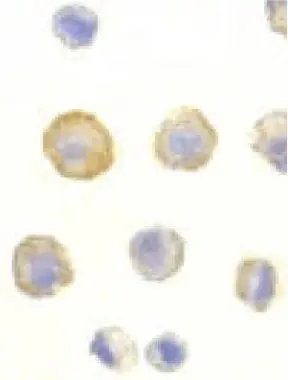
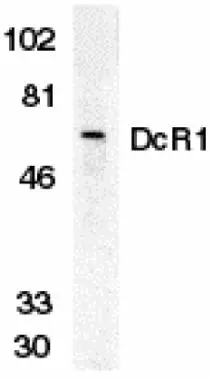
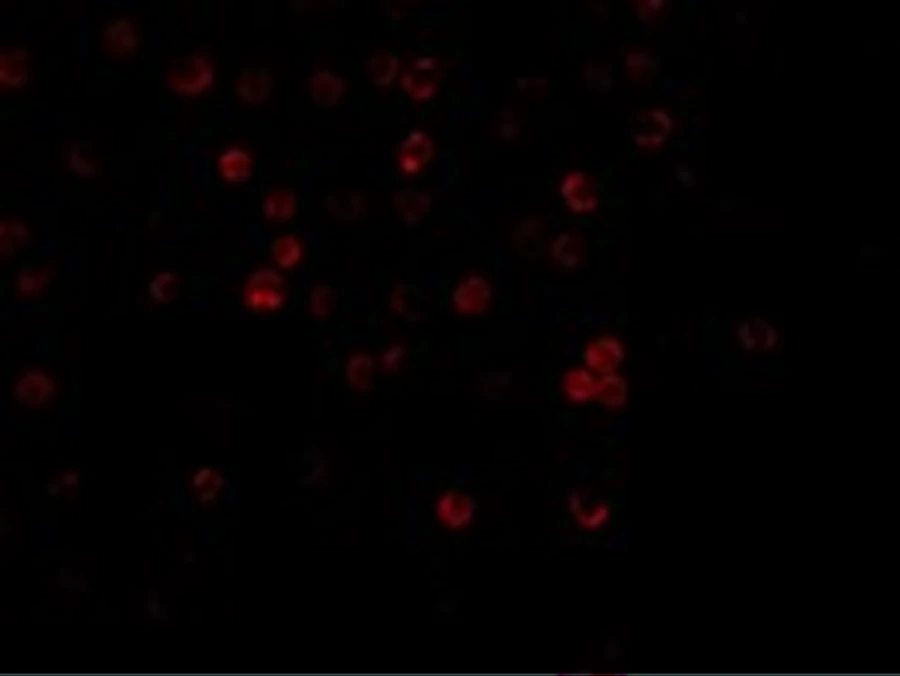
- ELISA, WB, IF, ICC
- Physical State:
- Liquid
- Species Reactivity:
- Human
- Purification:
- Affinity Purified
- Storage Conditions:
- -20[o]C Aliquot. Avoid freeze/thaw cycles. Store undiluted., 2-8[o]C Aliquot. Avoid freeze/thaw cycles. Store undiluted., -20[o]C/-70[o]C Aliquot. Avoid freeze/thaw cycles. Store undiluted.
- Supplier:
- Genetex
- Host:
- Rabbit
- Reactivities:
- Human, Mouse, Rat
- Buffer:
- PBS, 0.02% Sodium azide.
- Immunogen:
- Peptide corresponding to aa 149- 167 at the extracellular domain (ED) of human DcR1 precursor (accession no. AF012536).
- Uniprot:
- O14798
- Synonyms:
- antagonist decoy receptor for TRAIL/Apo-2L;CD263;cytotoxic TRAIL receptor-3;DCR1;DCR1-TNFR;decoy receptor 1;decoy TRAIL receptor without death domain;LIT;lymphocyte inhibitor of TRAIL;TNF-related apoptosis-inducing ligand receptor 3;TRAIL receptor without an intracellular domain;TRAIL-R3;TRAILR3;TRID;tumor necrosis factor receptor superfamily member 10C;tumor necrosis factor receptor superfamily, member 10c, decoy without an intracellular domain
- Extra Details:
- The protein encoded by this gene is a member of the TNF-receptor superfamily. This receptor contains an extracellular TRAIL-binding domain and a transmembrane domain, but no cytoplasmic death domain. This receptor is not capable of inducing apoptosis, and is thought to function as an antagonistic receptor that protects cells from TRAIL-induced apoptosis. This gene was found to be a p53-regulated DNA damage-inducible gene. The expression of this gene was detected in many normal tissues but not in most cancer cell lines, which may explain the specific sensitivity of cancer cells to the apoptosis-inducing activity of TRAIL. [provided by RefSeq, Jul 2008]
- Shipping Conditions:
- Blue Ice