GTX16394
TAP2 antibody

Cannot supply to this region.
- SKU:
- GTX16394
- Additional Names:
- transporter 2, ATP binding cassette subfamily B member , ABC18 , ABCB3 , APT2 , D6S217E , PSF-2 , PSF2 , RING11
- Application:
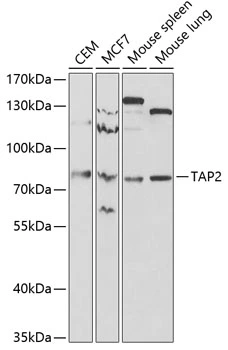
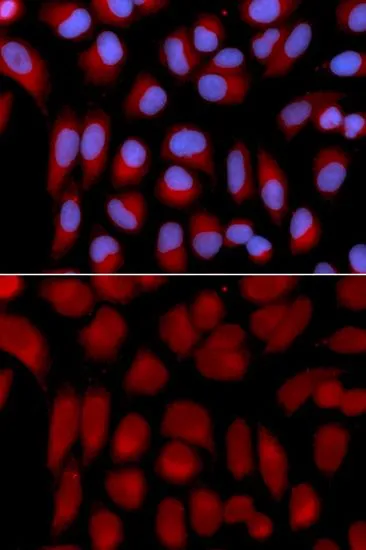
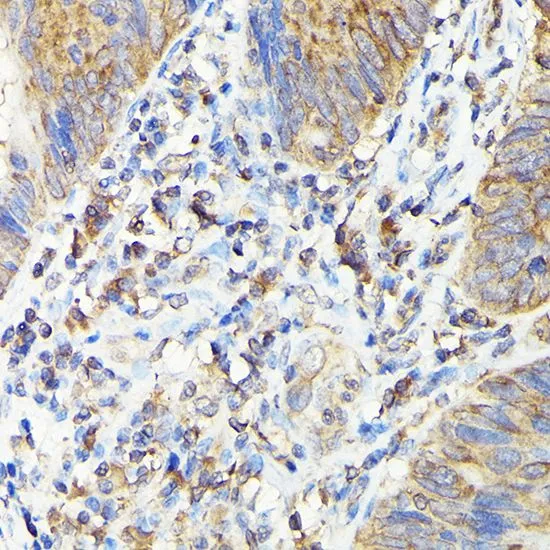
- WB, IHC-P, IF, ICC
- Physical State:
- Liquid
- Species Reactivity:
- Human
- Purification:
- Affinity Purified
- Storage Conditions:
- -20[o]C Aliquot. Avoid freeze/thaw cycles. Store undiluted., 2-8[o]C Aliquot. Avoid freeze/thaw cycles. Store undiluted., -20[o]C/-70[o]C Aliquot. Avoid freeze/thaw cycles. Store undiluted.
- Supplier:
- Genetex
- Host:
- Rabbit
- Reactivities:
- Human, Mouse
- Buffer:
- PBS, 50% Glycerol, 0.09% Sodium azide.
- Immunogen:
- Recombinant fusion protein containing a sequence corresponding to amino acids 430-680 of human TAP2 (NP_000535.3).
- Uniprot:
- Q03519
- Synonyms:
- ABC transporter, MHC 2;ABC18;ABCB3;antigen peptide transporter 2;APT2;ATP-binding cassette sub-family B member 3;ATP-binding cassette, sub-family B (MDR/TAP), member 3;D6S217E;peptide supply factor 2;peptide transporter involved in antigen processing 2;peptide transporter PSF2;Peptide transporter TAP2;PSF-2;PSF2;really interesting new gene 11 protein;RING11;transporter 2, ABC (ATP binding cassette);transporter 2, ATP-binding cassette, sub-family B (MDR/TAP)
- Extra Details:
- The membrane-associated protein encoded by this gene is a member of the superfamily of ATP-binding cassette (ABC) transporters. ABC proteins transport various molecules across extra- and intra-cellular membranes. ABC genes are divided into seven distinct subfamilies (ABC1, MDR/TAP, MRP, ALD, OABP, GCN20, White). This protein is a member of the MDR/TAP subfamily. Members of the MDR/TAP subfamily are involved in multidrug resistance. This gene is located 7 kb telomeric to gene family member ABCB2. The protein encoded by this gene is involved in antigen presentation. This protein forms a heterodimer with ABCB2 in order to transport peptides from the cytoplasm to the endoplasmic reticulum. Mutations in this gene may be associated with ankylosing spondylitis, insulin-dependent diabetes mellitus, and celiac disease. Alternative splicing of this gene produces products which differ in peptide selectivity and level of restoration of surface expression of MHC class I molecules. [provided by RefSeq, Feb 2014]
- Shipping Conditions:
- Blue Ice