GTX14690
MUC1 antibody

Cannot supply to this region.
- SKU:
- GTX14690
- Additional Names:
- mucin 1, cell surface associated , ADMCKD , ADMCKD1 , CA 15-3 , CD227 , EMA , H23AG , KL-6 , MAM6 , MCD , MCKD , MCKD1 , MUC-1 , MUC-1/SEC , MUC-1/X , MUC1/ZD , PEM , PEMT , PUM
- Application:
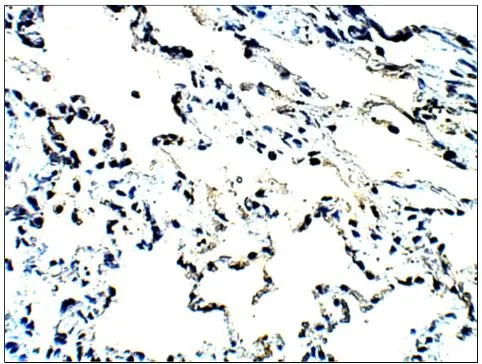
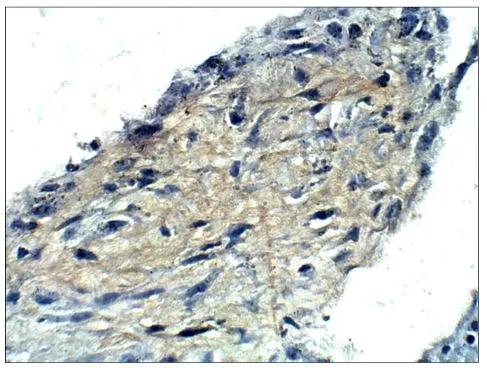
- ELISA, IHC-P, IP
- Concentration:
- 0.65 mg/ml
- Physical State:
- Liquid
- Species Reactivity:
- Human
- Purification:
- Affinity Purified
- Storage Conditions:
- -20[o]C Aliquot. Avoid freeze/thaw cycles. Store undiluted., 2-8[o]C Aliquot. Avoid freeze/thaw cycles. Store undiluted., -20[o]C/-70[o]C Aliquot. Avoid freeze/thaw cycles. Store undiluted.
- Supplier:
- Genetex
- Host:
- Rabbit
- Reactivities:
- Human
- Buffer:
- Tris/Glycine, 0.5% BSA, 30% Glycerol, 0.02% Sodium azide.
- Immunogen:
- Synthetic peptide corresponding to unique amino acid sequence on MUCIN1 protein.
- Uniprot:
- P15941
- Synonyms:
- ADMCKD;ADMCKD1;ADTKD2;breast carcinoma-associated antigen DF3;CA 15-3;cancer antigen 15-3;carcinoma-associated mucin;CD227;EMA;episialin;H23 antigen;H23AG;KL-6;krebs von den Lungen-6;MAM6;MCD;MCKD;MCKD1;MUC-1;MUC-1/SEC;MUC-1/X;MUC1/ZD;mucin 1, transmembrane;mucin-1;peanut-reactive urinary mucin;PEM;PEMT;polymorphic epithelial mucin;PUM;tumor associated epithelial mucin;tumor-associated epithelial membrane antigen;Tumor-associated mucin
- Extra Details:
- This gene encodes a membrane-bound protein that is a member of the mucin family. Mucins are O-glycosylated proteins that play an essential role in forming protective mucous barriers on epithelial surfaces. These proteins also play a role in intracellular signaling. This protein is expressed on the apical surface of epithelial cells that line the mucosal surfaces of many different tissues including lung, breast stomach and pancreas. This protein is proteolytically cleaved into alpha and beta subunits that form a heterodimeric complex. The N-terminal alpha subunit functions in cell-adhesion and the C-terminal beta subunit is involved in cell signaling. Overexpression, aberrant intracellular localization, and changes in glycosylation of this protein have been associated with carcinomas. This gene is known to contain a highly polymorphic variable number tandem repeats (VNTR) domain. Alternate splicing results in multiple transcript variants.[provided by RefSeq, Feb 2011]
- Shipping Conditions:
- Blue Ice