GTX13574
TrxR1 antibody, C-term

Cannot supply to this region.
- SKU:
- GTX13574
- Additional Names:
- thioredoxin reductase 1 , GRIM-12 , TR , TR1 , TRXR1 , TXNR
- Application:
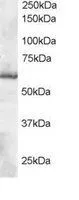
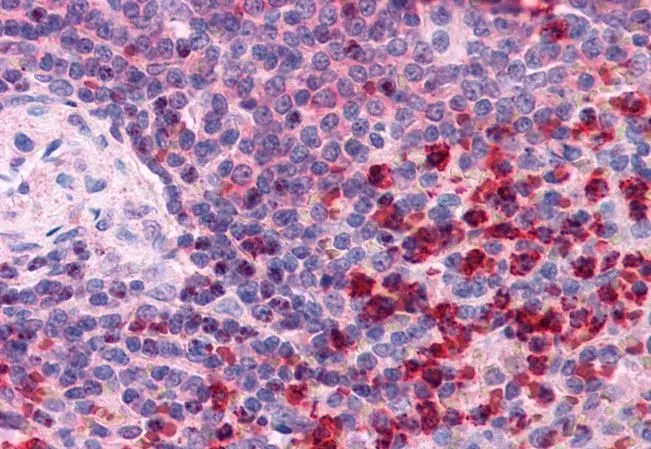
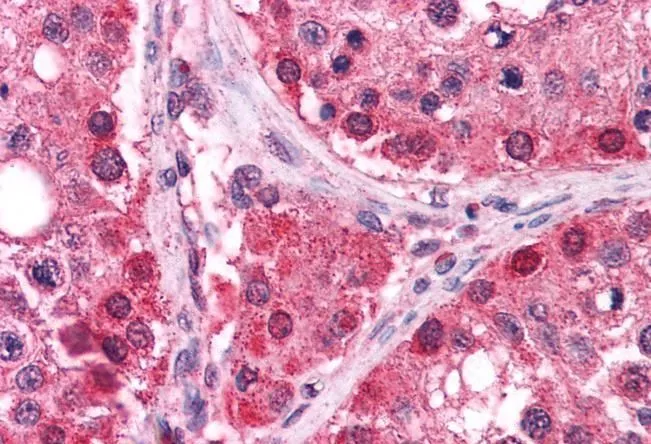
- WB, IHC-P
- Concentration:
- 0.50 mg/ml
- Physical State:
- Liquid
- Species Reactivity:
- Human
- Purification:
- Ammonium Sulfate Precipitated; Affinity Purified
- Storage Conditions:
- -20[o]C Aliquot. Avoid freeze/thaw cycles. Store undiluted., 2-8[o]C Aliquot. Avoid freeze/thaw cycles. Store undiluted., -20[o]C/-70[o]C Aliquot. Avoid freeze/thaw cycles. Store undiluted.
- Supplier:
- Genetex
- Host:
- Goat
- Reactivities:
- Human
- Buffer:
- TBS, 0.5% BSA, 0.02% Sodium azide.
- Immunogen:
- Peptide with sequence TKRSGASILQAGC, from the C Terminus of the protein sequence according to NP_003321.2; NP_877393.1; NP_877419.1; NP_877420.1; NP_001087240.1.
- Uniprot:
- Q16881
- Synonyms:
- gene associated with retinoic and IFN-induced mortality 12 protein;gene associated with retinoic and interferon-induced mortality 12 protein;GRIM-12;KM-102-derived reductase-like factor;oxidoreductase;selenoprotein TXNRD1;testis tissue sperm-binding protein Li 46a;thioredoxin reductase 1, cytoplasmic;thioredoxin reductase GRIM-12;thioredoxin reductase TR1;TR;TR1;TRXR1;TXNR
- Extra Details:
- The protein encoded by this gene belongs to the pyridine nucleotide-disulfide oxidoreductase family, and is a member of the thioredoxin (Trx) system. Three thioredoxin reductase (TrxR) isozymes are found in mammals. TrxRs are selenocysteine-containing flavoenzymes, which reduce thioredoxins, as well as other substrates, and play a key role in redox homoeostasis. This gene encodes an ubiquitously expressed, cytosolic form of TrxR, which functions as a homodimer containing FAD, and selenocysteine (Sec) at the active site. Sec is encoded by UGA codon that normally signals translation termination. The 3' UTRs of selenoprotein mRNAs contain a conserved stem-loop structure, the Sec insertion sequence (SECIS) element, which is necessary for the recognition of UGA as a Sec codon rather than as a stop signal. Alternative splicing, primarily at the 5' end, results in transcript variants encoding same or different isoforms, including a glutaredoxin-containing isoform that is predominantly expressed in testis. [provided by RefSeq, May 2017]
- Shipping Conditions:
- Blue Ice