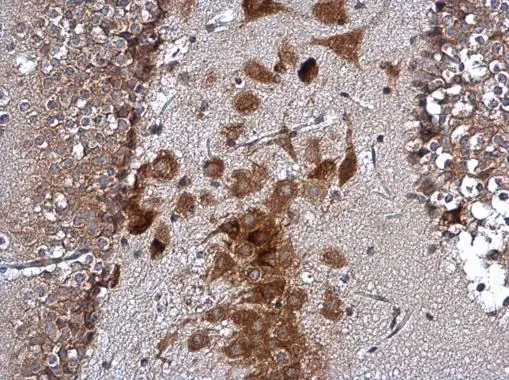
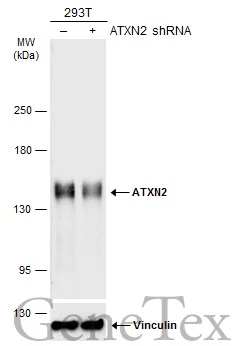
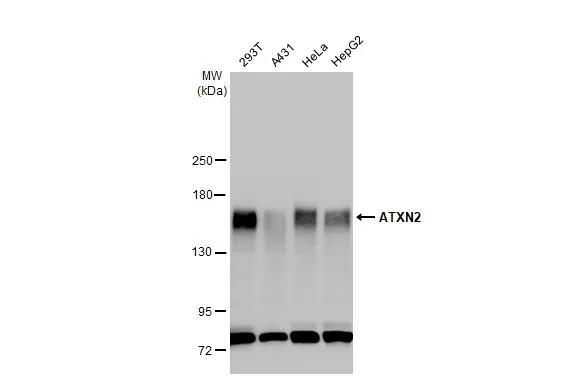
GTX130329
ATXN2 antibody

Cannot supply to this region.
- SKU:
- GTX130329
- Additional Names:
- ataxin 2 , ATX2 , SCA2 , TNRC13
- Application:
- WB, IHC-P, IP
- Concentration:
- 0.2 mg/ml
- Physical State:
- Liquid
- Species Reactivity:
- Human
- Purification:
- Affinity Purified
- Storage Conditions:
- -20[o]C Aliquot. Avoid freeze/thaw cycles. Store undiluted., 2-8[o]C Aliquot. Avoid freeze/thaw cycles. Store undiluted., -20[o]C/-70[o]C Aliquot. Avoid freeze/thaw cycles. Store undiluted.
- Supplier:
- Genetex
- Host:
- Rabbit
- Reactivities:
- Human, Mouse
- Buffer:
- PBS, 1% BSA, 20% Glycerol, 0.025% ProClin 300.
- Immunogen:
- Recombinant protein encompassing a sequence within the center region of human ATXN2. The exact sequence is proprietary.
- Uniprot:
- Q99700
- Synonyms:
- ataxin-2;ATX2;SCA2;spinocerebellar ataxia type 2 protein;TNRC13;trinucleotide repeat-containing gene 13 protein
- Extra Details:
- The autosomal dominant cerebellar ataxias (ADCA) are a heterogeneous group of neurodegenerative disorders characterized by progressive degeneration of the cerebellum, brain stem and spinal cord. Clinically, ADCA has been divided into three groups: ADCA types I-III. Defects in this gene are the cause of spinocerebellar ataxia type 2 (SCA2). SCA2 belongs to the autosomal dominant cerebellar ataxias type I (ADCA I) which are characterized by cerebellar ataxia in combination with additional clinical features like optic atrophy, ophthalmoplegia, bulbar and extrapyramidal signs, peripheral neuropathy and dementia. SCA2 is caused by expansion of a CAG repeat in the coding region of this gene. Longer expansions result in earlier onset of the disease. Alternatively spliced transcript variants encoding different isoforms have been identified but their full length sequence has not been determined. [provided by RefSeq]
- Shipping Conditions:
- Blue Ice