GTX112980
SMAD4 antibody

Cannot supply to this region.
- SKU:
- GTX112980
- Additional Names:
- SMAD family member 4 , DPC4 , JIP , MADH4 , MYHRS
- Application:
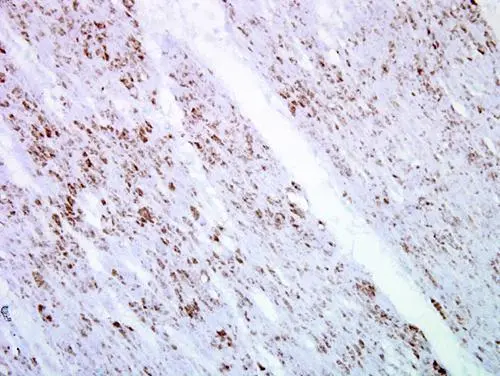
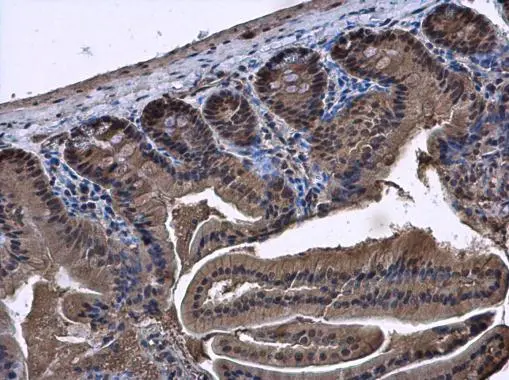
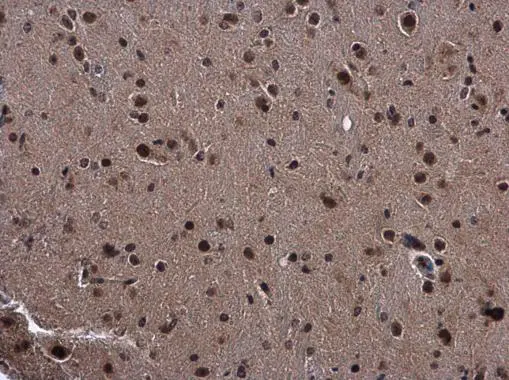
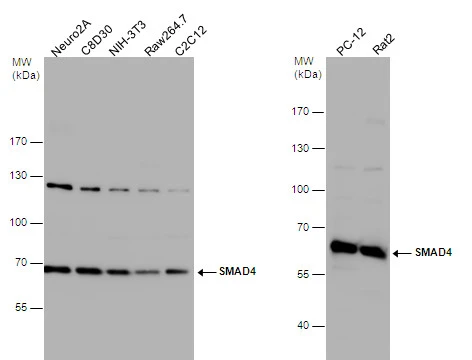
- WB, IHC-P, IF, ICC
- Concentration:
- 0.58 mg/ml
- Physical State:
- Liquid
- Species Reactivity:
- Human
- Purification:
- Affinity Purified
- Storage Conditions:
- -20[o]C Aliquot. Avoid freeze/thaw cycles. Store undiluted., 2-8[o]C Aliquot. Avoid freeze/thaw cycles. Store undiluted., -20[o]C/-70[o]C Aliquot. Avoid freeze/thaw cycles. Store undiluted.
- Supplier:
- Genetex
- Host:
- Rabbit
- Reactivities:
- Human, Mouse, Rat
- Buffer:
- PBS, 20% Glycerol, 0.025% ProClin 300.
- Immunogen:
- Recombinant protein encompassing a sequence within the C-terminus region of human SMAD4. The exact sequence is proprietary.
- Uniprot:
- Q13485
- Synonyms:
- deleted in pancreatic carcinoma locus 4;deletion target in pancreatic carcinoma 4;DPC4;JIP;MAD homolog 4;MADH4;mothers against decapentaplegic homolog 4;mothers against decapentaplegic, Drosophila, homolog of, 4;MYHRS;SMAD family member 4;SMAD, mothers against DPP homolog 4
- Extra Details:
- This gene encodes a member of the Smad family of signal transduction proteins. Smad proteins are phosphorylated and activated by transmembrane serine-threonine receptor kinases in response to TGF-beta signaling. The product of this gene forms homomeric complexes and heteromeric complexes with other activated Smad proteins, which then accumulate in the nucleus and regulate the transcription of target genes. This protein binds to DNA and recognizes an 8-bp palindromic sequence (GTCTAGAC) called the Smad-binding element (SBE). The Smad proteins are subject to complex regulation by post-translational modifications. Mutations or deletions in this gene have been shown to result in pancreatic cancer, juvenile polyposis syndrome, and hereditary hemorrhagic telangiectasia syndrome. [provided by RefSeq]
- Shipping Conditions:
- Blue Ice