GTX103593
ALDH7A1 antibody

Cannot supply to this region.
- SKU:
- GTX103593
- Additional Names:
- aldehyde dehydrogenase 7 family member A1 , ATQ1 , EPD , PDE
- Application:
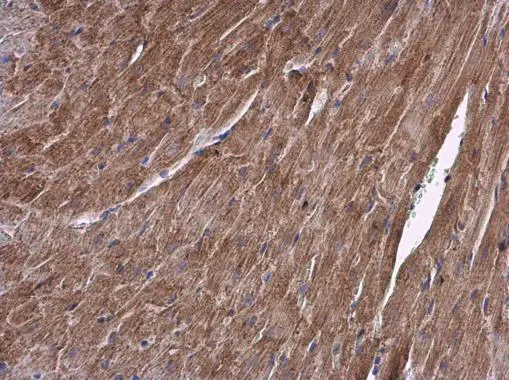
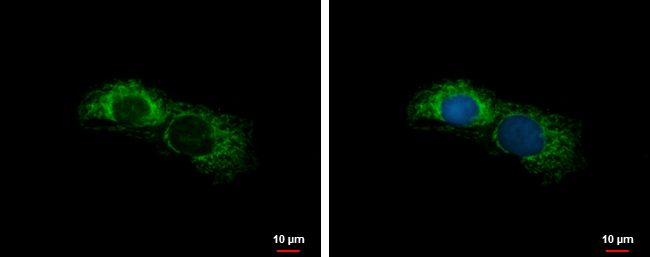
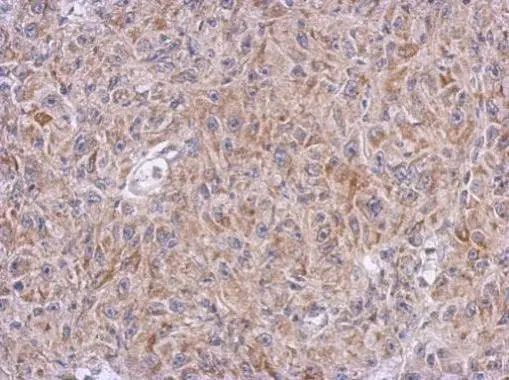
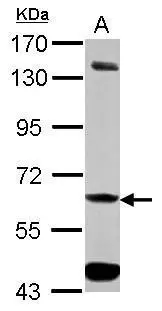
- WB, IHC-P, IF, ICC
- Concentration:
- 1 mg/ml
- Physical State:
- Liquid
- Species Reactivity:
- Human
- Purification:
- Affinity Purified
- Storage Conditions:
- -20[o]C Aliquot. Avoid freeze/thaw cycles. Store undiluted., 2-8[o]C Aliquot. Avoid freeze/thaw cycles. Store undiluted., -20[o]C/-70[o]C Aliquot. Avoid freeze/thaw cycles. Store undiluted.
- Supplier:
- Genetex
- Host:
- Rabbit
- Reactivities:
- Human, Mouse
- Buffer:
- PBS, 1% BSA, 20% Glycerol, 0.01% Thimerosal.
- Immunogen:
- Recombinant protein encompassing a sequence within the center region of human ALDH7A1. The exact sequence is proprietary.
- Uniprot:
- P49419
- Synonyms:
- 26g turgor protein homolog;Aldehyde dehydrogenase family 7 member A1;alpha-AASA dehydrogenase;alpha-aminoadipic semialdehyde dehydrogenase;antiquitin-1;ATQ1;betaine aldehyde dehydrogenase;delta1-piperideine-6-carboxylate dehydrogenase;EPD;epididymis secretory sperm binding protein;P6c dehydrogenase;PDE
- Extra Details:
- Antiquitin is a member of subfamily 7 in the aldehyde dehydrogenase gene family. These enzymes are thought to play a major role in the detoxification of aldehydes generated by alcohol metabolism and lipid peroxidation. This particular member has homology to a previously described protein from the green garden pea, the 26g pea turgor protein. Mutations in this gene cause pyridoxine-dependent epilepsy, which involves a combination of various seizure types and is responsive to immediate administration of pyridoxine hydrochloride. Four additional human antiquitin-like sequences, all of which are pseudogenes, have also been identified. [provided by RefSeq]
- Shipping Conditions:
- Blue Ice