GTX102788
CD13 antibody

Cannot supply to this region.
- SKU:
- GTX102788
- Additional Names:
- alanyl aminopeptidase, membrane , APN , CD13 , GP150 , LAP1 , P150 , PEPN
- Application:
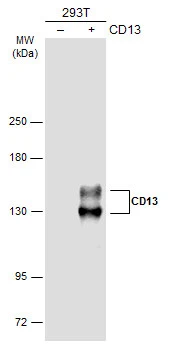
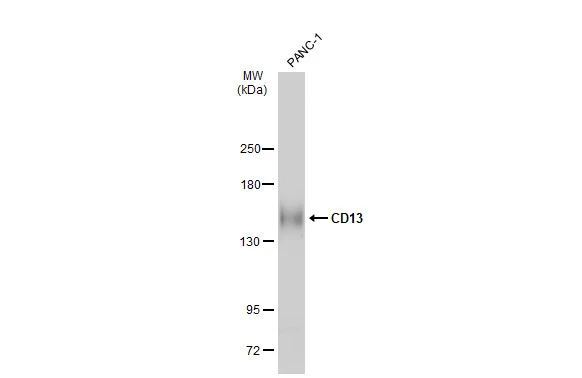
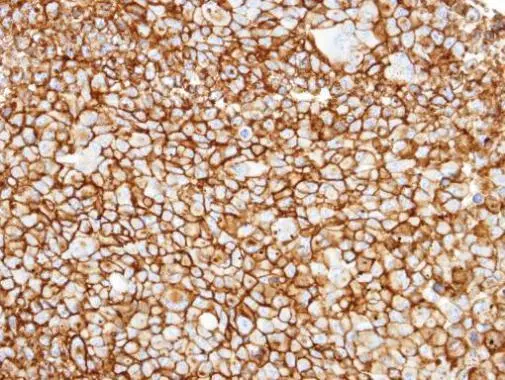
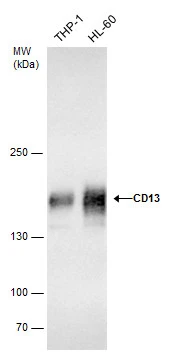
- WB, IHC-P
- Concentration:
- 0.82 mg/ml
- Physical State:
- Liquid
- Species Reactivity:
- Human
- Purification:
- Affinity Purified
- Storage Conditions:
- -20[o]C Aliquot. Avoid freeze/thaw cycles. Store undiluted., 2-8[o]C Aliquot. Avoid freeze/thaw cycles. Store undiluted., -20[o]C/-70[o]C Aliquot. Avoid freeze/thaw cycles. Store undiluted.
- Supplier:
- Genetex
- Host:
- Rabbit
- Reactivities:
- Human
- Buffer:
- 0.1M Tris, 0.1M Glycine, 10% Glycerol, 0.01% Thimerosal.
- Immunogen:
- Recombinant protein encompassing a sequence within the Extracellular domain of human CD13. The exact sequence is proprietary.
- Uniprot:
- P15144
- Synonyms:
- alanyl (membrane) aminopeptidase;Alanyl aminopeptidase;aminopeptidase M;aminopeptidase N;AP-M;AP-N;APN;CD13;GP150;hAPN;LAP1;membrane alanyl aminopeptidase;microsomal aminopeptidase;myeloid plasma membrane glycoprotein CD13;P150;PEPN
- Extra Details:
- Aminopeptidase N is located in the small-intestinal and renal microvillar membrane, and also in other plasma membranes. In the small intestine aminopeptidase N plays a role in the final digestion of peptides generated from hydrolysis of proteins by gastric and pancreatic proteases. Its function in proximal tubular epithelial cells and other cell types is less clear. The large extracellular carboxyterminal domain contains a pentapeptide consensus sequence characteristic of members of the zinc-binding metalloproteinase superfamily. Sequence comparisons with known enzymes of this class showed that CD13 and aminopeptidase N are identical. The latter enzyme was thought to be involved in the metabolism of regulatory peptides by diverse cell types, including small intestinal and renal tubular epithelial cells, macrophages, granulocytes, and synaptic membranes from the CNS. Human aminopeptidase N is a receptor for one strain of human coronavirus that is an important cause of upper respiratory tract infections. Defects in this gene appear to be a cause of various types of leukemia or lymphoma. [provided by RefSeq]
- Shipping Conditions:
- Blue Ice