GTX101767
Calmodulin antibody

Cannot supply to this region.
- SKU:
- GTX101767
- Additional Names:
- calmodulin 2 , CALM , CALML2 , CAM1 , CAM3 , CAMC , CAMII , CAMIII , LQT15 , PHKD , PHKD2 , caM
- Application:
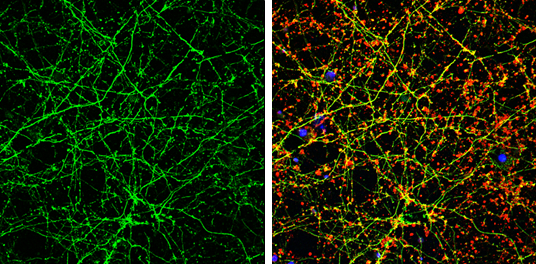
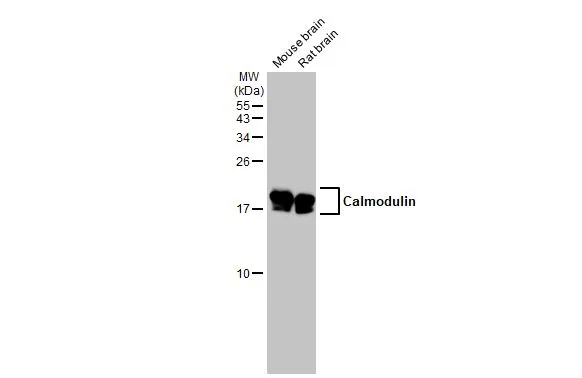
- WB, IF, ICC
- Concentration:
- 1 mg/ml
- Physical State:
- Liquid
- Species Reactivity:
- Human, Mouse
- Purification:
- Affinity Purified
- Storage Conditions:
- -20[o]C Aliquot. Avoid freeze/thaw cycles. Store undiluted., 2-8[o]C Aliquot. Avoid freeze/thaw cycles. Store undiluted., -20[o]C/-70[o]C Aliquot. Avoid freeze/thaw cycles. Store undiluted.
- Supplier:
- Genetex
- Host:
- Rabbit
- Reactivities:
- Mouse, Rat
- Buffer:
- PBS, 20% Glycerol, 0.01% Thimerosal.
- Immunogen:
- Recombinant protein encompassing a sequence within the center region of human Calmodulin 2. The exact sequence is proprietary.
- Uniprot:
- P0DP23, P0DP24, P0DP25
- Synonyms:
- CALM;CALML2;calmodulin 1 (phosphorylase kinase, delta);calmodulin 2 (phosphorylase kinase, delta);calmodulin-1;Calmodulin-2;Calmodulin-3;caM;CAM1;CAM2;CAM3;CAMB;CAMC;CAMI;CAMII;CAMIII;CPVT4;CPVT6;DD132;epididymis secretory protein Li 72;HEL-S-72;LP7057 protein;LQT14;LQT15;LQT16;PHKD;PHKD2;PHKD3;phosphorylase kinase delta;phosphorylase kinase subunit delta;phosphorylase kinase, delta subunit;prepro-calmodulin 1;prepro-calmodulin 2;prepro-calmodulin 3
- Extra Details:
- This gene is a member of the calmodulin gene family. There are three distinct calmodulin genes dispersed throughout the genome that encode the identical protein, but differ at the nucleotide level. Calmodulin is a calcium binding protein that plays a role in signaling pathways, cell cycle progression and proliferation. Several infants with severe forms of long-QT syndrome (LQTS) who displayed life-threatening ventricular arrhythmias together with delayed neurodevelopment and epilepsy were found to have mutations in either this gene or another member of the calmodulin gene family (PMID:23388215). Mutations in this gene have also been identified in patients with less severe forms of LQTS (PMID:24917665), while mutations in another calmodulin gene family member have been associated with catecholaminergic polymorphic ventricular tachycardia (CPVT)(PMID:23040497), a rare disorder thought to be the cause of a significant fraction of sudden cardiac deaths in young individuals. Pseudogenes of this gene are found on chromosomes 10, 13, and 17. Alternative splicing results in multiple transcript variants encoding different isoforms. [provided by RefSeq, Mar 2015]
- Shipping Conditions:
- Blue Ice