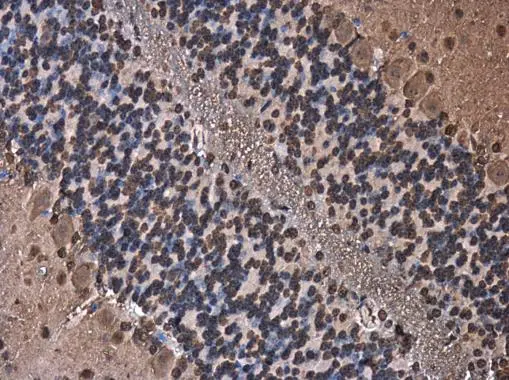
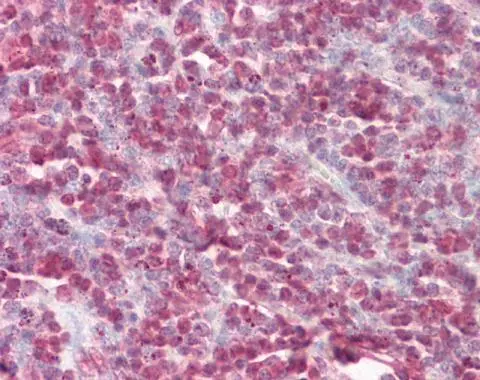
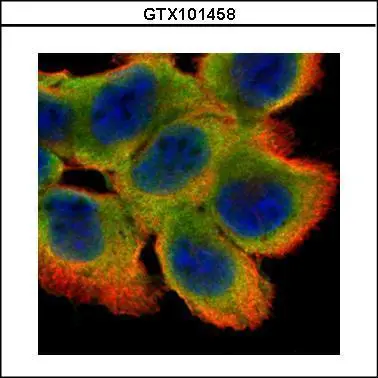
GTX101458
Cystatin B antibody

Cannot supply to this region.
- SKU:
- GTX101458
- Additional Names:
- cystatin B , CPI-B , CST6 , EPM1 , EPM1A , PME , STFB , ULD
- Application:
- IHC-P, IF, ICC
- Concentration:
- 6.04 mg/ml
- Physical State:
- Liquid
- Species Reactivity:
- Human
- Purification:
- Protein A Purified
- Storage Conditions:
- -20[o]C Aliquot. Avoid freeze/thaw cycles. Store undiluted., 2-8[o]C Aliquot. Avoid freeze/thaw cycles. Store undiluted., -20[o]C/-70[o]C Aliquot. Avoid freeze/thaw cycles. Store undiluted.
- Supplier:
- Genetex
- Host:
- Rabbit
- Reactivities:
- Human, Mouse
- Buffer:
- 0.1M Tris, 0.1M Glycine, 10% Glycerol, 0.01% Thimerosal.
- Immunogen:
- Recombinant protein encompassing a sequence within the center region of human Cystatin B. The exact sequence is proprietary.
- Uniprot:
- P04080
- Synonyms:
- CPI-B;CST6;cystatin B (stefin B);cystatin-B;epididymis secretory sperm binding protein;EPM1;EPM1A;liver thiol proteinase inhibitor;PME;Stefin-B;STFB;ULD
- Extra Details:
- The cystatin superfamily encompasses proteins that contain multiple cystatin-like sequences. Some of the members are active cysteine protease inhibitors, while others have lost or perhaps never acquired this inhibitory activity. There are three inhibitory families in the superfamily, including the type 1 cystatins (stefins), type 2 cystatins and kininogens. This gene encodes a stefin that functions as an intracellular thiol protease inhibitor. The protein is able to form a dimer stabilized by noncovalent forces, inhibiting papain and cathepsins l, h and b. The protein is thought to play a role in protecting against the proteases leaking from lysosomes. Evidence indicates that mutations in this gene are responsible for the primary defects in patients with progressive myoclonic epilepsy (EPM1). [provided by RefSeq]
- Shipping Conditions:
- Blue Ice