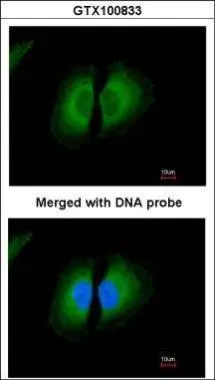
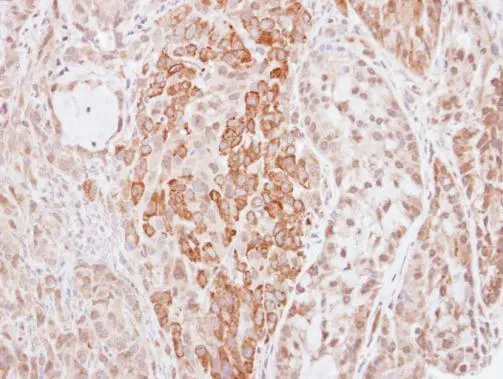
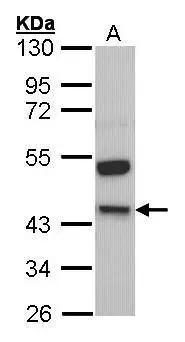
GTX100833
HMW Kininogen antibody

Cannot supply to this region.
- SKU:
- GTX100833
- Additional Names:
- kininogen 1 , BDK , BK , HMWK , KNG
- Application:
- WB, IHC-P, IF, ICC
- Concentration:
- 1 mg/ml
- Physical State:
- Liquid
- Species Reactivity:
- Human
- Purification:
- Affinity Purified
- Storage Conditions:
- -20[o]C Aliquot. Avoid freeze/thaw cycles. Store undiluted., 2-8[o]C Aliquot. Avoid freeze/thaw cycles. Store undiluted., -20[o]C/-70[o]C Aliquot. Avoid freeze/thaw cycles. Store undiluted.
- Supplier:
- Genetex
- Host:
- Rabbit
- Reactivities:
- Human
- Buffer:
- 0.1M Tris, 0.1M Glycine, 10% Glycerol, 0.01% Thimerosal.
- Immunogen:
- Recombinant protein encompassing a sequence within the center region of human HMW Kininogen. The exact sequence is proprietary.
- Uniprot:
- P01042
- Synonyms:
- alpha-2-thiol proteinase inhibitor;BDK;BK;bradykinin;fitzgerald factor;HAE6;high molecular weight kininogen;HMWK;kininogen-1;KNG;williams-Fitzgerald-Flaujeac factor
- Extra Details:
- High molecular weight kininogen (HMWK) plays an important role in assembly of the plasma kallikrein (see MIM 147910)-kinin system. The KNG1 gene generates both HMWK and low molecular weight kininogen (LMWK) through alternative splicing. Both HMWK and LMWK contain an identical heavy chain consisting of protein domains 1, 2, and 3. However, HMWK contains a 56-kD light chain that consists of domains 5 and 6H, whereas LMWK contains a unique 4-kD light chain that consists of domain 5L. In both proteins, the heavy and light chains are linked by domain 4, which contains the bradykinin (BK) nonapeptide. BK, which is released by plasma kallikrein, is a potent inflammatory mediator that causes vasodilation and enhanced capillary permeability, induces pain, and stimulates production of nitric oxide and prostacyclin (see MIM 601699) from endothelial cells. During vascular damage, BK stimulates smooth muscle proliferation and intimal hypertrophy. Release of BK from HMWK generates a 2-chain HMWK, termed HMWKa, containing the heavy and light chains joined by a disulfide bond (Merkulov et al., 2008 [PubMed 18000168]).[supplied by OMIM]
- Shipping Conditions:
- Blue Ice