

A4903
Pan Cadherin Rabbit monoclonal antibody

Size
POA
- SKU:
- A4903
- Additional Names:
- Arc-1|CD324|CDHE|ECAD|LCAM|Pan Cadherin|UVO
- Application:
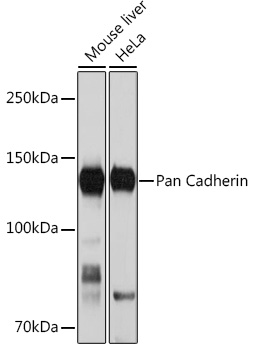
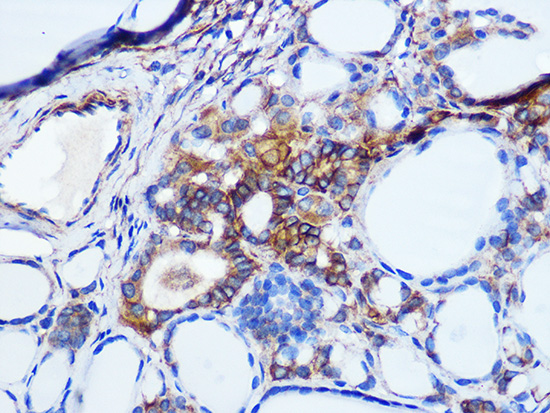
- ELISA, WB, IHC-P
- Molecular Weight:
- 130-150 kDa
- Species Reactivity:
- Human
- Purification:
- Affinity Purified
- Storage Conditions:
- -20[o]C Avoid freeze/thaw cycles.
- Supplier:
- Abclonal
- Host:
- Rabbit
- Reactivities:
- Human, Mouse
- Immunogen:
- Synthetic peptide. This information is considered to be commercially sensitive.
- Formulation:
- Unmodified
- Sequence:
- IRRMDERPIHAEPQYPVRSAAPHPGDIGDFINEGLKAADNDPTAPPYDSLLVFDYEGSGSTAGSLSSLNSSSSGGEQDYDYLNDWGPRFKKLADMYGGGDD
- Uniprot:
- P12830, P19022, P22223, P33151, P39038, P55283
- Synonyms:
- 7B4;7B4 antigen;ACOGS;Arc-1;ARVD14;AW120700;BCDS1;CAD4;cadherin 1, E-cadherin (epithelial);cadherin 1, type 1, E-cadherin (epithelial);cadherin 2, type 1, N-cadherin (neuronal);cadherin 3, type 1, P-cadherin (placental);cadherin 4, type 1, preproprotein;cadherin 4, type 1, R-cadherin (retinal);cadherin 5, type 2 (vascular endothelium);cadherin 5, type 2, VE-cadherin (vascular epithelium);cadherin-1;cadherin-2;cadherin-3;cadherin-4;cadherin-5;calcium-dependent adhesion protein, epithelial;calcium-dependent adhesion protein, neuronal;calcium-dependent adhesion protein, placental;CAM 120/80;CD144;cd144 antigen;CD324;CD325;CDHE;CDHN;CDHP;CDw325;cell-CAM 120/80;E-cadherin 1;ECAD;endothelial-specific cadherin;epididymis secretory sperm binding protein;epithelial cadherin;HJMD;LCAM;N-cadherin 1;NCAD;neural cadherin;PCAD;Placental cadherin;R-Ca;R-CAD;R-Cadh;R-cadherin;Rc;RCAD;retina cadherin;retinal cadherin;UVO;uvomorulin;vascular endothelial cadherin;VE-cadherin
- Extra Details:
- This gene encodes a classical cadherin of the cadherin superfamily. Alternative splicing results in multiple transcript variants, at least one of which encodes a preproprotein that is proteolytically processed to generate the mature glycoprotein. This calcium-dependent cell-cell adhesion protein is comprised of five extracellular cadherin repeats, a transmembrane region and a highly conserved cytoplasmic tail. Mutations in this gene are correlated with gastric, breast, colorectal, thyroid and ovarian cancer. Loss of function of this gene is thought to contribute to cancer progression by increasing proliferation, invasion, and/or metastasis. The ectodomain of this protein mediates bacterial adhesion to mammalian cells and the cytoplasmic domain is required for internalization. This gene is present in a gene cluster with other members of the cadherin family on chromosome 16. [provided by RefSeq, Nov 2015]
- Shipping Conditions:
- Blue Ice