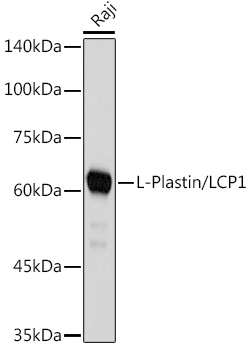
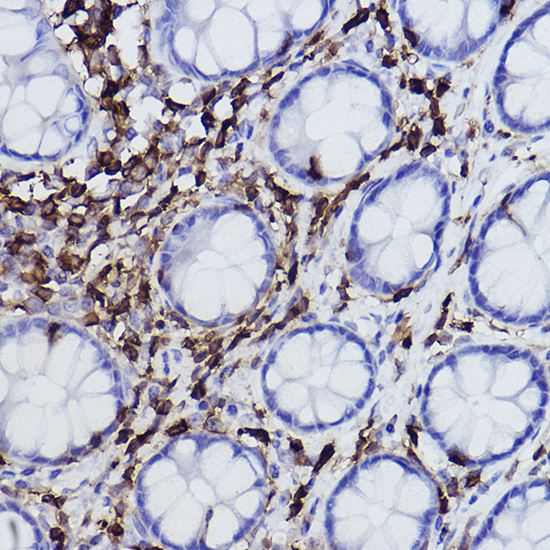
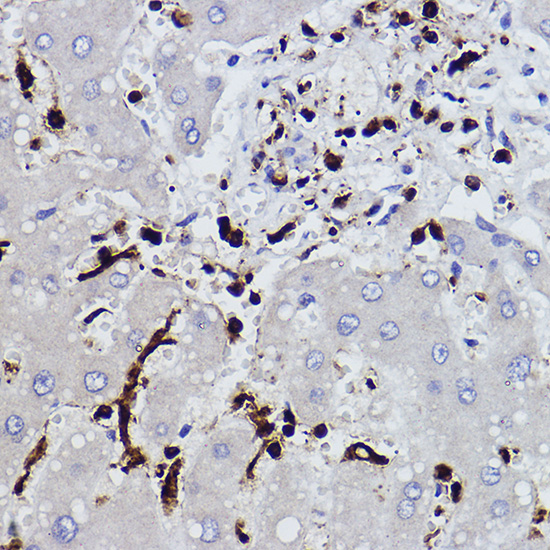


A4664
L-Plastin/LCP1 Rabbit monoclonal antibody

Size
POA
- SKU:
- A4664
- Additional Names:
- CP64|HEL-S-37|L-PLASTIN|L-Plastin/LCP1|LC64P|LPL|PLS2
- Application:
- ELISA, WB, IHC-P
- Molecular Weight:
- 70kDa
- Species Reactivity:
- Human
- Purification:
- Affinity Purified
- Storage Conditions:
- -20[o]C Avoid freeze/thaw cycles.
- Supplier:
- Abclonal
- Host:
- Rabbit
- Reactivities:
- Human
- Immunogen:
- Synthetic peptide. This information is considered to be commercially sensitive.
- Formulation:
- Unmodified
- Sequence:
- TLREAKKSSSISSFKDPKISTSLPVLDLIDAIQPGSINYDLLKTENLNDDEKLNNAKYAISMARKIGARVYALPEDLVEVNPKMVMTVFACLMGKGMKRV
- Uniprot:
- P13796
- Synonyms:
- bA139H14.1 (lymphocyte cytosolic protein 1 (L-plastin));CP64;epididymis secretory protein Li 37;HEL-S-37;L-PLASTIN;L-plastin (Lymphocyte cytosolic protein 1) (LCP-1) (LC64P);LC64P;LCP-1;LPL;Lymphocyte cytosolic protein 1;Lymphocyte cytosolic protein-1 (plasmin);plastin-2;PLS2
- Extra Details:
- Plastins are a family of actin-binding proteins that are conserved throughout eukaryote evolution and expressed in most tissues of higher eukaryotes. In humans, two ubiquitous plastin isoforms (L and T) have been identified. Plastin 1 (otherwise known as Fimbrin) is a third distinct plastin isoform which is specifically expressed at high levels in the small intestine. The L isoform is expressed only in hemopoietic cell lineages, while the T isoform has been found in all other normal cells of solid tissues that have replicative potential (fibroblasts, endothelial cells, epithelial cells, melanocytes, etc.). However, L-plastin has been found in many types of malignant human cells of non-hemopoietic origin suggesting that its expression is induced accompanying tumorigenesis in solid tissues.
- Shipping Conditions:
- Blue Ice