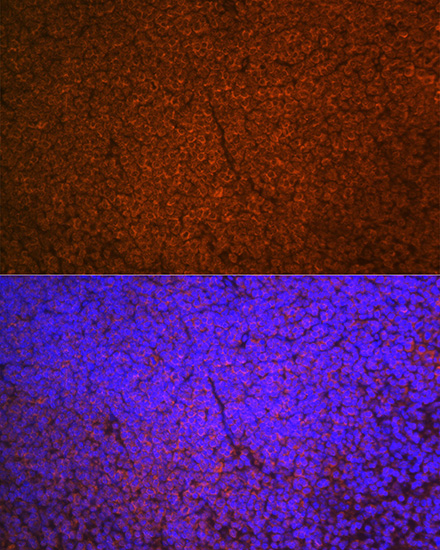


A3571
SHIP1 Rabbit monoclonal antibody

Size
POA
- SKU:
- A3571
- Additional Names:
- hp51CN|p150Ship|SHIP|SHIP-1|SHIP1|SIP-145
- Application:
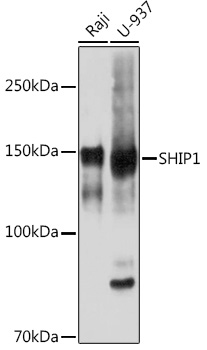
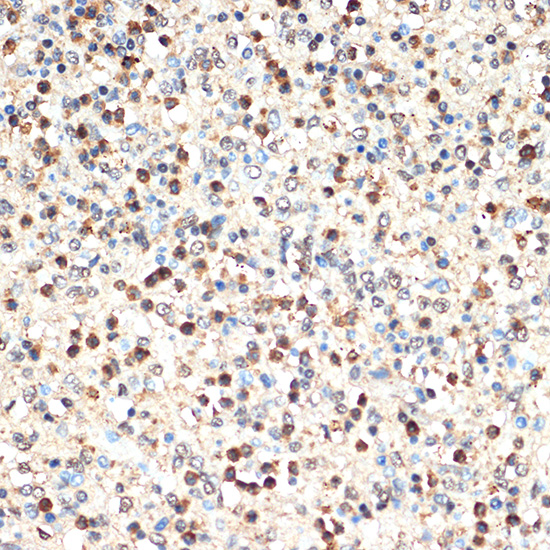
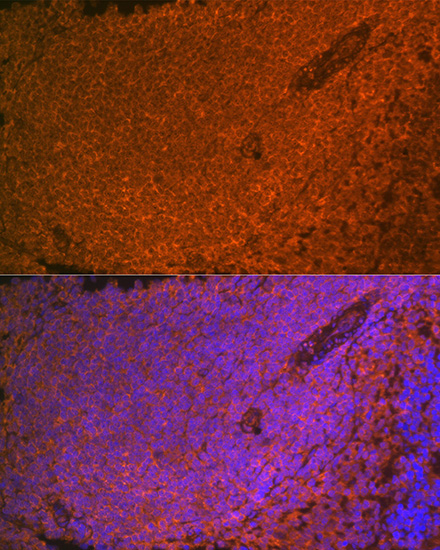
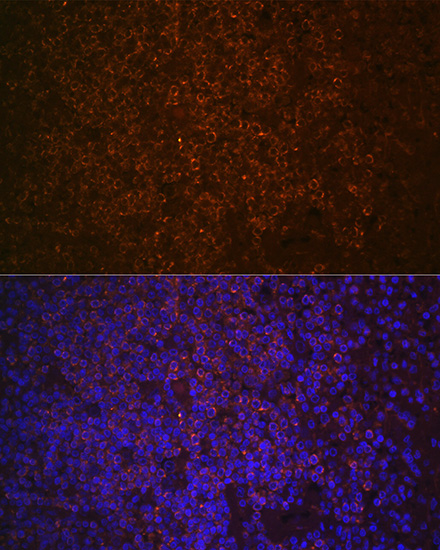
- ELISA, WB, IHC-P, IF
- Molecular Weight:
- 145kDa
- Species Reactivity:
- Human
- Purification:
- Affinity Purified
- Storage Conditions:
- -20[o]C Avoid freeze/thaw cycles.
- Supplier:
- Abclonal
- Host:
- Rabbit
- Reactivities:
- Human, Mouse, Rat
- Immunogen:
- Recombinant protein (or fragment).This information is considered to be commercially sensitive.
- Formulation:
- Unmodified
- Sequence:
- RSFTCSSSAEGRAAGGDKSQGKPKTPVSSQAPVPAKRPIKPSRSEINQQTPPTPTPRPPLPVKSPAVLHLQHSKGRDYRDNTELPHHGKHRPEEG
- Uniprot:
- Q92835
- Synonyms:
- hp51CN;Inositol polyphosphate-5-phosphatase of 145 kDa;inositol polyphosphate-5-phosphatase, 145kD;inositol polyphosphate-5-phosphatase, 145kDa;p150Ship;phosphatidylinositol 3,4,5-trisphosphate 5-phosphatase 1;phosphatidylinositol 4,5-bisphosphate 5-phosphatase;SH2 domain-containing inositol 5'-phosphatase 1;SHIP;SHIP-1;SHIP1;signaling inositol polyphosphate 5 phosphatase SIP-145;signaling inositol polyphosphate phosphatase SHIP II;SIP-145
- Extra Details:
- This gene is a member of the inositol polyphosphate-5-phosphatase (INPP5) family and encodes a protein with an N-terminal SH2 domain, an inositol phosphatase domain, and two C-terminal protein interaction domains. Expression of this protein is restricted to hematopoietic cells where its movement from the cytosol to the plasma membrane is mediated by tyrosine phosphorylation. At the plasma membrane, the protein hydrolyzes the 5' phosphate from phosphatidylinositol (3,4,5)-trisphosphate and inositol-1,3,4,5-tetrakisphosphate, thereby affecting multiple signaling pathways. The protein is also partly localized to the nucleus, where it may be involved in nuclear inositol phosphate signaling processes. Overall, the protein functions as a negative regulator of myeloid cell proliferation and survival. Mutations in this gene are associated with defects and cancers of the immune system. Deficiencies in the encoded protein, SHIP1, have been associated with Inflammatory Bowel Disease types such as Crohn's Disease and Ulcerative Colitis. Alternative splicing of this gene results in multiple transcript variants.
- Shipping Conditions:
- Blue Ice