
_IF_01.jpg)
A2577
CD19 Rabbit polyclonal antibody

Size
£152.00
- SKU:
- A2577
- Additional Names:
- B4|CD19|CVID3
- Application:
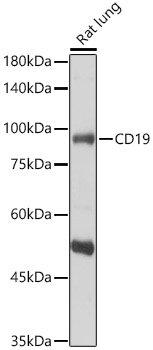
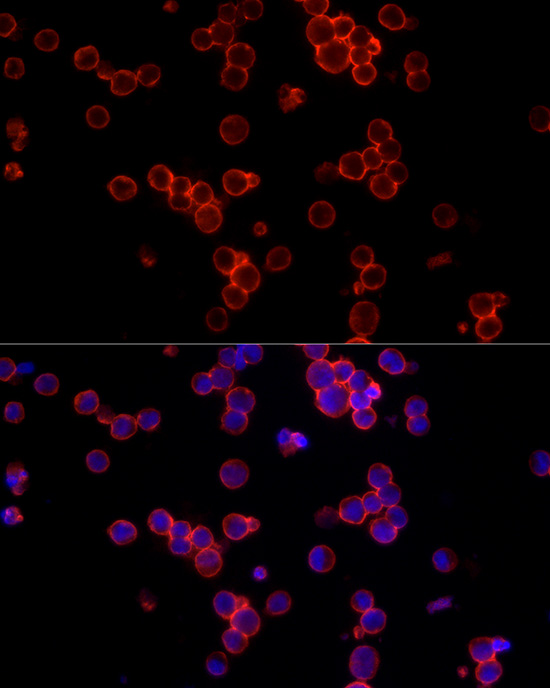
- ELISA, WB, IF, ICC
- Molecular Weight:
- 95kDa
- Species Reactivity:
- Human
- Purification:
- Affinity Purified
- Storage Conditions:
- -20[o]C Avoid freeze/thaw cycles.
- Supplier:
- Abclonal
- Host:
- Rabbit
- Reactivities:
- Human, Mouse, Rat
- Immunogen:
- Synthetic peptide. This information is considered to be commercially sensitive.
- Formulation:
- Unmodified
- Sequence:
- NAESYENEDEELTQPVARTMDFLSPHGSAWDPSREATSLGSQSYEDMRGILYAAPQLRSIRGQPGPNHEEDADSYENMDNPDGPDPAWGGGGRMGTWSTR
- Uniprot:
- P15391
- Synonyms:
- B-lymphocyte antigen CD19;B-lymphocyte surface antigen B4;B4;CVID3;differentiation antigen CD19;T-cell surface antigen Leu-12
- Extra Details:
- This gene encodes a member of the immunoglobulin gene superfamily. Expression of this cell surface protein is restricted to B cell lymphocytes. This protein is a reliable marker for pre-B cells but its expression diminishes during terminal B cell differentiation in antibody secreting plasma cells. The protein has two N-terminal extracellular Ig-like domains separated by a non-Ig-like domain, a hydrophobic transmembrane domain, and a large C-terminal cytoplasmic domain. This protein forms a complex with several membrane proteins including complement receptor type 2 (CD21) and tetraspanin (CD81) and this complex reduces the threshold for antigen-initiated B cell activation. Activation of this B-cell antigen receptor complex activates the phosphatidylinositol 3-kinase signalling pathway and the subsequent release of intracellular stores of calcium ions. This protein is a target of chimeric antigen receptor (CAR) T-cells used in the treatment of lymphoblastic leukemia. Mutations in this gene are associated with the disease common variable immunodeficiency 3 (CVID3) which results in a failure of B-cell differentiation and impaired secretion of immunoglobulins. CVID3 is characterized by hypogammaglobulinemia, an inability to mount an antibody response to antigen, and recurrent bacterial infections. Alternative splicing results in multiple transcript variants encoding distinct isoforms.
- Shipping Conditions:
- Blue Ice