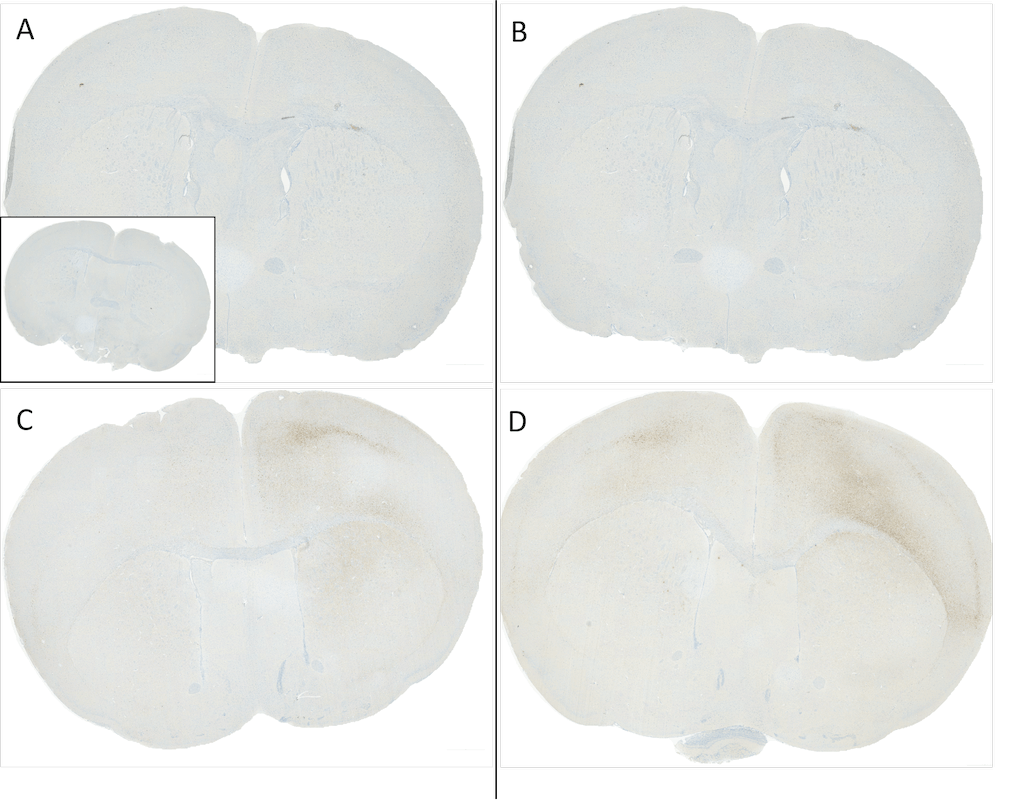
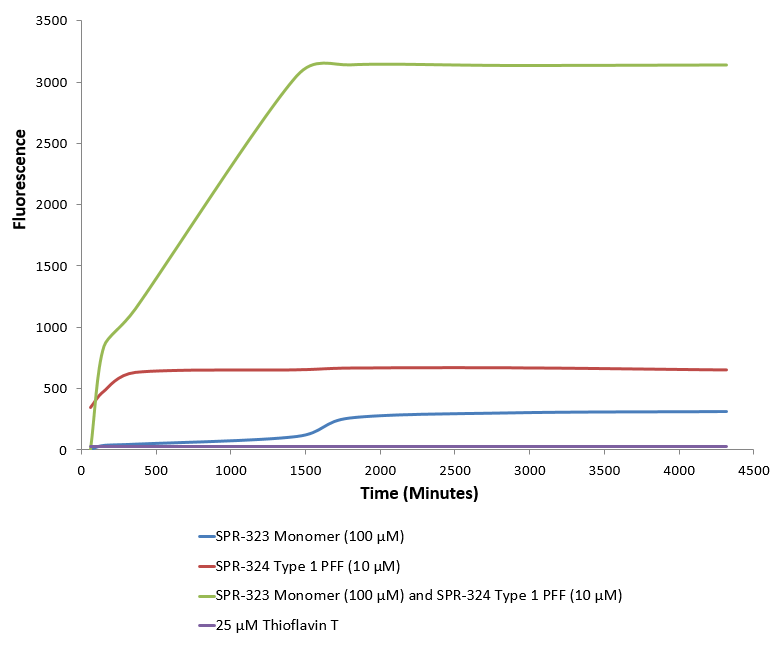
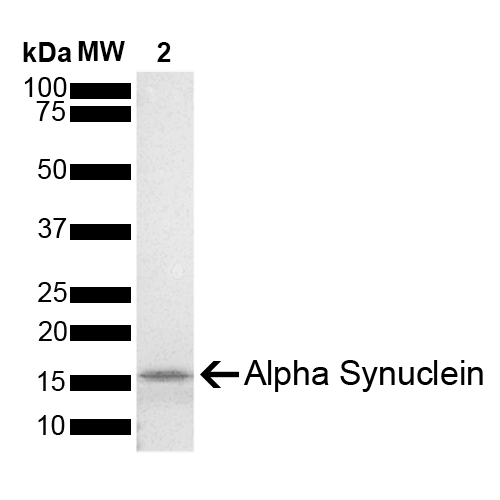
SPR-323
Alpha Synuclein Monomers (Type 1)

Eine Lieferung in diese Region ist nicht möglich.
- SKU:
- SPR-323
- Zusätzliche Namen:
- Alpha-synuclein, Alpha synuclein, Asyn, SNCA, NACP, PARK1, PARK4, PD1, Synuclein alpha, Non-A beta component of AD amyloid, Non-A4 component of amyloid precursor, Synuclein Alpha-140, SYN, Parkinson's disease familial 1 Protein Protein
- Anwendung:
- SDS-PAGE, WB, FuncS
- Molekulargewicht:
- ~14.46 kDa
- Reinheit:
- >95%
- Aufreinigung:
- Ion Exchange
- Lagerbedingungen:
- -70[o]C
- Hersteller:
- StressMarq Biosciences
- ABP:
- No Import Docs
- Buffer:
- PBS
- Immunogen:
- Alpha Synuclein Monomers
- Spezies:
- Mouse
- Sequenz:
- MDVFMKGLSK AKEGVVAAAE KTKQGVAEAA GKTKEGVLYV GSKTKEGVVH GVTTVAEKTK EQVTNVGGAV VTGVTAVAQK TVEGAGNIAA ATGFVKKDQM GKGEEGYPQE GILEDMPVDP GSEAYEMPSE EGYQDYEPEA
- Uniprot:
- O55042
- Synonyme:
- al;alp;alpha-Syn;alpha-synuclein;alphaSYN;NACP;non-A beta component of AD amyloid;non-A4 component of amyloid;Non-A4 component of amyloid precursor
- Weitere Details:
- Alpha-synuclein (A Alpha-syn), a 140-amino acid neuronal protein encoded by the SNCA gene, plays a vital role in maintaining synaptic function. In its monomeric form, A Alpha-syn regulates synaptic vesicle trafficking, neurotransmitter release, and SNARE-complex assembly, contributing to efficient neuronal communication and dopamine homeostasis. Under physiological conditions, A Alpha-syn monomers exhibit a dynamic, unfolded structure that allows interaction with lipid membranes and synaptic proteins. However, environmental stressors, genetic mutations, and aging can destabilize this native conformation, triggering misfolding and self-aggregation. These misfolded monomers act as seeds for the formation of toxic oligomers and fibrils, initiating a prion-like propagation of pathology across neural networks. This pathological transformation disrupts synaptic integrity, impairs mitochondrial function, and activates neuroinflammatory pathways, ultimately leading to neuronal death. Monomeric A Alpha-syn is increasingly recognized as a critical upstream factor in the development of synucleinopathies, including Parkinson's disease, Lewy body dementia, and multiple system atrophy. Targeting A Alpha-syn monomers before aggregation occurs offers a promising therapeutic strategy. Approaches such as molecular chaperones, SNCA gene modulation, and immunotherapies aim to stabilize monomeric A Alpha-syn or prevent its pathological conversion. As research advances, understanding the molecular behavior of A Alpha-syn monomers is essential for developing disease-modifying treatments and biomarkers for early diagnosis in neurodegenerative disorders.
- Versandbedingungen:
- Dry Ice